
The demand for non-alcoholic wine is exploding, but is it ruining the culture of winemaking? Explore the process, the price, and why I’m skipping this trend.
In recent years, there has been a growing demand for non-alcoholic wine, and winemakers are adapting by producing dealcoholized alternatives. It makes sense; non-alcoholic wines are a multi-billion-dollar industry and growing.
But what exactly is non-alcoholic wine? And more importantly, is it any good? Read on to find out, and I’ll also talk about why I don’t like the trend.
How is Non-Alcoholic Wine Made?
Non-Alcoholic wine is regular wine that undergoes a process to have its alcohol removed.
Grapes go through the normal winemaking process. When it’s ready, winemakers remove its alcohol, typically, using heat. See, alcohol evaporates at a lower temperature than water[1], so you can simply “boil” it out. Then, unfermented grape juice[2] is added to the wine to make up for the lost volume.
The process removes most but not all the alcohol. Dealcoholized wine contains trace contents of alcohol, less than 0.5% A.B.V.[3] Nothing to worry about, though. That’s around the same amount as regular grape juice. You read that right. Regular unfermented grape juice has small amounts of alcohol. Well, except it’s not unfermented, just not on purpose. Since the fruit has sugars and natural yeast is everywhere, natural fermentation occurs in very ripe fruit and grape juice as well.
There are other methods to make non-alcoholic wine, all involving removing alcohol from the finished wine. In reverse osmosis, wine is passed through a membrane to separate water from alcohol.

Photo by Quadronet
Are Dealcoholized Wines Good?
That’s the million-dollar question, isn’t it? So, technology has improved. They didn’t used to be, but now you can find better ones in the market. But that’s part of the problem. Though there are genuinely some tasty ones, most are not really that good.
The problem is that by removing the alcohol from the wine, producers are not only removing 12% of the volume[4], but they’re also removing balance. Non-Alcoholic wines need to be corrected because as-is, they’re overwhelmingly acidic and texturally bland. Correction usually means sugar[5], therefore dealcoholized wines tend to be off-sweet, which isn’t necessarily a bad thing, but also not always desired.
There’s an inherent risk when picking a bottle of wine at random. You might not like it. The risk increases with dealcoholized wine. Non-alcoholic wines are not always bad, but they are bad often enough for the risk to not be worth it.
Besides, they’re expensive.
Why Is Non-Alcoholic Wine Expensive?
Not expensive like a Grand Cru from Burgundy[6], but expensive in relation to similar quality wines. If you’re used to buying Chardonnay at 10 dollars, a similar dealcoholized one will likely cost 15. I’ve made those numbers up; of course, prices will be different in a case-by-case basis.
Removing alcohol from wine is more expensive and lengthier than the winemaking process for regular wine. There’s an additional procedure when dealcoholizing wine, so the grapes go through two distinct production processes.
The technology for the second of those, the one that removes the alcohol, is expensive. Additionally, it adds time before the finished dealcoholized wine can be bottled. All that adds to the cost of the wine, of course. I didn’t mention this above. But to maintain the aromatic compounds in non-alcoholic wine, they are first extracted[7] and added back once the dealcoholized wine is finished. That also adds costs in technology, labor, and time.
But there’s more.
Remember that when alcohol is removed, the volume decreases, and extra liquid must be added back. That liquid has a cost, of course. For balancing reasons, though, the amount added is not necessarily the same as the amount removed, it’s usually less. So, you need more grapes and you yield less wine when you dealcoholize it.
Lastly, demand keeps growing, and wineries are not quite keeping up, which means that the available supply is more expensive. Furthermore, this is a recent trend, and it’s hot right now, so markets are looking to capitalize by charging more. Now the question is, is paying the extra cost worth it to you?

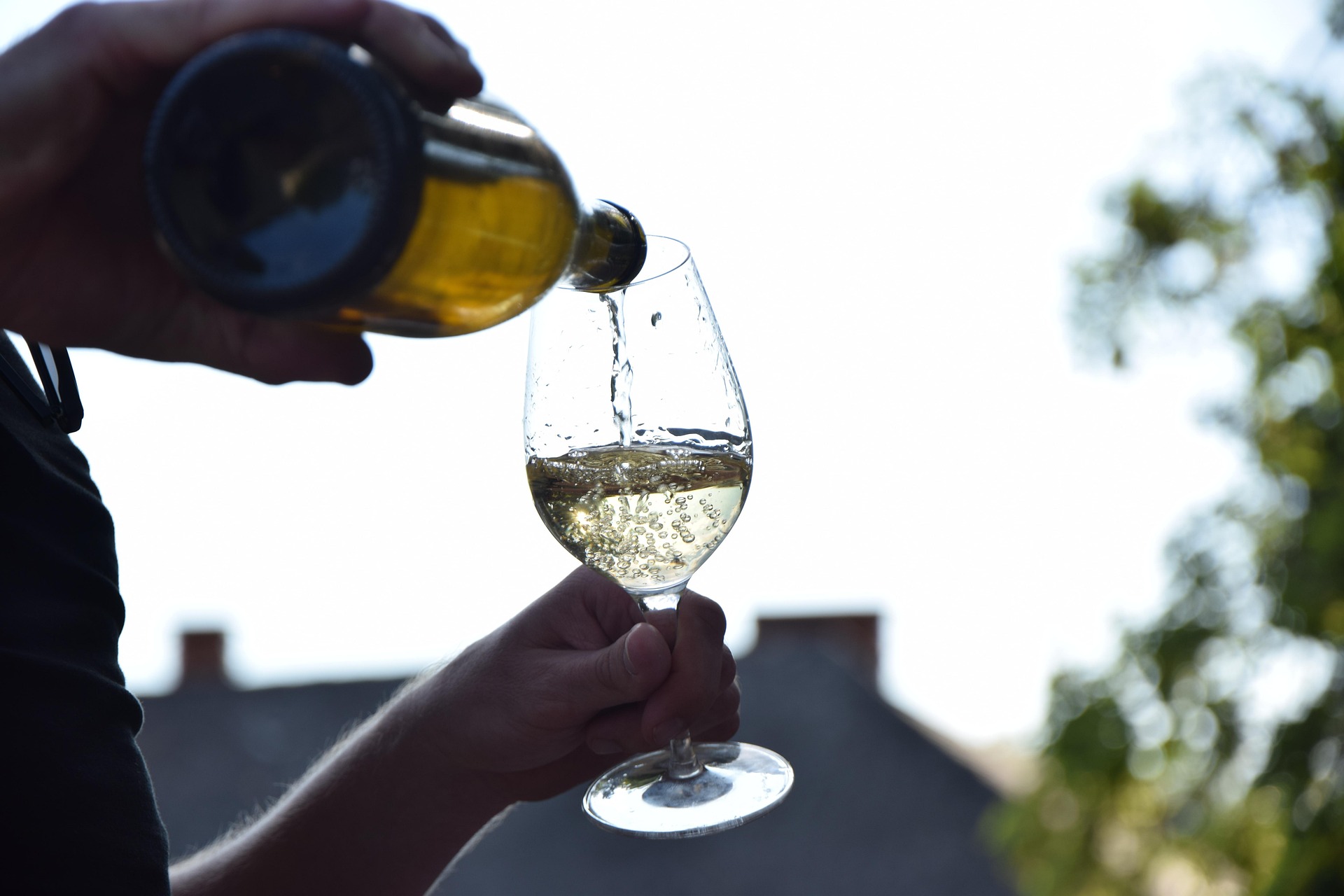
Photo by Taryn Elliot
Who Is Non-Alcoholic Wine For?
I get the need for non-alcoholic alternatives. You might be driving or under specific medication depriving you of alcohol. Or perhaps you want to stay sober for no reason. I get it. I just don’t know that wine is the right drink for that.
When I’m not drinking alcohol, I’m drinking water, or regular fruit juice. I also drink a lot of coffee and sometimes I even go for tea. Additionally, I’m not health-conscious enough to avoid soda. I’m not big on mocktails, but they’re there as an option as well, right? So maybe I don’t get it after all. I think there are plenty of non-alcoholic alternatives around, so I don’t see why wine needs to be one of them[8].
Is it to feel a part of the history and culture behind winemaking? But part of that is visiting wine regions and talking to vintners in their historic wineries. Most of the non-alcoholic wine comes from large mainstream wineries, though. Sure, a lot of them are historic, but they’re still selling you a mass-produced beverage that has little to do with the hand-crafted experiences made by smaller producers. You won’t get a feel for the terroir in your industrial non-alcoholic wine. In fact, you’ll probably get more from your locally sourced kombucha.
Is it because wine is a shareable social experience? Well, so is a 2-liter bottle of diet ginger ale. Dealcoholized wine, depending on which one you get, might only be marginally better. If only one of you isn’t drinking, I guess the rest can be polite and uncork a non-alcoholic wine… or all those drinking can open a regular bottle and the sober friend can drink something else, like water. That’s what I do whenever I’m the sober friend. No need to force others to drink something of lower quality only because I’m choosing to stay sober on a particular evening. I’m fine with water and happy to see them enjoy good quality wine.
The Last Drop
I drink wine because I find it delicious, and I’m also interested in the winemakers and the history of the places where they grow their grapes. I like the cultural aspects of wine, how important it’s been in societies, how influential in art.
I also drink wine to get a buzz.
And, yes, I recognize how privileged I am to not be alcohol-dependent. I can drink wine just to get a light happy high, and I’m happy to leave it at that. I don’t want to drink non-alcoholic wine because I’ll be missing that buzz.
Non-alcoholic wine is not a new thing. The first ones are from the 1850s. Regular wine, however, is much older. We believe, through pottery shards holding traces of wine, that the oldest wines were produced in the Caucasus 8,000 years ago. So, let me contradict what I’ve just said. Non-alcoholic wine is a new thing; we’ve been producing it for only about 2% of the time we’ve been producing wine. Will all wine be non-alcoholic in the future? If not, I don’t see much of a point in winemakers making (and me buying) non-alcoholic wine. Which doesn’t mean they will stop anytime soon. It’s a multi-billion-dollar industry. And growing.

Photo by bridgesward
Footnotes
[1] Ethanol, the alcohol type in wine and other drinks, has a boiling point of around 173°F (78°C), much lower than water, which evaporates at 212°F (100°C).
[2] Of the same varietal or blend to retain the organoleptic qualities of the grapes.
[3] Alcohol By Volume. 10% A.B.V., for instance, means that in a regular 750 milliliter bottle of wine, there will be 75 milliliters of alcohol. 0.5% would mean just under 4 milliliters of alcohol in the whole bottle.
[4] A lot of wines are around 12% A.B.V., so that’s the number I used, but technically still wines range from 8% to 15% A.B.V.
[5] Sometimes that means actual sugar, but what I really mean here is that the grape juice added is unfermented, therefore sugars have not turned into alcohol, and therefore it’s sweet.
[6] Only 1% to 2% of all Burgundy wines are Grand Cru, with average prices the easily surpass 100 dollars per bottle and are probably closer to 500 dollars each.
[7] The method I’m familiar with involves adding regular still wine into a spinning cone, which transforms it, through centrifugal force, into a thin film. Nitrogen gas is then fed into the cone to extract and preserve the flavors and aromas, and to prevent the wine from oxidizing.
[8] Or beer, for that matter, except that you can crack open a can of beer and finish it easier than you can a whole bottle of wine.
Cover Image: Is non-alcoholic wine good? Photo by Ruslan Sikunov.


Leave a Reply