

Is our complex wine language turning away a new generation of drinkers? It’s time to stop the gatekeeping and make wine accessible to everyone.
Wine is complex, but should our wine language be as well? When we talk about wine, we reach for descriptors that can be hard to grasp and some are borderline ridiculous, like finding aromas of dill pickle. This is from a review I remember reading a few years back. It’s even funnier because the critic liked the wine and rated it highly.
Today I want to explore how we use language to communicate about wine, from how we describe its aromas and flavors, to whether our lingo’s complexity is serving as a gatekeeper for younger generations to get into wine.
Let’s get started.
Why Is Our Wine Language So Pretentious?
It’s not enough to smell cherries in your wine anymore. No, now it’s ripe red cherry pits, because they—the pits—have a faint nutty aroma, which reminds us of almonds. Would it be enough to just say that we smell red fruit? I love the elaborate description Miles Raymond gives while tasting wine in Sideways, finger to the ear for no reason at all:
A little citrus. Maybe some strawberry. Mmm. Passion fruit, mmm, and, oh, there’s just like the faintest soupçon of like, uh, asparagus, and there’s a, just a flutter of, like a, like a nutty Edam cheese.
Too much?
Why do we use that wine language? And yes, I say we. I’ve done it in the past as well. And I’ll probably do it again. After all, we’re proud to discover different flavors in wine. It’s not an easy feat, and it takes practice to get there. When I began drinking wine, I could barely tell if the wine had the typical aromas we associate with oak-barrel aging, like smoke or leather. Eventually being able to pick up nutty aromas over the red cherry ones is, categorically, a win.
Furthermore, if we have the vocabulary, shouldn’t we use it? Gewürztraminer unquestionably smells of lychees. But how did they describe that fragrance before lychees were introduced in Europe? If we have a comparable aroma available, is it wrong to use it? Of course not, using a particular fruit to describe a specific wine is normal. But what about nowadays? Will somebody who never smelled a lychee before understand the descriptor? How would they depict it?
The Two Problems with Descriptive Wine Language
First, is the wine language we’re using too complicated for beginners? And more importantly, are we making them feel like they’re not good enough by using it? I recall a taster correcting a friend once, because the wine didn’t smell like peaches, but apricots. Or another who audibly baffled because no one else could smell the violets in the red we had been served.
In both cases, people put their noses to work, trying to find the right fruit or the missing flowers. Many looked at each other confused, some even ashamed. And yes, it would be easy to say that the vocal minority were in the wrong, and that we shouldn’t listen to jerks. We could even go as far as to say that they should be banned or asked to leave. And I agree, it costs nothing to be polite and civil instead of condescending and obnoxious, but the reality is that people like that will always find their way in and will and will jump at the opportunity to ruin somebody’s experience.
What can we do, then? Well, I think we should normalize a simpler wine language. Finding red fruit is okay. Finding cherries is better, but unnecessary. And if a new taster picks it out, the least we can do is reward them with an acknowledgement or a congratulatory nod—even if you smell strawberries instead of cherries.
The second problem in our wine language is that not everybody is familiar with the aromas you’re describing. Have you been to enough forests to know what their floors smell like? It’s like the lychee situation; if you haven’t so much as seen the fruit before, can you make sense of the description? Then again, do we have a better one? Is “tropical fruit” too broad? What about a replacement for forest floor? Would “earthy” do?
I always think it’s better to simplify the wine language we use, but I agree that our vocabulary is limited. I don’t have a good solution for this second problem. Maybe simplicity isn’t always the answer?
Is Simplicity Best or Simply the Easiest?
Wine is complex, then why should we dumb-down our wine language when describing it? Yes, I know I’m playing Devil’s Advocate now. But it’s only for the sake of the argument. In the end, I’ll come around.
Winemakers are faced by many decisions from the vineyards to the wineries and cellars. Wine is alive in the bottle and therefore is in a constant evolution that accelerates when it meets oxygen once uncorked and poured. There’s just too much happening to explain using a simplistic wine language. Maybe red fruit is enough to describe your Merlot, but there’s much more. Red fruit is a good start, but can you smell the ripeness in the fruit? Can you pick out cherries or raspberries? What about the subtle spices? They’re there, why ignore them?
Well, I don’t think we should. It’s only by recognizing all its descriptors that you can identify a wine during a blind tasting. Of course, how likely is it that you’ll be blind tasting wines on a regular basis? It’s good to distinguish aromas in wine, it’s not good to obsess over them. Again, red fruit is good enough, and not just for beginners, unless you’re studying for a sommelier exam, then the expectations are higher.
But there’s a wine language I haven’t talked about yet.
Wine Language as a Gatekeeper

Some of the language we use when talking about wine describes it, but it does so poorly. Why is one wine elegant and another isn’t? Also, “elegant” has a positive connotation; are we using it to describe an expensive wine? Wine is already viewed as elitist, expensive, and old. And don’t forget, all wine drinkers are snobs looking down at the simple man. Some are, for sure. Some feel that wine needs to be academic, that more complexity is better. I think wine can remain complex, but we must not be gatekeepers—particularly us, wine communicators. It can be talked about in simpler terms, and more effort must be placed in value over expense.
I think we all understand what is meant with elegance in a wine. Same with balance or roundness. But what about describing a wine as masculine or sophisticated? We’re not doing the industry—currently struggling to find new customers—any favors by overreaching with our descriptions. There’s no need to complicate our wine language. I think balanced, as in a good balance of acidity, tannins, sweetness, and alcohol, is plenty.
The Last Drop
I honestly struggled a bit with this article, because I’m also guilty of using a convoluted wine language; not as much when talking, but definitely when writing. It’s easy to run out of descriptors, and my vocabulary is limited. I can only repeat “red fruit” and “balanced” so many times before even I get bored of typing them (I can only imagine how you feel when reading them!)
Wine is not finding its way to new drinkers, and I think our current wine language is adding to the complexity and contributing to the apathy. It’s not the only factor, of course; it might not even be the most important one, which is probably price. There’s also the sheer volume of wine styles, pairing rules, thousands of grape varieties, and wine regions with intricate regulations all make it difficult to get into. And don’t get me started about the “proper” wine glasses.
Is there a solution? Mine is to uncork something good but not necessarily multilayered and get them to taste it without saying a lot. Make it a social moment with food and good music, and many laughs. And if one of your uninitiated guests takes a whiff and smells red fruit, be enthusiastic in your congratulations: “Yes! I think there’s some strawberry there, and some plum. How do you like it?”
I think between the good time they’re having and the unguided exploration, you might find one or two who leave with more interest than they had when they arrived. And why not? Wine is delicious! Besides, I’ve seen it before.
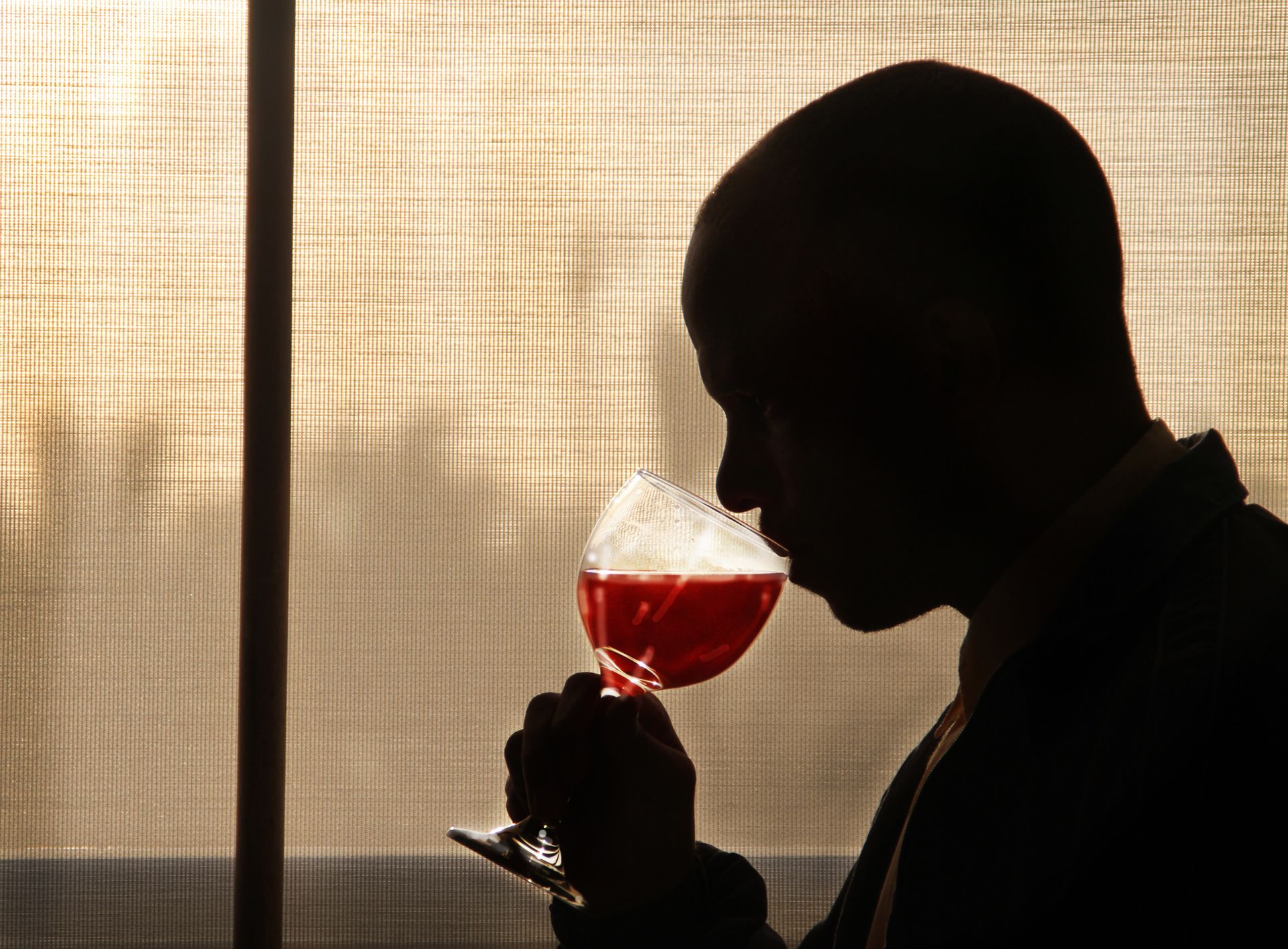
Cover Image: Talking about wine, maybe. Photo by Helena Lopes.

Leave a Reply