
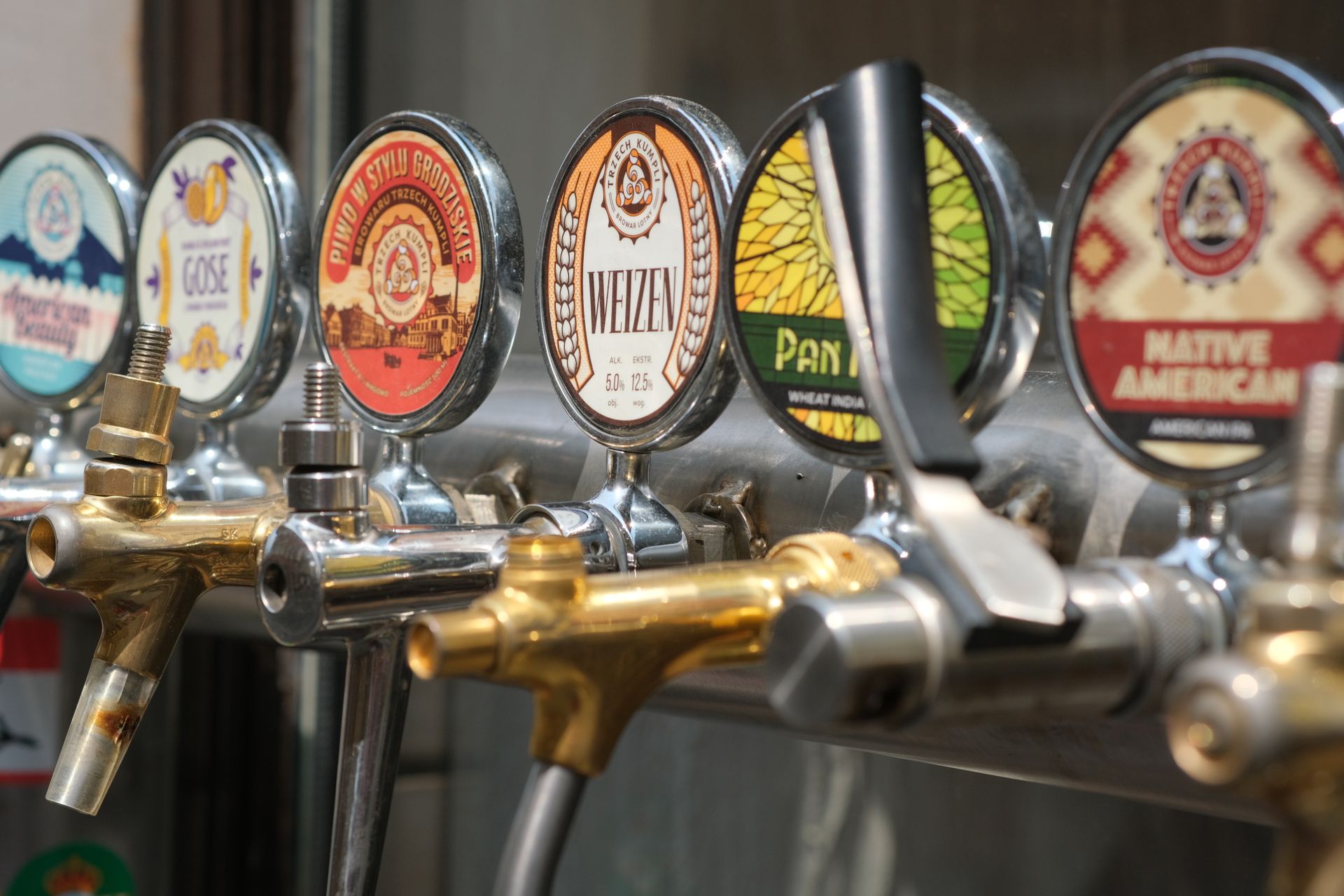
Why does beer dominate consumption even in major wine regions? Explore what the wine industry can learn from beer’s approachable, casual success.
No, I’m not turning this blog into a beer appreciation site, so you can relax. But there are a few things I want to say about ales and lagers, so I’m using this space to do it. For one, I really like beer. It was my drink of choice before I moved to Chile, and even after several years here, it was my preferred alcoholic beverage. Even now I crave a beer often, particularly with some foods.
Also, is there something the wine industry can learn about beer to reach more consumers? Why is beer consumed more than wine worldwide? And if I want to localize the problem to my country, Chile consumes nearly 60 liters of beer per capita, while struggling to reach 20 liters of wine. Curious for a wine-producing country, don’t you think? In California—another well-known wine region—the gap is even larger. The beer consumption per capita is similar to that of Chile, but wine consumption isn’t even at 12 liters per person a year.
But before we get to that, let’s talk about how good beer is.
My First Alcoholic Drink Was a Beer
Well, this is unfair because my grandpa was a beer-loving German who had no problem letting me taste it when I was a young boy sitting on his lap. It was just a sip, and I remember not liking it because it was too bitter. I probably imagined it tasting like soda or juice, so I was disappointed.
Later, my first drink when I knew what I was getting into, was also beer. At the time I was maybe fifteen and living in the hot and humid city of Guayaquil, in Ecuador. Beer was everybody’s drink of choice. The adults gathered around the TV to watch a soccer match on Sundays, while the children played nearby. My friends and I, thinking we were too old for hide-and-seek, would join our parents, who, in turn, would hand us a beer to share if we made the right comments on the game they were watching or the team they followed. It was a rite of passage.
From Bad to Good
Beer was what we drank when we met with friends. I can use that statement and be truthful for nearly three decades of my life. Yes, I drank other things, even wine, but I always came back to beer.
In Ecuador, beer was cheap. Not bad, just not very interesting. Tasty, and it did the job, but not a lot else going for it. Ideal to quench your thirst during hot evenings with friends. We drank them cold—very cold. In fact, the name we had for beers in Ecuador derives from their temperature: biela, from bien helada, well cooled, chilled.
At nineteen I went to university in the U.S., and there I kept drinking mostly beer. It was also cheap, worse tasting than the ones I was used to in Ecuador, but it still did the job. Now, I must be fair, some of the really inexpensive brands were awful, but most weren’t bad. Either way, at the time I was more interested in price than flavor.
$9.99 for a 30-pack? Yes, please.
I started drinking better after graduation. I began buying bottles instead of cans and started exploring different brands, focusing on quality instead of quantity. A few years later, when I went to culinary school, drinking became research. Yes, wine is important for the food industry, but beer was still my drink of choice for many years. Partially because it was also what many of my friends were drinking at the time, both those in the hospitality industry and those who were not.
In the mid-to-late aughts, the craft beer movement really took off in Chile, so I was exposed to better variety, and I no longer depended only on imported brews. Furthermore, while visiting friends in Cleveland, we frequented beer-specific gastropubs. They had great varieties in bottles and draft, and the food was phenomenal, which is fantastic, because food pairs great with beer.
Food Friendly
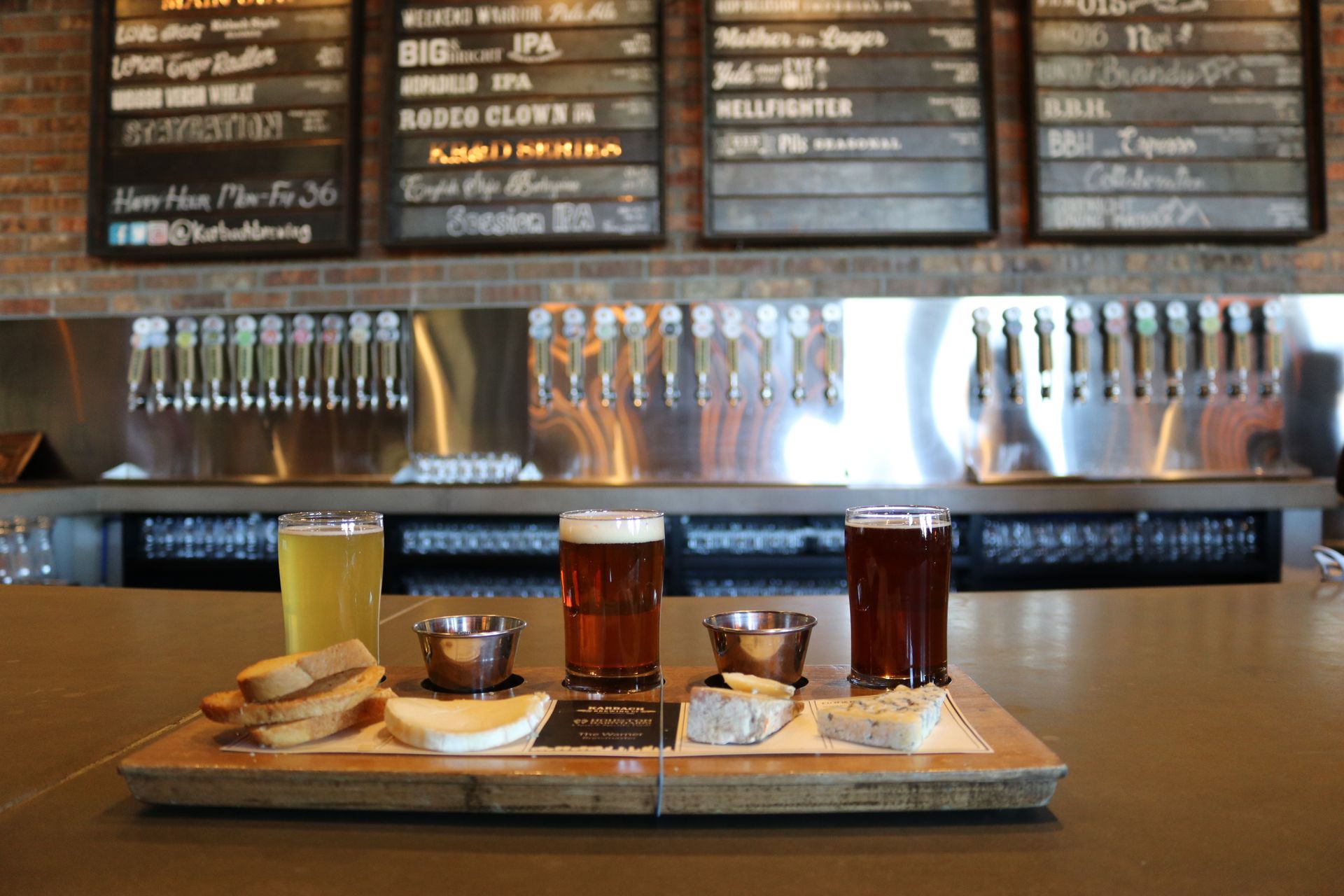
I worked as a server while in culinary school, and the restaurant had a small but well-curated cheese cart. It was our job to try to sell wine by the glass if the table got tempted by our cheese selection. We had a few wines to recommend based on the cheeses ordered; we also had a beer that went well with all of them.
Now, this was an upscale restaurant in New York, so we didn’t sell a lot of brews. Thus, even though our maître encouraged pushing for the beer, it was a difficult sale. It makes sense; we probably relate it more to spicy wings and fried ravioli than a cheese course, but I wouldn’t discard it when thinking about pairings.
Lighter lagers are a great choice when eating spicy—or spiced—food. Think Mexican, Thai, or Indian. They also pair well with seafood, like whenever you’re having sushi, ceviche, or steamed clams. If you go to heavier ales, pair them with pizza or barbecued pork.
Oh, and yes, I’m aware that I’m generalizing ales as being heavier than lagers, when that’s certainly not always the case. But I think you get the idea. The heavier the drink, the bolder the flavors it can match. You can even pair some desserts, like tiramisu, with certain kinds of stouts.
Why Is Beer More Popular Than Wine?
That’s a difficult question, and there’s not one single satisfactory answer to it. But among the many reasons, I want to mention a couple that could help the wine industry. First, though, we should acknowledge that the alcoholic beverage consumption has dropped significantly in the past few years, and that affects both industries. Beer, however, still holds the larger market share. How come?
Well, let’s go into some factors.
- It’s easier to drink. Wine can be sweet, tannic, or acidic, whereas beer is simpler, as long as you get past the bitterness. It’s also less alcoholic, and therefore smoother.
- It’s available at places where drinking is socially acceptable. How often do you see wine being poured at a sporting event?
- It’s offered in an individual container. With wine, you have to uncork a bottle with several servings, but you crack open a brew and it’s a single serving, which is far more convenient, and you don’t have to deal with leftovers.
- It’s cheaper. This is the big one, isn’t it? You can get a couple of six-packs of pilsner lagers for less than the price of a decent bottle of Cabernet Sauvignon. And a high-quality Trappist ale typically costs less than low-quality wine.
With better marketing and perhaps creative packaging, maybe the wine industry can reduce the gap. Wine is already offered in cans, and I foresee more brands using them in the coming years, for instance. But there’s a deeper problem.
Us.
Yes, us. We, wine drinkers. We, wine communicators. We’re also the gatekeepers. We like to think about wine as a luxury item. My social feeds are full of Champagne uncorkings and bottles of La Tâche or Sassicaia. Those are not accessible wines.
We also need to change the way we talk about whatever we’re drinking. Yes, wine tasted better in the appropriate glass. But do we need to look down at those who don’t have the proper glassware? I know of people who take their own wine glasses to restaurants. And God forbid they serve Sparkling in a flute! You don’t see that with beer. You get it in a plastic cup and everybody’s fine with it. Us? We even argue about cutting the foil above or below the lip of the bottle.
Wine is complex, and we not only embrace the complexity, but we also double down with our language and our elitism. If we want younger generations to join us with our passion, we need to simplify it and lower the barrier of entry. Yes, even if that means they drink wine from a can or add ice to their glasses.
The Last Drop
Beer is fantastic, and for many years it was my preferred beverage. The switch to wine came slowly. I had a couple of good wine moments in my life before moving to Chile, so the transition was natural. Here, it’s easy to fall in love with wine, and my friends—mostly—like it more than beer.
But every now and then I crave a pale ale in the summer or an IPA with my fried chicken. I’m not a hard liquor drinker, even if sometimes I enjoy a Scotch with a little ice and just a splash of water.
Today the beers available, both local and foreign, in the Chilean market are impressive, and I think maybe I should explore more of them. Would you like to see me talk a little about beers here? It would never get to more beer content than wine, of course.
Cover Image: Draft beer is great. Photo by Roman Biernacki.

Leave a Reply