
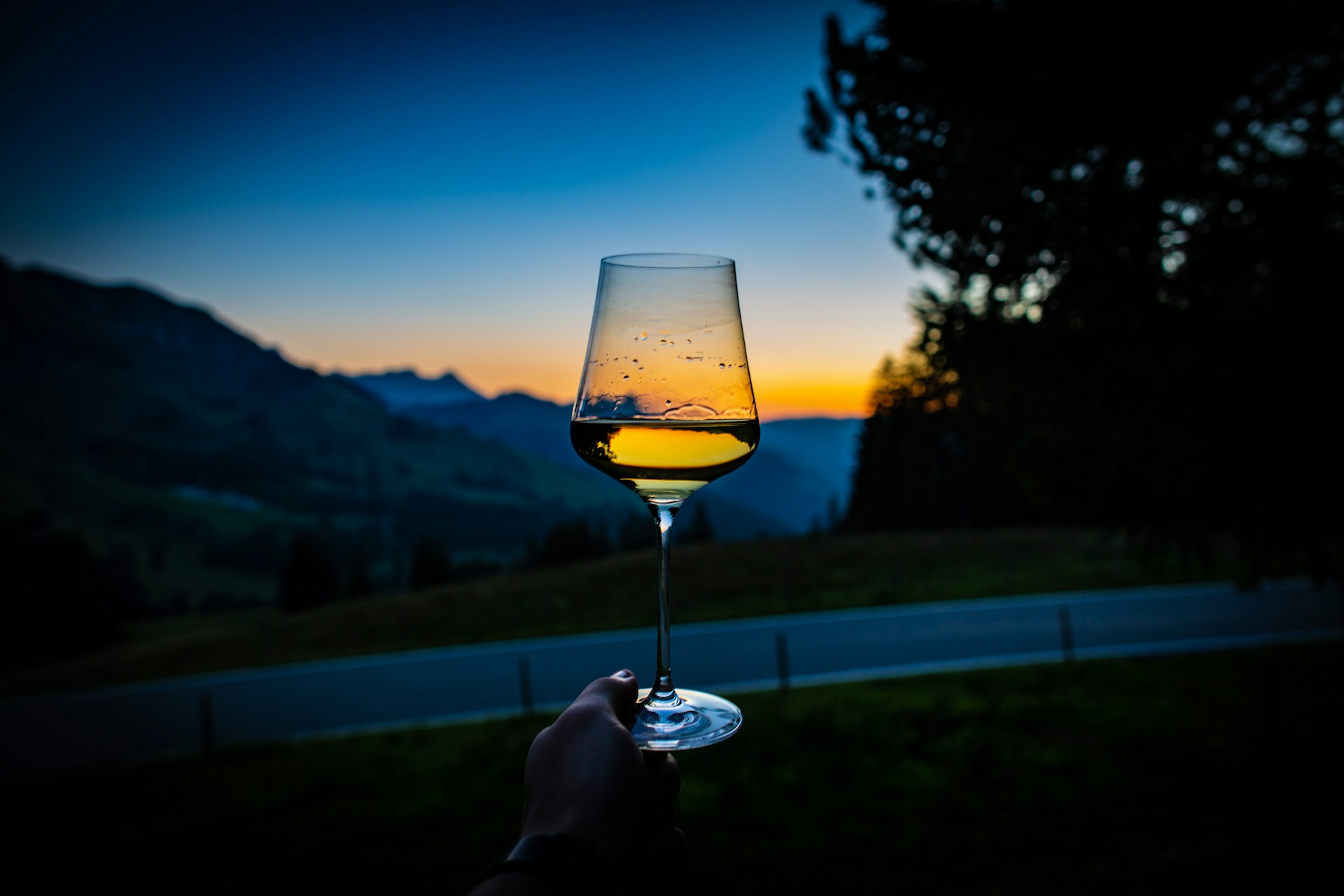
Think you knew all the wine jargon? Think again. Here are 9 wine terms explained for every aficionado who wants to level up their wine talk.
That’s right, there’s more wine terminology to know, so allow me to Electric Boogaloo my previous article on the subject. Today we’ll cover another 9 wine terms explained in plain language to get a better understanding of the lingo professionals use, and maybe even to learn something new!
But you know how we do it here:
I Learned These 9 Wine Terms to Impress My Boss. Sommeliers Hate Me!
Sorry not sorry.
But before we jump in, remember that these 9 wine terms build on what we covered last time, so think of this as your next level of wine fluency. Now let’s see those 9 wine terms.
Body
When we talk about body in wine, we mean density and mouthfeel. Even light-body wines should have a little weight[i] in them. Think skim milk. From that starting point, wines can only get heavier. Several elements impact the body of a wine. Some of them are:
- Alcohol is heavier than water, so the more of it the wine has, the more body you should expect.
- Sugar, or in this case syrup—you know, sugar dissolved—is denser than water. Again, the higher the sugar, the fuller the body.
- Tannins don’t necessarily make the wine denser, but they do influence how we perceive it in our mouth. A wine with more tannins will feel fuller. I’ve already covered tannins with a bit more detail in my previous “9 wine terms” article.
- Acidity kind of has the opposite effect. A wine with more acid feels lighter because it refreshes our palate.
Wine body tends to be divided into three levels: Light-body wines are your Sauvignon Blancs and Pinot Noirs. If you’re looking for medium-body wines, then you want Chardonnay or Merlot. And full-bodied wines are mostly red wines, like Cabernet Sauvignon.
Legs
A few of you might also know them as tears. When you swirl your wine, some of it sticks to the walls of the glass, and with time droplets of wine will start falling downwards. I’m sure you know what I’m talking about. It’s often mistaken as a sign of quality for the wine, but it really isn’t. Wine sticks to the walls because of its density. So, if we take what we just learned about the wine’s body, we can conclude that if the wine has more alcohol or more sugar, then it will stick to the glass and form thicker legs.
I also talk about this wine term when covering wine myths, in case you’re looking for a little extra (spoiler: wine legs are not a sign of quality).
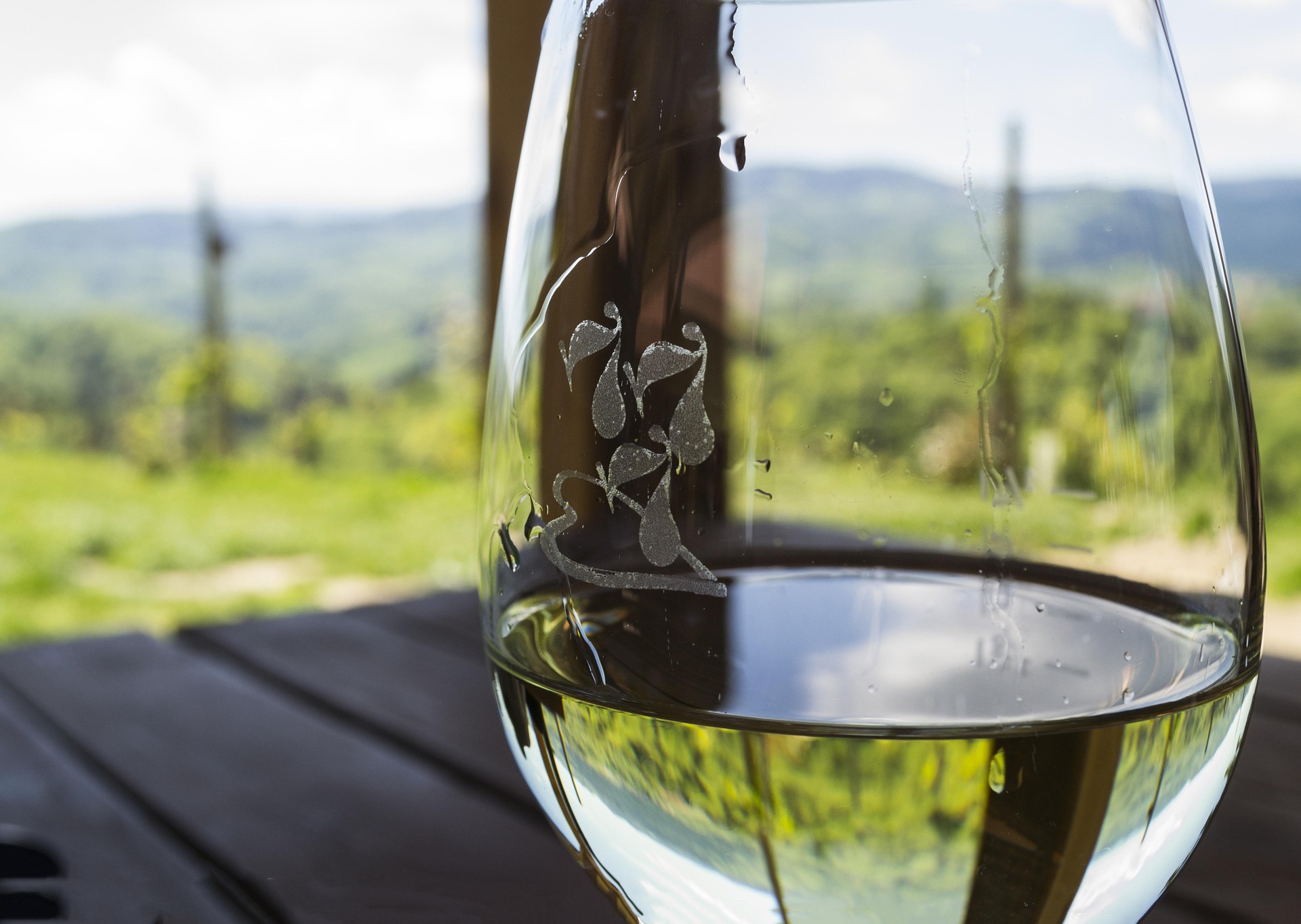
Photo by Daniel Vogel
Decanting / Sediment
Let’s break this wine term down. What is sediment in wine? Dead yeast and leftover grape matter, with time, will precipitate as solids to the bottom of the bottle. As will other particles that break down from the wine as it ages. What I’m saying is, then, that in red wines you will more commonly find sediment in older bottles. However, some winemakers prefer not to filter their wines[ii]. In those cases, sediment will be present even in younger wines.
Right, so what about white wines. You might’ve come across sediment there too. Well, the culprit there is tartaric acid. See, this acid is common in grape juice, and through the fermentation process, it binds with potassium (also common in grape juice) to form tartrate crystals[iii], which are dissolved into the wine, but will revert to crystal form at lower temperatures.
Are wine sediments safe? Yes, but they might feel uncomfortable in your mouth, which is why we decant older wines. To decant a wine, you pour it gently to another container, ideally holding the neck of the bottle over a light source to see the sediment approaching[iv] and therefore stop the process.
Now, in the process of decanting, you also introduce air to the wine, but that’s a separate matter. I’ve covered all of this and more in a dedicated article about decanting wine.
Aeration
Introducing air into wine is a common practice. As seen above, this can be done through the process of decanting, but there’s also specific wine gear available for that purpose, including pourers designed to introduce air while … well, while you pour. You can also do it by swirling the wine—either in a decanter or your glass—and even by just letting it sit for a while.
Why is it common? How can your wine benefit from wine aeration? Letting the wine breathe will mimic aging, except in a more restrained kind of way. It will soften the tannins in full-bodied wines, and release subtle aromas typically held back by the overwhelming fruit and oak. Just do me one favor, do not use a milk frother to aerate wine. I know it’s viral, but it’s too violent a method and you risk changing the wine’s flavor for the worst.
On the Lees / Sur Lie
For this wine term we must go back to sediment. Or at least to dead yeast cells. See, in the bottle, they are called sediment, but in the fermentation barrel, they are called lees. Winemakers might decide to do some—or all—aging with the wine in contact with those lees, because it will make more complex wines. The process adds body to the wine, as well as some interesting aromas, like bread and yeast.
If the winemakers decide to rest the wine on the lees for longer periods of time, they will frequently stir the lees into the wine, a process called batônnage (bonus word!) to avoid unpleasant aromas in the finished product. Of these 9 wine terms, sur lie is the one you’re more likely to find on the label.
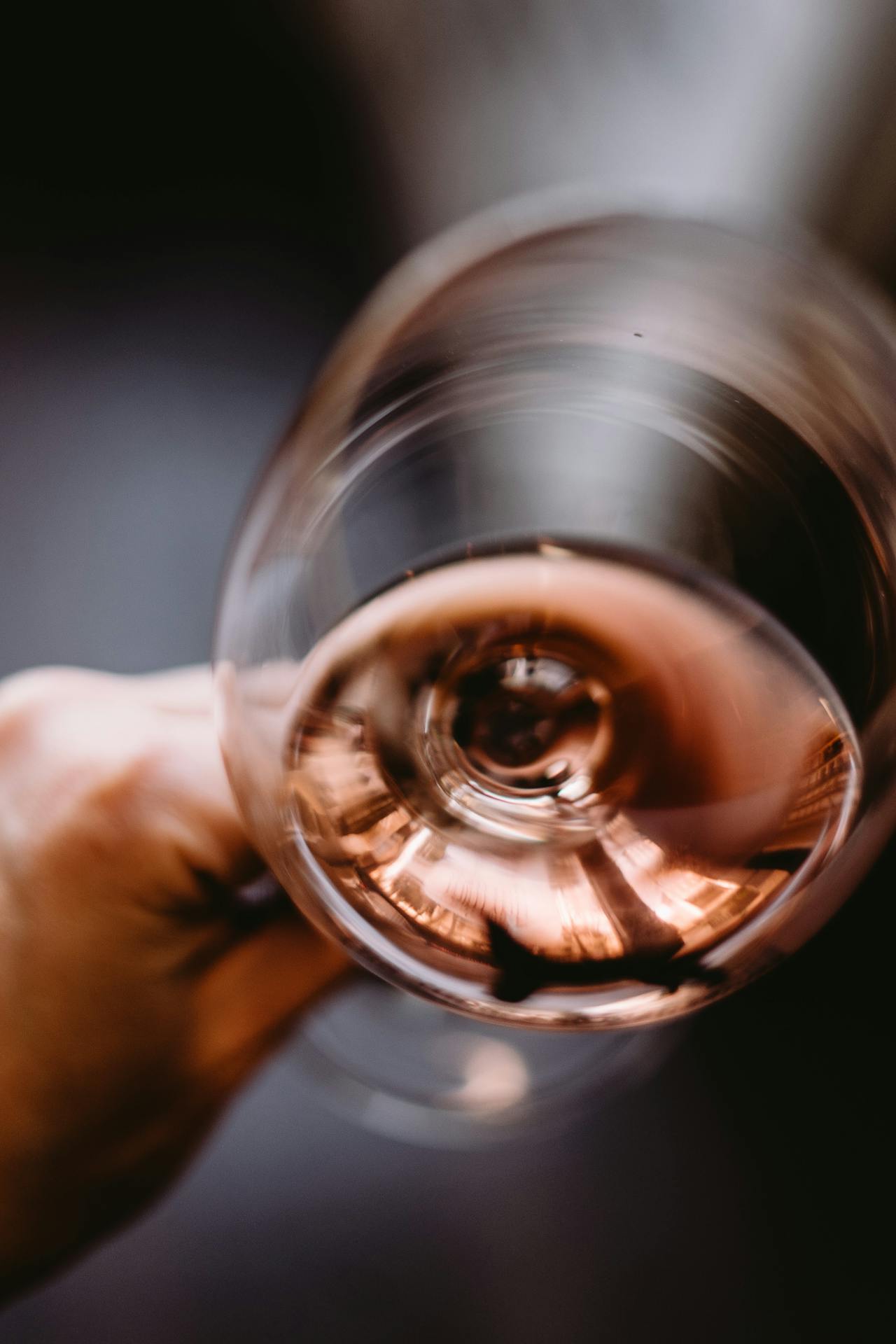
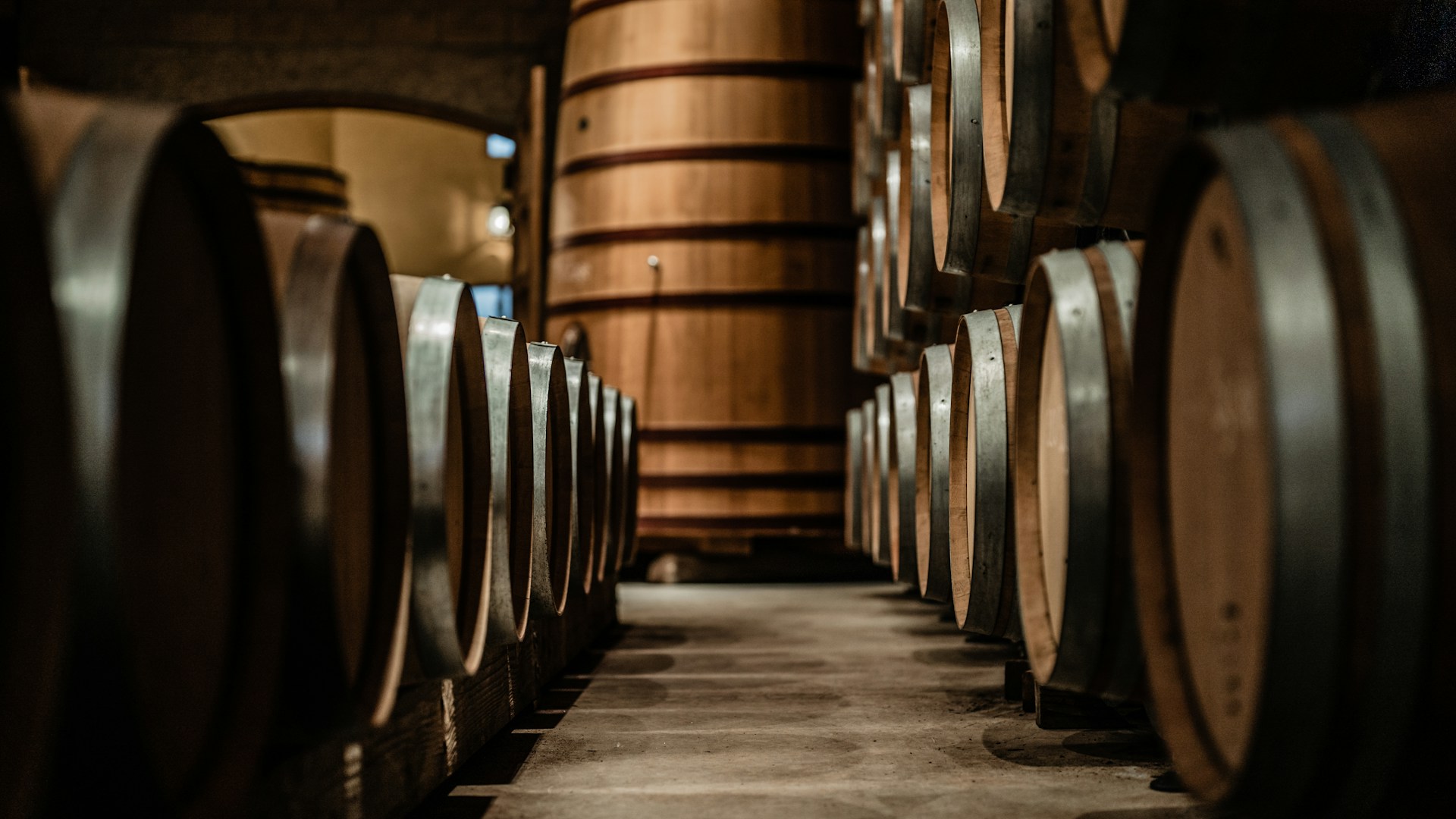
Photo by Maria Orlova
Malolactic (Fermentation)
A side effect from secondary fermentation is that malic acid turns into lactic acid. But that’s a lot of words. I might’ve gone too fast. Let me backtrack. After harvest, grapes are destemmed and crushed and left in vats with some yeast[v] to ferment. That’s the primary fermentation, where sugars and yeast turn into alcohol and carbon dioxide. After that, wine is transferred to a different container—cement, clay, or oak—to age. That’s the secondary fermentation.
Malic acid is the tartness of fruit. If you’re thinking green apple, you’re in the right track. In fact, malic shares the same Latin root as mela, the Italian word for apple. Now, let’s put those two together. Malic acid, during secondary fermentation, and particularly in oak, will turn to lactic acid. This is the acid found in dairy—think the tanginess of milk.
So, the result is a velvety texture and aromas that can range, depending on the grape variety, from butter to nuts and spices.
Rosé / Orange
These two are more styles of wine than terminology, so I’m cheating a little bit (but it’s my blog, so I cheat if I want to!) The thing about them is that they are both very similar. You’re probably more familiar with rosé wine, as it’s been popular for longer.
The color of the wine comes from the skin of the grapes. Red wines are, therefore, made with red—black, or at least purple-ish—berries. The longer the juice is in contact with the skins, the deeper the color of the wine will be. So, for rosé wines, skin contact is limited. In some cases, only a couple of hours, but it can go up to a day or so. With that, you also get lighter-body wines with low tannins.
What about orange wines, then? Those are white wines made without removing the skins. For rosé wines, skin contact is brief, but for orange ones, it can be much longer—months, even!
I feel like these two styles are gaining popularity, especially orange wine. We’ll have to wait and see if it’s just a passing fad or if it’s here to stay. I like orange wines, so I hope the trend continues.
Balance
By now, you probably see how interconnected these 9 wine terms are with the ones in my previous article: body, acidity, tannins, and balance all talk to each other.
When is a wine balanced? It really depends on who’s drinking it. But to generalize, winemakers are looking for roundness in their wines. They don’t want a note to fall flat nor one to spike up. The balance is between tannins, acidity, bouquet, mouthfeel, sweetness, and alcohol level.
When rating wines, critics look for their version of balance, but it still has to be relative to the style. It would be unfair to rate a Sauvignon Blanc poorly because it doesn’t have strong tannins.
Discerning palates might quickly spot an unbalanced wine, but if you’re like me, and therefore not an expert, you’re just looking for something that doesn’t belong. Whatever feels off-key, you know? Maybe it’s a little to acidic? Maybe the alcohol burns your throat a bit? Or, maybe, you find it to be in harmony, and then all is good.
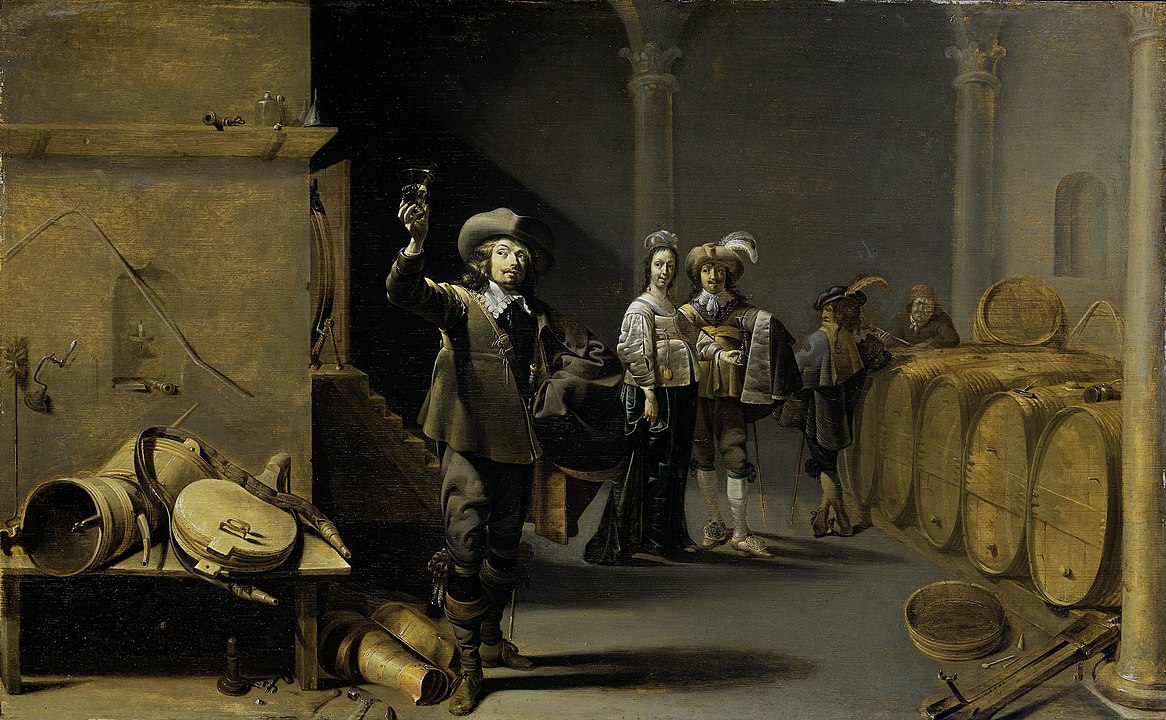
De Wijnproevers by Jacob Duck (1640-1642)
Finish
After you taste the wine, you will always notice that some of the flavor lingers. That’s what we mean when we talk about the wine’s finish. Depending on how long we can still taste it, we will say that the finish is short, medium, or long.
Then you can also talk about something special (or awful) in the aftertaste. Some flavors only come after a while, and if the wine has a long finish, you might discover them there!
The Last Drop
Here you go. 9 wine terms to expand your knowledge and vocabulary. Some of them were a bit more advanced than the ones in my last article, but that’s the point, right? We get progressively better. I you missed part one, check out 9 Wine Terms Every Wine Afficionado Should Know here.
Let me know in the comments below any other other wine term I might’ve missed. Maybe if there’s enough, there will be a Return of the 9 Wine Terms in a future article!
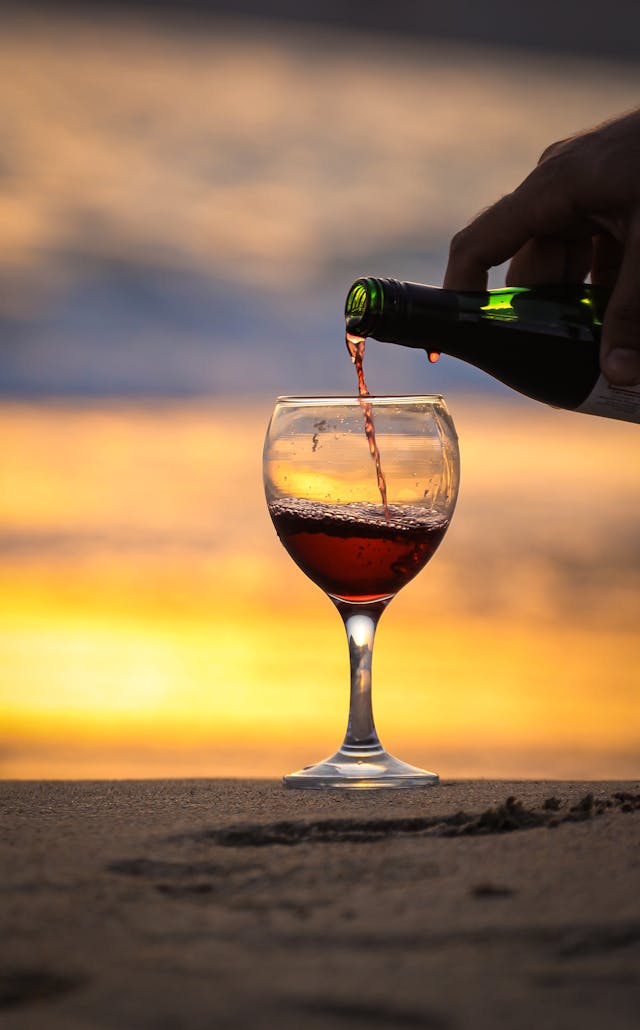
Photo by Duran Ekiz
[i] We talk about weight, but that’s more a mouthfeel than an actual mass measurement.
[ii] They sacrifice texture for flavor.
[iii] It’s common to remove them prior to bottling. The solids are crushed and then sold as tartaric acid.
[iv] Incidentally, you might’ve noticed that some wine bottles have shoulders. They will also catch some of these sediments, which is why Bordeaux wines—typically age-worthy and prone to sedimentation—are sold in this type of bottle.
[v] Natural yeasts are found in the grapes and their skins, but often additional yeast is added for standardization and more control.
Cover Image: Learn These 9 Wine Terms to Better Enjoy Your Drink. Photo by Daniel Vogel.

Leave a Reply