
Explore the fascinating and bizarre history of wine in Christian art. From Noah’s vineyard and biblical excess to sacred blood, discover it’s symbology.
Wine was central for the civilizations that flourished around the Mediterranean and the Black Sea. So important, in fact, that it was often depicted in their art. Wine’s significance was inherited by early Christians, and for them it became an integral part of their religion, taking form in the sacrament of the Eucharist.
A note before we start seeing some art; I’m talking about wine in Christian art, but I will also be showing images depicting Old Testament stories, therefore part of the Jewish tradition. However, Christian painters also used those themes because in a mostly illiterate society—like Europe was for most of the Middle Ages and beyond—pictures visually depicted Bible teachings.
Some of those teachings include wine. Let’s start there.
Old Testament Teachings in Christian Wine Art
There are a couple of allegories from the Old Testament that became popular motifs known for featuring wine in Christian art. I’m talking about the stories of Noah and Lot.
Noah Makes the First Wine and Gets Intoxicated
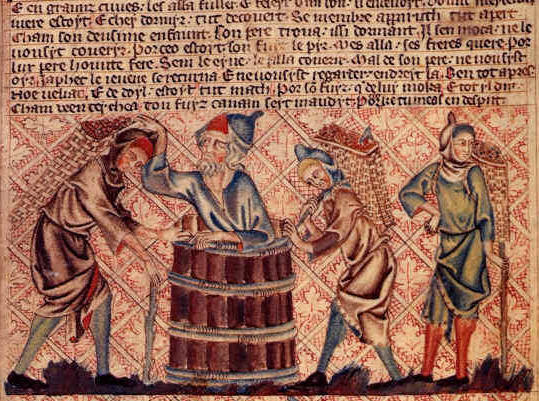
In the Bible, Noah, of Great Flood fame, is credited with planting the first vines and producing the first wine. It’s interesting because between the creation of Adam and Noah, his great-great-great-great-great-great-great-grandson, there are no mentions of alcoholic drinks.
It’s also interesting that Noah invented wine and got drunk immediately after the flood. PTSD much?
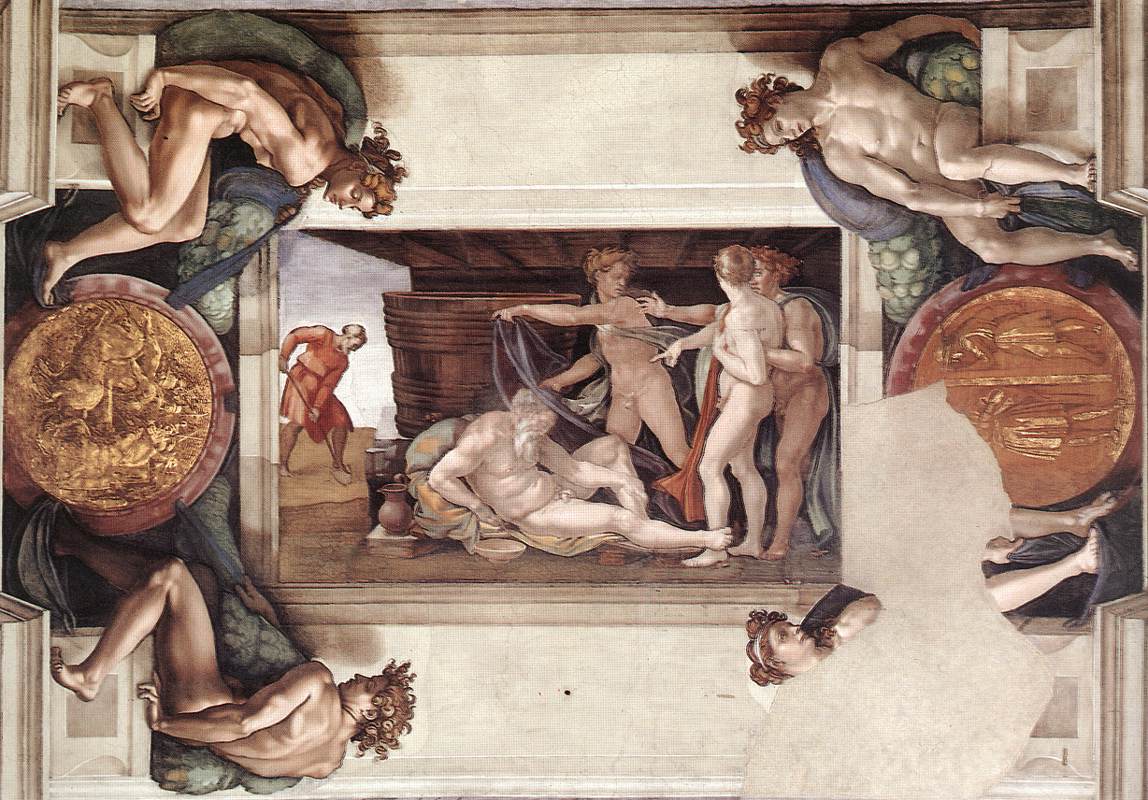
Now, in the introduction I mentioned biblical teachings, and Noah getting drunk is a great opportunity. Apparently, he didn’t just get drunk; he got stupid drunk, undressed, and passed out. Some of us have been there, haven’t we?
Ham, one of Noah’s sons, discovers him drunk and naked and feels ashamed. He and his brothers cover him up, but a hung-over Noah is not happy and curses Canaan, Ham’s youngest son, to be “the lowest of slaves”.
I’ll let you decide if that judgment seems too severe. It might be that it’s not only about Ham seeing him naked; this may imply misconduct, whether sexual or because perhaps Ham was mocking his father. Or maybe Noah was just dehydrated and cranky. In any case, Christian wine art uses the story as a cautionary tale: even the righteous are not immune to sin, and it’s virtuous to practice temperance.
Lot Gets Seduced with Wine by His Daughters
I know. Gross! But still, we must talk about it. It’s another important depiction of wine in Christian art.
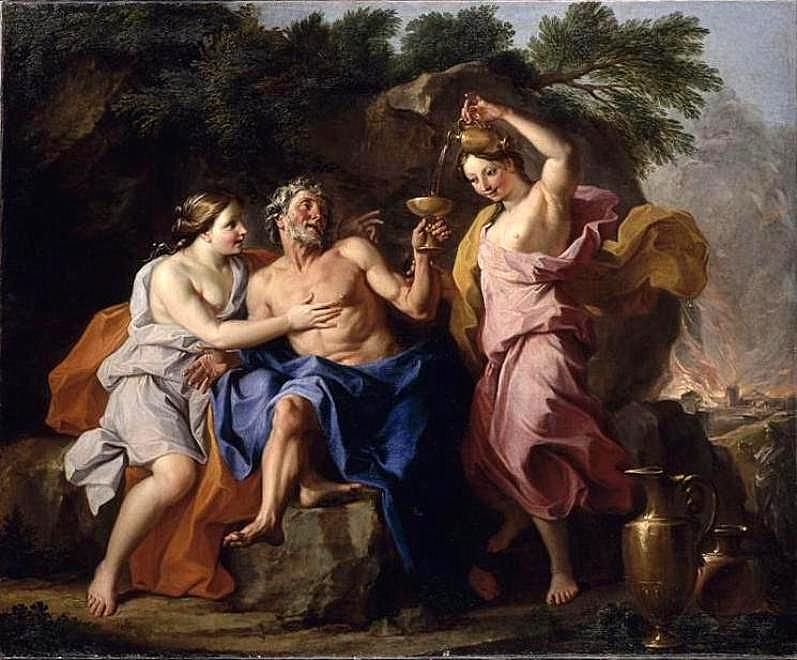
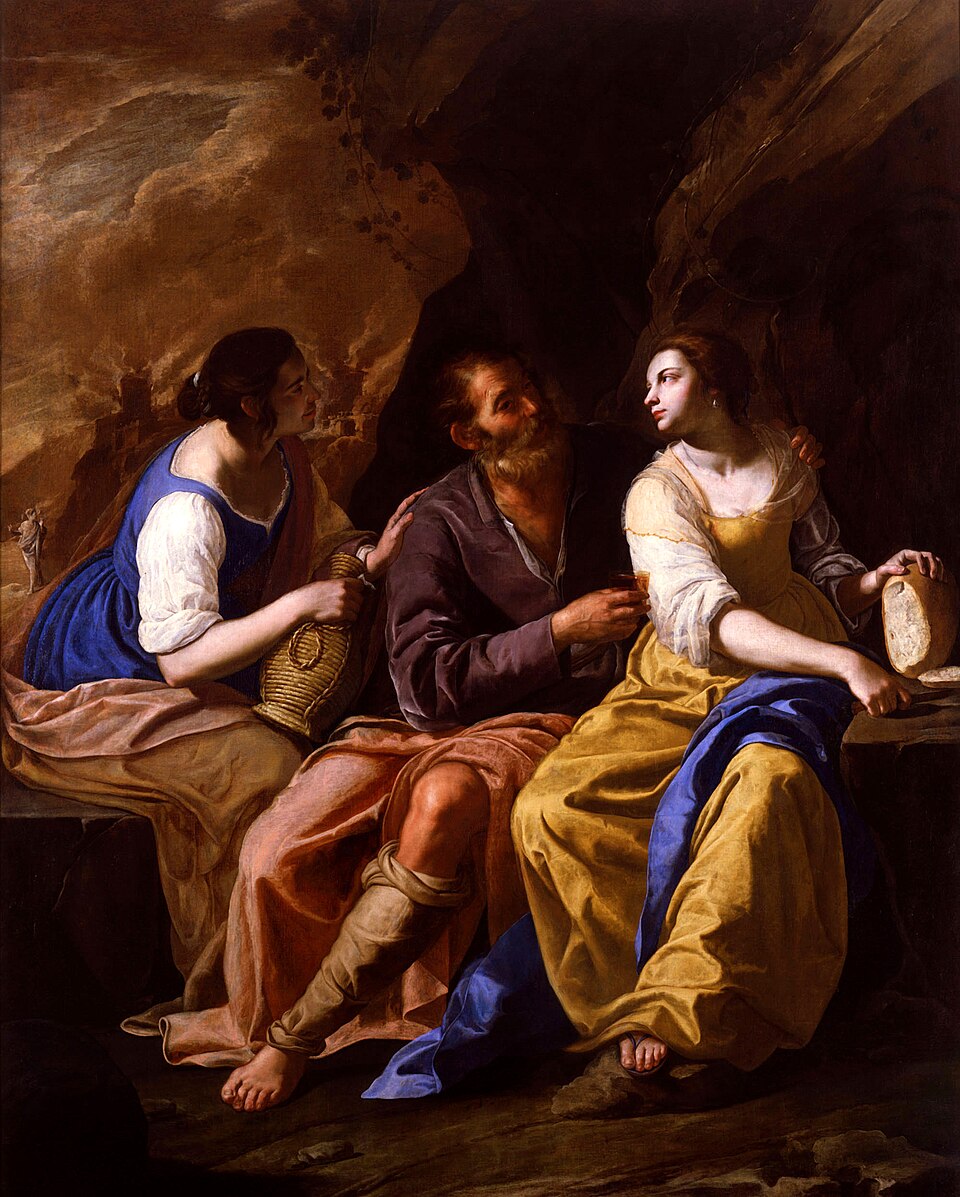
Lot and his daughters have escaped the destruction of Sodom and taken refuge in a cave. The daughters witnessed fire and brimstone consuming the city and lost their unnamed mother who turned to salt. They believed that they had just survived a Great-Flood-sized cataclysm and were the only survivors in the world. Therefore, worried about their family lineage, they proceeded to get their father drunk to seduce him and get impregnated,
I told you. Gross!
I’m not entirely sure what the lesson here is. Don’t drink and get seduced by your daughters? In any case, it’s another warning; another call for moderation. The positive? Artists loved this motif for their Christian wine art.
Wine in Christian Art Proper: The New Testament
Now we get to the stories in the Bible relating to the life and miracles of Jesus Christ. And it’s about a miracle that I want to talk about here, because it was his first.
The Marriage at Cana
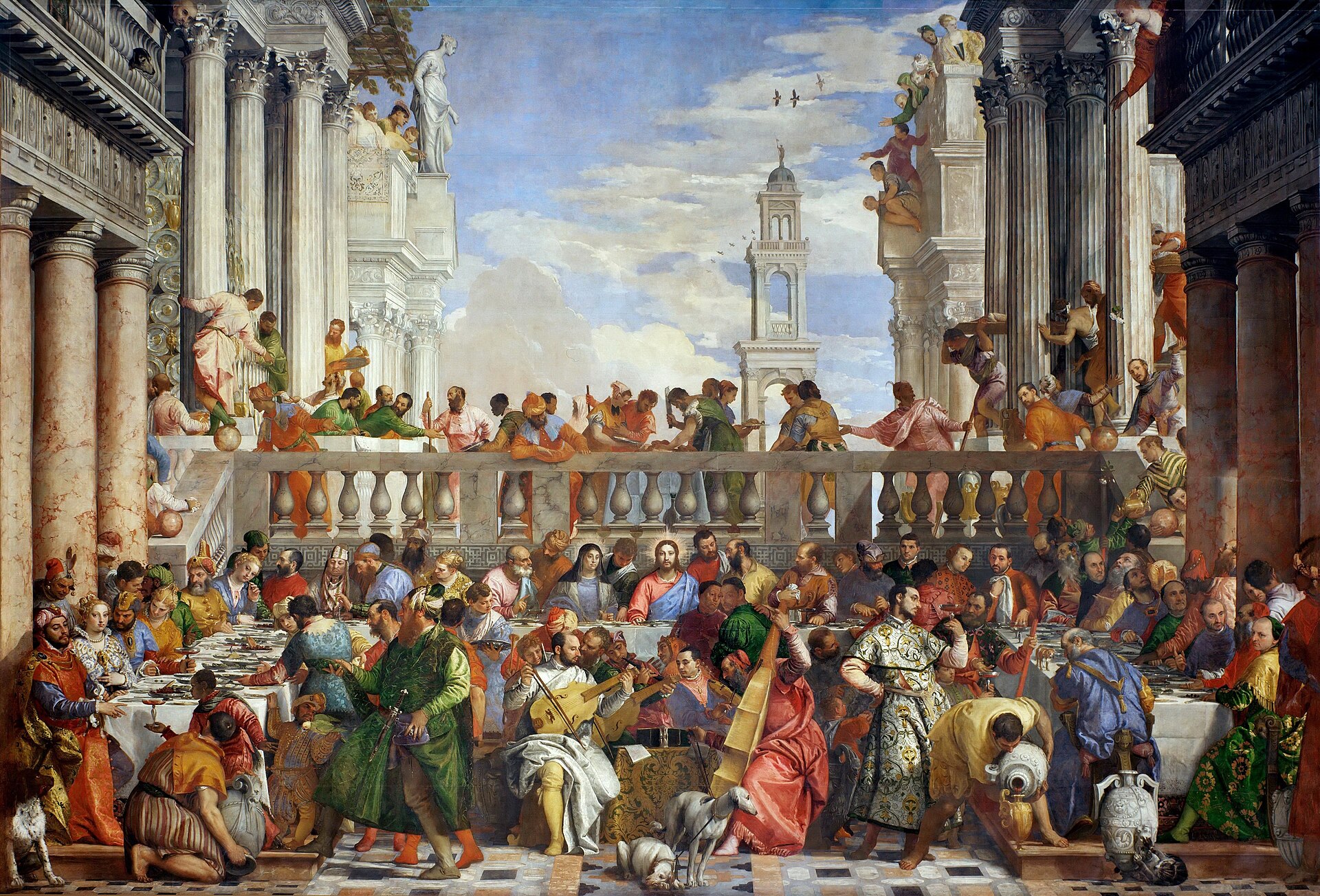
I find it lovely that Jesus’ first public miracle was not curing the leper or raising Lazarus from the dead. No, his first miracle was turning water into wine.
We all know this one, I hope. It’s a popular miracle. But some context might be needed.
Jesus was at a wedding with his mom and at least John, who tells this story in his gospel. At one point during the feast, the wine ran out. Mother Mary came to Jesus to ask for help, which he granted by turning water from the purification ritual into wine. John was impressed, as the miracle revealed his divinity; it certainly helped to get his disciples to believe in him.
Now, why did Mary come to Jesus for help? It’s been speculated that it was somebody from her family that was getting married, which would explain why she was worried about the wine running out. It might’ve made her and her family look inhospitable, a major faux pas during their times.
Christian wine art uses this theme not only to show his first divine miracle, but also because the wedding at Cana symbolizes an acceptance of marriage as sacred (why else would Jesus be there?) and that wine is ok outside of the Eucharist (for instance, it goes great with food). But there’s something else.
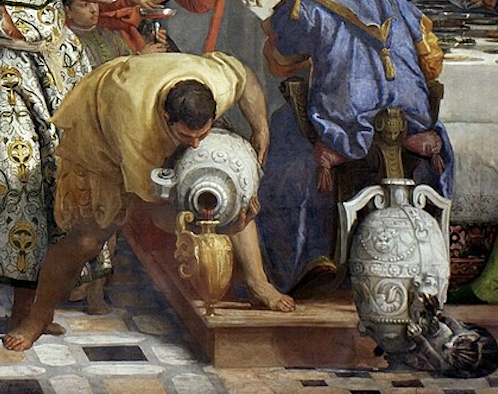
Jewish purification rituals involved cleansing their bodies with water. The stone vessels they used to store that water were exactly the ones that Jesus asks for. The water that filled six jars, representing the old tradition, was turned into wine, representing the new one. Clever, isn’t it?
Wine, however, has a deeper meaning in Christianity, and Christian wine art hasn’t shied away from it.
The Blood of Christ: How Christian Wine Art Has Dealt with It.
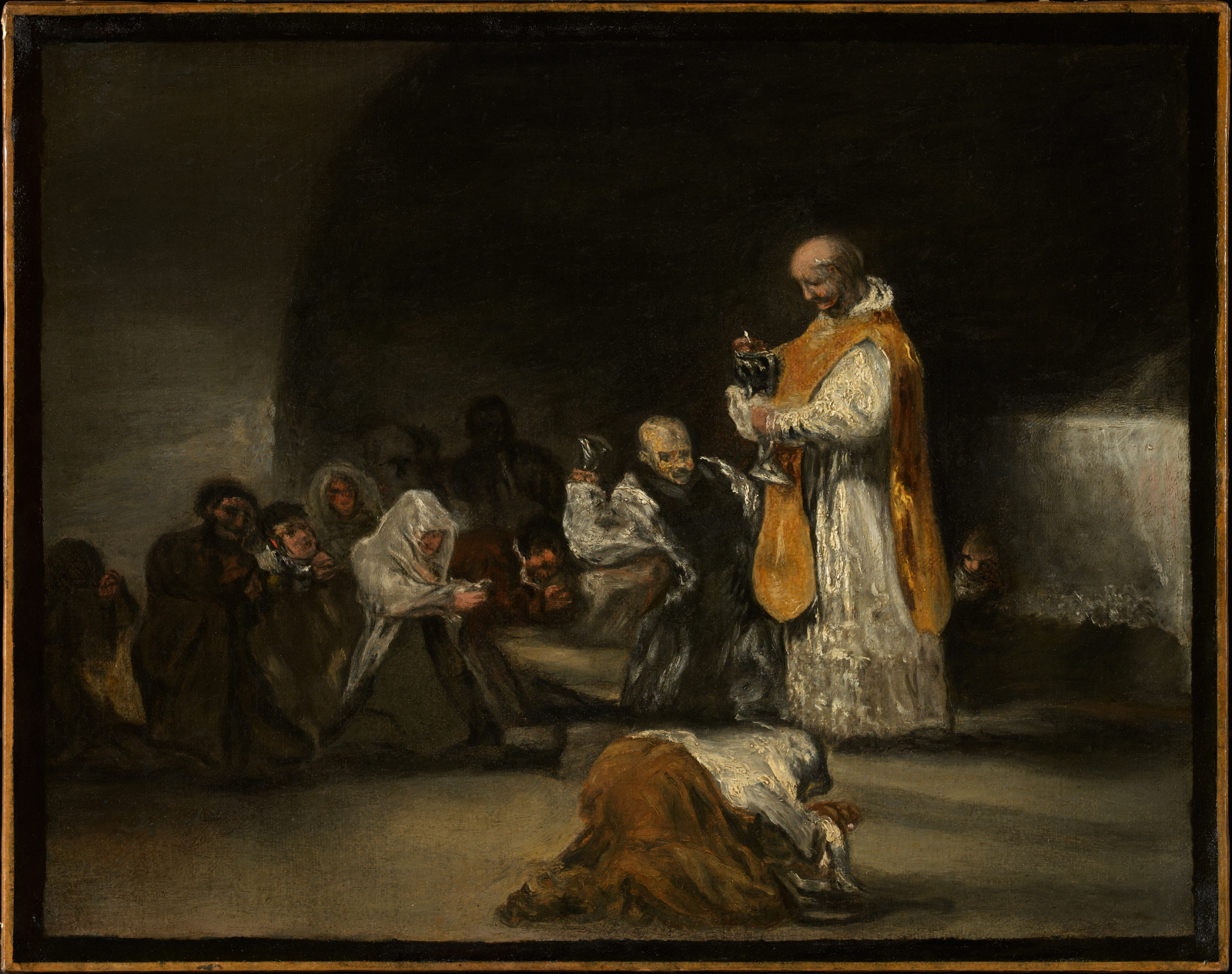
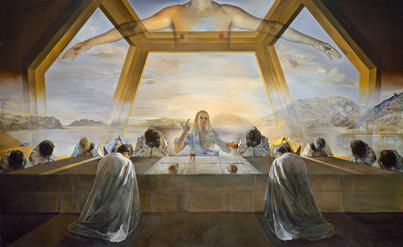
Wine, for Christianity, has a deeper meaning than simple forewarnings about excess and a party anecdote. During the Last Supper, Jesus offers to share bread and wine, as his own body and blood respectively. Whenever you see wine in Christian art, expect deeper symbolism.
There are wonderful depictions of the Last Supper, the more famous of which is probably the one by Leonardo. However, it’s a popular motif, and most artists from the Middle Ages until the 18th century were likely commissioned a version of it, and to this day they’re still depicting it.
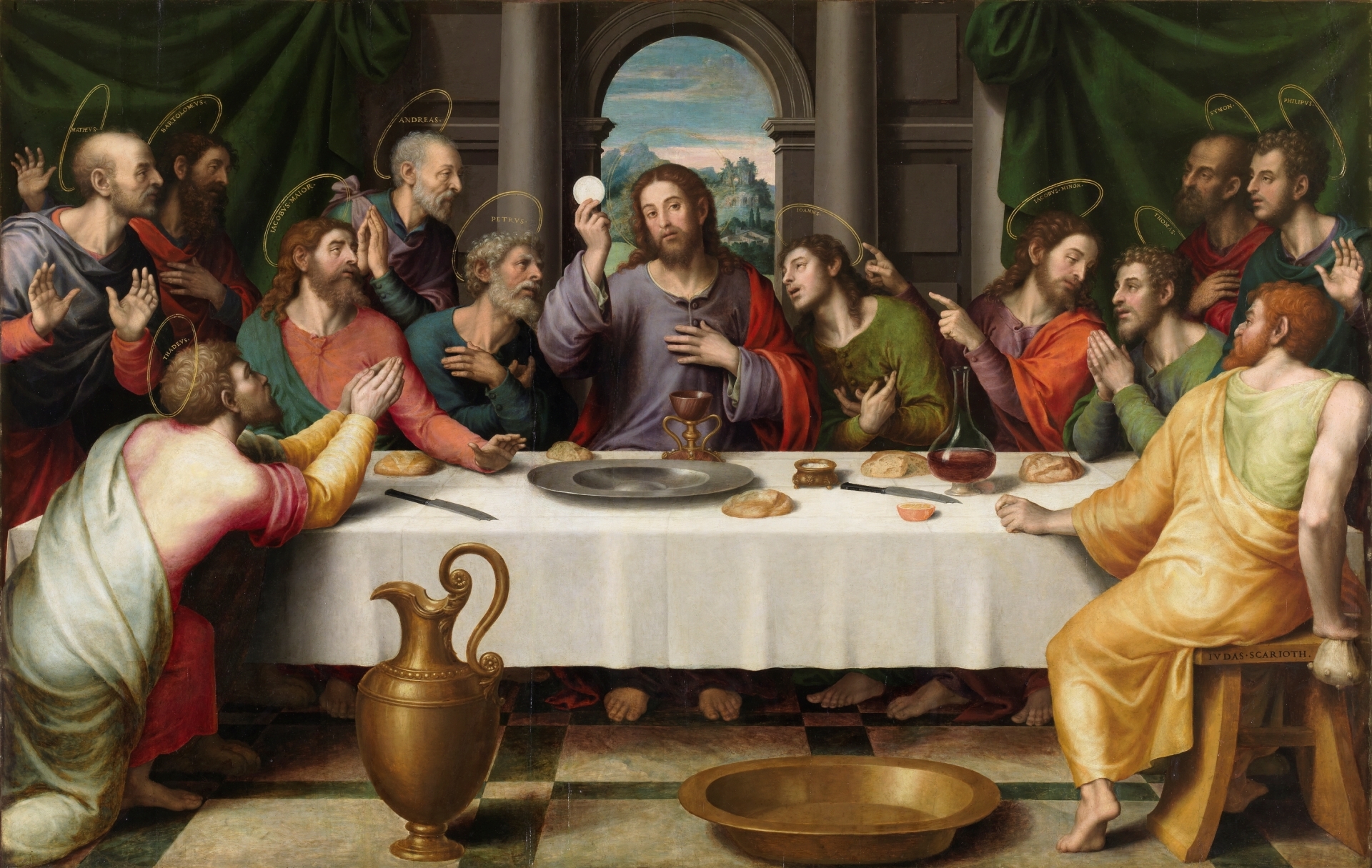
The Last Supper, however, is not about wine in Christian art. Wine—and bread—are present and important, but there are other stories to tell. One about Judas betraying Jesus and another one about Peter denying knowing him thrice. Artists tend to portray Jesus shining with divine light and talking, rather than him breaking bread and sharing his cup.
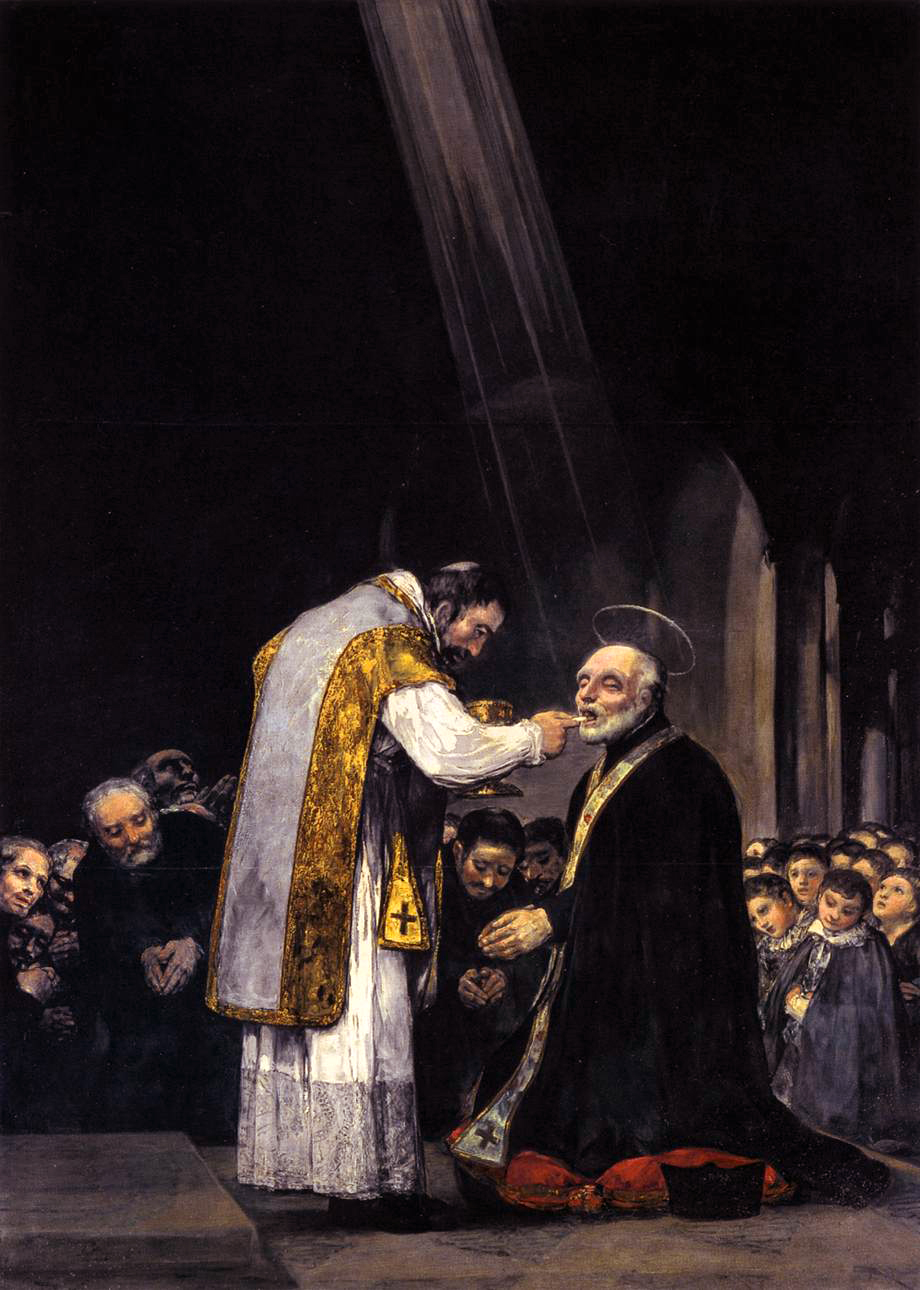
However, artists have used the rite of the eucharist as inspiration, using this moment when they want to illustrate a Christian mass. A priest holding the unleavened host up high with both hands is the image that first comes to mind when I think about mass, so maybe the paintings and other artistic representation have done their job.
The Strangest Christian Wine Art Motif: Christ in the Winepress
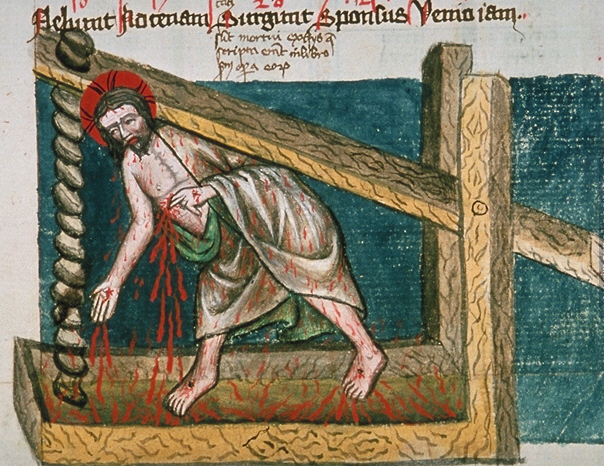
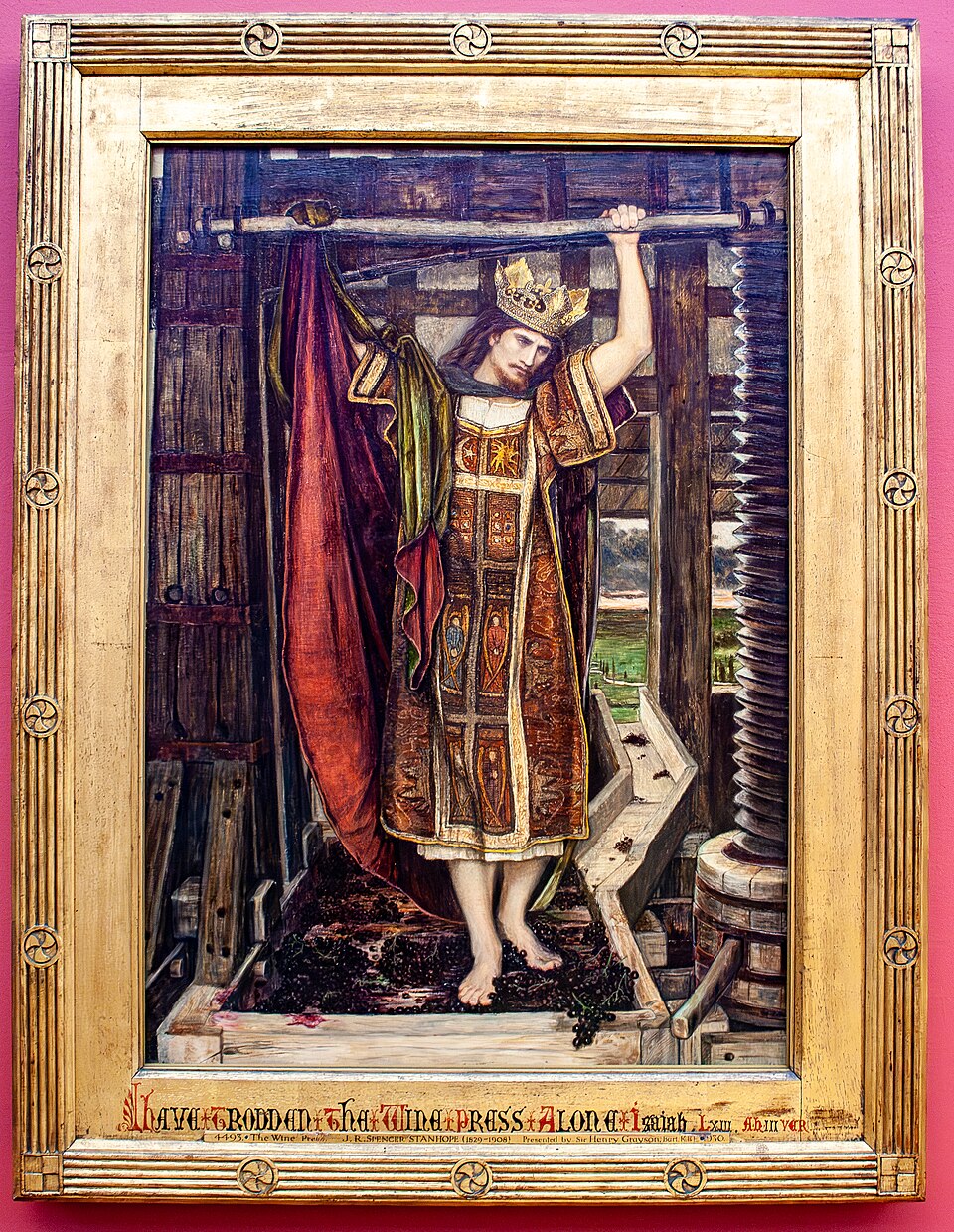
During my research for this topic, I found a theme that was too weird not to include. I’m talking about the mystical winepress, which shows Christ being pressed, like grapes would, in a winepress, sometimes with the cross as the pressing mechanism. This creates a visually striking link between Jesus’ blood and wine, the epitome of wine in Christian art.
The subject might seem morbid today, but it shows in a graphic and easy-to-understand manner that the blood of Christ is the same as the wine in the Eucharist. Besides, in John 15:1, Jesus says “I am the true vine, and my father is the gardener.” I hadn’t been aware of it, but it was popular during the Middle Ages and all the way up to the 18th century, particularly in Northern Europe after the Reformation.
The Last Drop
Wine shows up a lot in Christian art, which makes sense, as wine was already important in the region, and is mentioned often in the Bible. Wine in Christian art is prolific and interesting. It teaches us caution in the Old Testament and reveals that it was sacred all along in the New one.
I enjoy Medieval and Renaissance art; therefore, I also like Christian depictions. I understand that, in Europe, churches are also museums. I’m used to seeing wine as a theme in art, but I hadn’t ever thought about it much. That is, until I began researching for this article. Now, I can’t unsee Christ pressed so that we can collect his blood/wine in a chalice, and I can’t unlearn that excess is dangerous and might lead to you cursing your grandchildren or impregnating your daughters.
Do you have a favorite depiction of wine in Christian art? I would love to see it!
Cover Image: The Last Supper, by Salvador Dalí.

Leave a Reply