
Ever wonder what ancient wine was actually like? Step back 8,000 years to explore wine’s uncertain origins and how our ancestors drank it.
When I uncork a wine, as I sip it with my friends, if the question of where this wine comes from pops into my head, curiosity typically only goes as far as to search the label for a wine region and a vintage. However, I’m here today to go beyond that and explore the history of wine, from its uncertain origins to the end of Classical Antiquity, before the Middle Ages.
More than ever, it feels fitting to say that we’re going to start at the beginning. But do we truly know when or where that was?
Where Does Wine Come From?
That’s the thing: we don’t really know. We have archeological evidence that it originated in the Caucasus over eight thousand years ago. But here’s the catch, that’s the archeological evidence that we’ve found. Could there be older proof waiting to be discovered somewhere else around the Mediterranean? What if it’s lost to history, never to be found? Best we can do, at the moment, is that chemical traces of wine have been identified in the Caucasus dated around 6000 BCE.
There’s also the problem that the Caucasus is a large area with territories comprising four modern-day countries: Southern Russia, Georgia, Armenia, and Azerbaijan. The archeological wine traces I mentioned above are in Georgia, but do we really know that it wasn’t produced in one of those other countries first? To complicate wine history, the first commercial winery was found in Armenia, dated 4000 BCE. We don’t know for sure they weren’t fermenting wine there before Georgians. Or maybe the Azerbaijanis did it first?
And then there’s the Chinese, right? Wine history is no different than other histories, and when in doubt, it’s likely that the Chinese did it first. I’m half joking, of course, but it isn’t a lie that fermented fruit wine was first made in China nearly a thousand years earlier than those Georgian traces above.
And I know that we could sit here and argue all day whether wine made from fruit other than grapes should be called wine. You might not think so, and that’s fair, but I’ve had delicious blueberry wine, fermented the same as the grape variety. I think it’s at least correct to say that it’s probable that the Chinese pioneered the technique but didn’t have the grapes to make wine the way most of us understand it.
What Was Ancient Wine Like?
I guess the answer to that question depends on what we understand by ancient. For many of us, it probably means Greek, Roman, or maybe Egyptian. But, as we’ve seen, archeology points to a much older origin. So, let’s start with that wine history.
Surprisingly, wine in Ancient Georgia and Armenia was made and drunk in a very similar way to how we do it today: grapes were harvested and pressed by foot. The resulting juice, along with skins, seeds, and even the stems went into large clay amphorae-like vessels, which were similar but not the same in Georgia and Armenia. Wine history points to Georgia coming first, so we’ll go with the qvevris they used, mostly buried underground to keep the wine cool. Natural yeasts in the environment were responsible for the fermentation. After this process was nearly complete, the qvevri was closed with a wooden or stone lid and sealed with wet clay or beeswax. Lastly, the wine was left to macerate for several months.
I just described a process that you might recognize if you’ve had Georgian amber wine today. We’re lucky that it has remained mostly unchanged over the millennia. You might also be familiar with a lot of the described winemaking if you’re down with natural wines, as they also spontaneously ferment with ambient yeast and some are also aged in clay amphorae (though, to be honest, oak is more common).
Mesopotamian Wine History
The history of wine is complicated because we don’t know enough about how early wine was consumed, but we believe—based on archeological evidence—that it was drunk as is, just like we drink it today.
Mesopotamia is a historical region situated in Western Asia, primarily in what we call Iraq today. Mesopotamians are usually associated with beer, which they brewed and was the drink of the common man. However, wine was also produced, often with imported grapes because the area is too hot to grow them, and was reserved for the nobility, diplomatic gifts, and religious rituals. Siduri, goddess of winemaking and brewing, is even an important character in the Epic of Gilgamesh.
Mesopotamians liked their ancient wine sweetened with honey and blended with aromatics. They also had regulations in place for how wine was traded and distributed to avoid fraud and to encourage fair-trade practices.
But let’s get back to Ancient Greek and Roman winemaking, because more information survives from that era of the history of wine.
What Was Ancient Greek and Roman Wine Like?
In the history of wine, the more things change, the more they stay the same. I’m oversimplifying, but Neolithic Caucasian winemaking knowledge spread to Mesopotamia, the Levant, and eventually reached the Phoenicians and the Greeks. Ancient wine, or at least winemaking, remained largely unchanged through the Neolithic Period, the Bronze Age, and even the Iron Age, when it reached Ancient Rome at around the second century BCE.
Think about it: six thousand years and the process to make wine remained basically unchanged: grapes harvested when ripe, crushed by feet, fermented with natural yeasts, and aged in an amphora.
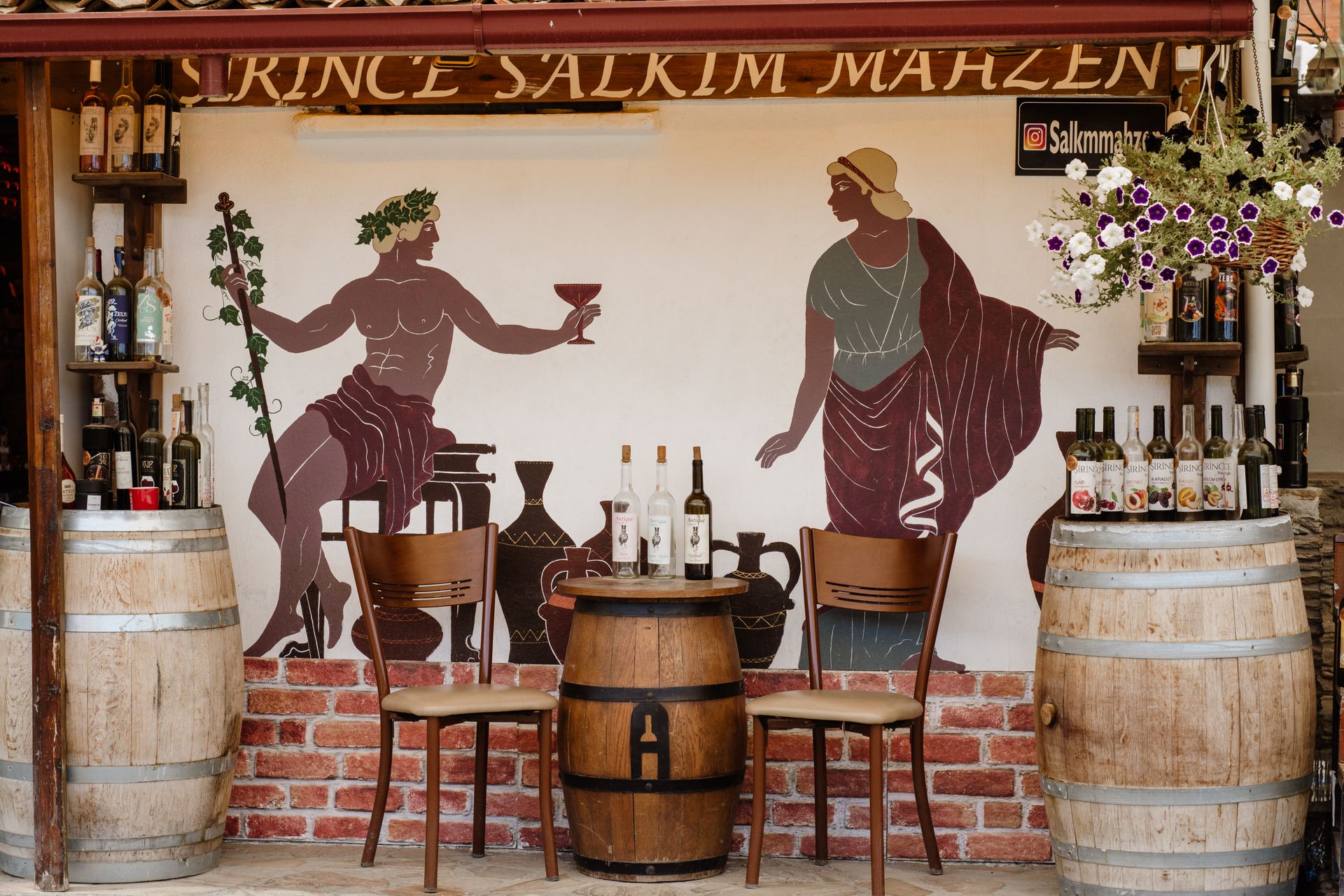
Both Greeks and Romans liked their ancient wine sweetened and spiced, similar to the Mesopotamians. They also always diluted it because they felt that drinking it undiluted was uncivilized and therefore “barbaric.”
Greeks drank wine during symposia, which were parties dedicated to poetry, politics, and philosophy, so the purpose was not getting drunk. This sounds like a great time, except that women were not permitted to attend. Incidentally, they were not allowed to drink alcohol, either.
Romans were more inclusive, and when their empire grew, so did wine in their society. For the first time in the history of wine, we have writers discussing wines by specific origins and vintages. Some of the high-quality wines they produced were aged in clay amphorae for up to twenty years.
Lastly, the Romans, as they expanded, took their wines and their vines with them. A lot of the ancient wine in Europe was introduced when the Empire settled there, kickstarting their winemaking tradition. Therefore, some of the wine that later would make it to the New World also has Ancient Roman roots.
The Last Drop
Wine history is fascinating because of how little the process of making it has changed since it was first made eight thousand years ago. Sure, now everything is more controlled, and the industry has evolved in containers to age wine (though we still use amphorae), and to store it (I’m talking about bottles and closures—whether natural cork or something else).
I can’t believe it’s taken me nearly two years to finally sit down and try to write about the history of wine. Moreover, I can’t believe that when I sat down to write this piece, I intended to cover wine history from its Caucasian origins to modern-day winemaking. What was I thinking? As soon as I began talking about Mesopotamia, I realized I needed to cut it shorter and end it with ancient wine—anything before the Middle Ages.
Just like with my series on wine in art123, I might split wine history into three articles, but no promises. I don’t really know how much I have to say about medieval wine and if it’s worth combining it with the Renaissance.
Footnotes
- The Evolution of Pre-Christian Wine Art. ↩︎
- Wine in Christian Art. ↩︎
- Beyond the Sacred: Wine in Secular Art. ↩︎
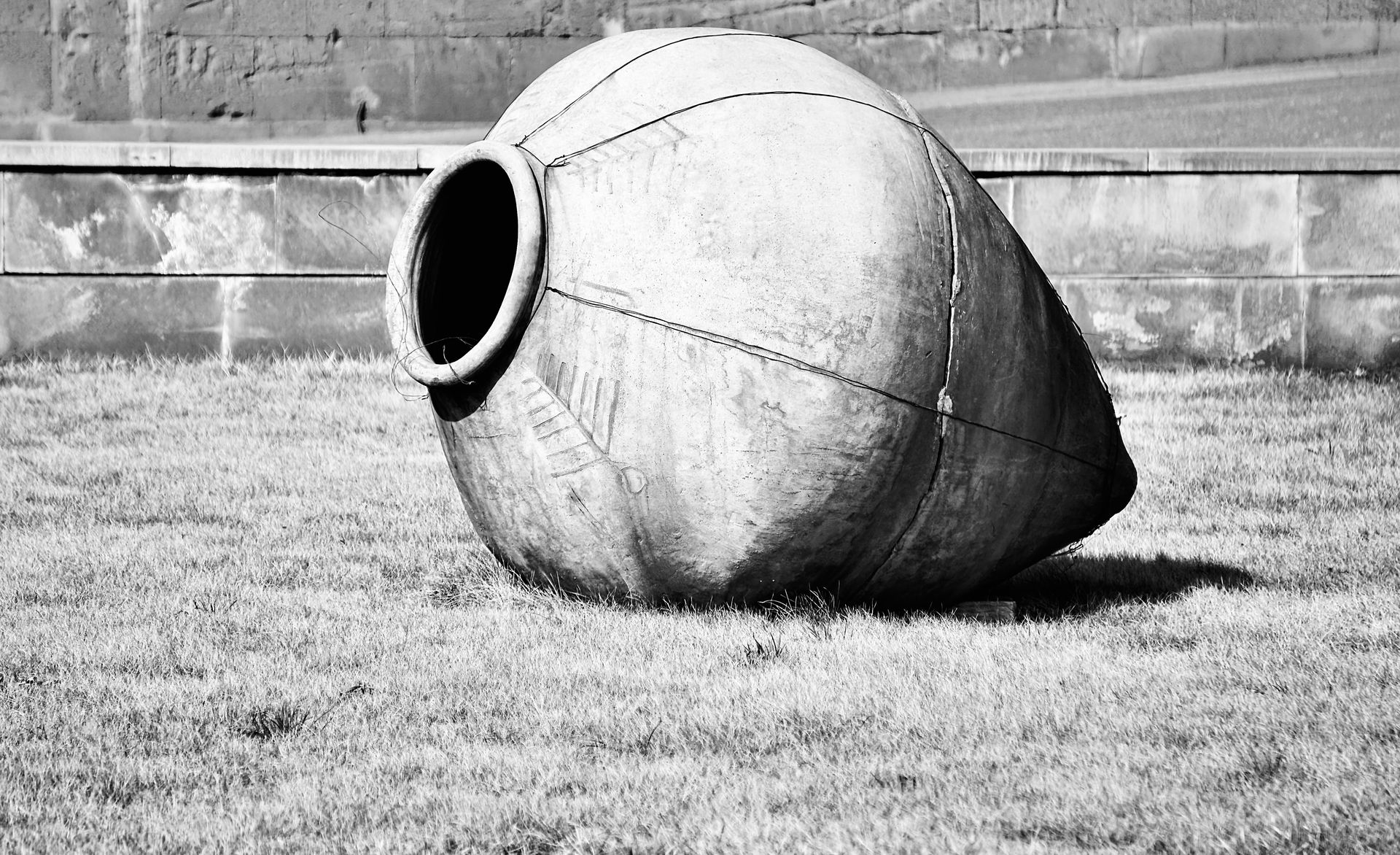
Cover Image: Ancient wine was aged and stored in clay amphorae. Photo by Anna Romanova.


Leave a Reply