

We focus on what’s inside, but wine bottles tell a story too. Explore shapes, sizes, and two common myths that drive wine lovers crazy.
I couldn’t blame you for overlooking wine bottles. I often do so myself. After all, it’s all about what’s inside, isn’t it? However, wine bottles are interesting, and it’s well worth spending a few minutes talking about them. We’ll look at shapes and sizes, and even delve into a couple of myths.
Wine producers pack their wines in all kinds of vessels. Some are plastic[i] and others are aluminum[ii], but the ones we’ll be talking about are glass bottles. Let’s get into it!
The Different Wine Bottle Shapes
There are more wine bottle shapes than there are wine styles, so I will only be covering a few of the more popular ones[iii].
The Bordeaux Bottle
This is a cylindrical bottle with straight edges and high shoulders. As you can imagine, this bottle shape is popular in Bordeaux for their red blends. Elsewhere, winemakers prefer this shape for bottling Cabernet Sauvignon and Merlot. In Chile, this is also the most common bottle for Carménère.
I mentioned the shoulders in these bottles. They look smart, but they’re also functional. The sharp edges are designed to trap sediments in the shoulders when pouring. Perfect for those bottles you’ve been storing long-term[iv].
The Burgundy Bottle
This wine bottle shape gets its name from Burgundy, another French wine region. As you can imagine, Chardonnay and Pinot Noir productions elsewhere around the globe are also bottled in…well…bottles with this shape. I’ve also seen it used for other light-bodied reds, like Cinsault or País. This shape is recognizable because it has a long neck and slopping shoulders.
I believe the Bordeaux bottle is still the more popular shape. However, I’ve seen several producers in Chile opting for the Burgundy bottle. Syrah, for instance, is commonly found in Burgundy bottles. Is it the same elsewhere? Let me know in the comments below!
Bonus: The Champagne Bottle
I’m adding this shape under the Burgundy bottle shape because they’re visually similar. They differ because sparkling wine bottles are thicker and heavier. They need to be. See, sparkling wine bottles have a lot of pressure due to the CO2 inside them. Therefore, the bottles need stronger walls to resist it. These bottles also have deeper punts, those depressions at the bottom, because they help strengthen the glass[v].
The Germanic Bottle
So, I’m using one of the two names this wine bottle shape goes by, and it’s only so I don’t use only French wine regions. The other name is the Alsace bottle. These bottles are tall and thin, and their shoulders slim and gentle. This is the typical Riesling bottle, but also the one used for many German whites. Albariño from Rías Baixas and Vinho Verde is generally also bottled in a Germanic bottle.
Like I mentioned above, there are plenty of other shapes, so I’m sorry if I didn’t mention your favorite. But shape isn’t alone in naming bottles. Let me introduce you to bottle sizes and their biblical names.
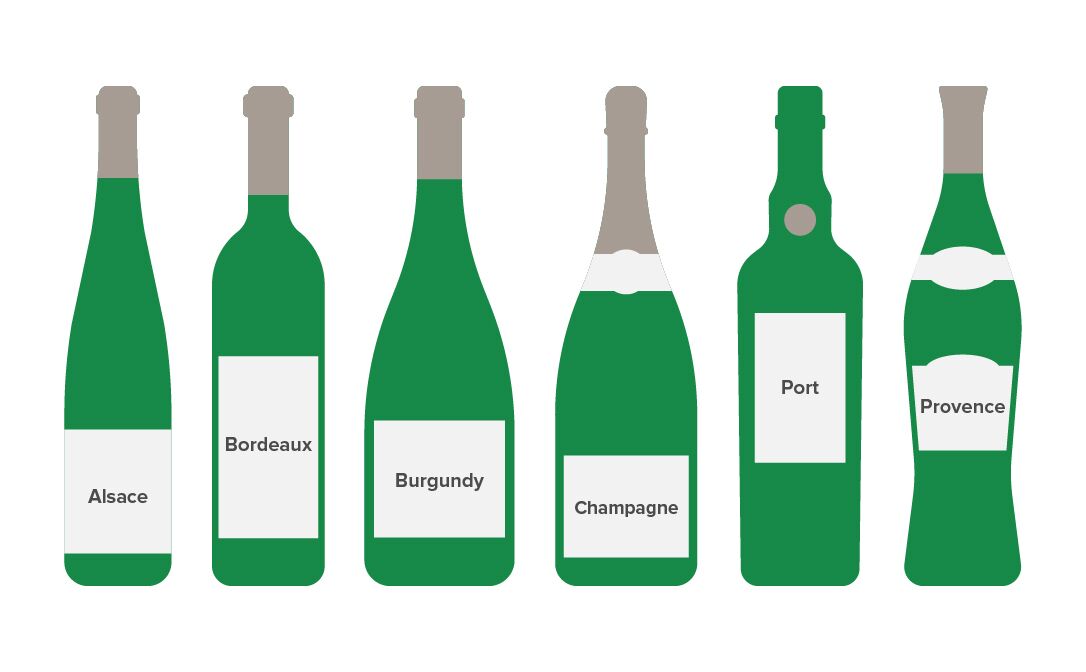
Image by WSET Global
Wine Bottles Come in More Sizes Than You Realize
You probably know of three wine sizes. There’s your regular 750 ml bottle, one that’s half of that, and a larger one that’s double the capacity of the regular one. You likely even know the name of that one. It’s a Magnum. You might also be aware that there are a couple of additional sizes larger than that, right? Well, there’s a lot more than “a couple”. In fact, there are over 10 total wine bottle sizes.
The regular wine bottle size was standardized in the 19th century to facilitate trade[vi]. I’m sure it helped that the common 225-liter barrel can hold exactly enough wine to fill three hundred 0.75-liter bottles. The rest of the bottle sizes have volumes related to the regular bottle size. Here’s some of the bottle names according to how much wine they hold:
- Piccolo – 187.5 ml. The smallest size available.
- Demi – 375 ml. Half the volume of a standard wine bottle.
- Standard – 750 ml. Your everyday bottle.
- Magnum – 1.5 l. Two times the volume of a wine bottle.
- Double Magnum – 3 l. Equivalent to two Magnums. Duh.
- Jérobam[vii] – 4.5 l. The first biblical king’s name. Corresponds to 6 standard bottles.
- Impériale[viii] – 6 l. Contains 8 standard bottles.
- Salmanazar – 9 l. Equivalent to 12 standard bottles.
- Balthazar – 12 l. The same as 16 standard bottles.
- Nebuchadnezzar – 15 l. Equal to 20 standard bottles. Also, hard to pronounce.
- Solomon – 18 l. Holds 24 standard bottles.
It’s usually believed that the smaller sizes hasten the aging process, and that the perfect size for long-term storage is the Magnum. However, there’s not a lot of evidence to back those claims, and though more research is needed, it’s also unlikely.
Experts believe that the biblical names are used because they symbolize greatness and prestige. A tribute to their worth. The worth of both the kings and the wine alike, of course. I’m not certain why they chose difficult names to remember, however.
But enough with wine bottle facts. Let’s move on to a couple of myths.
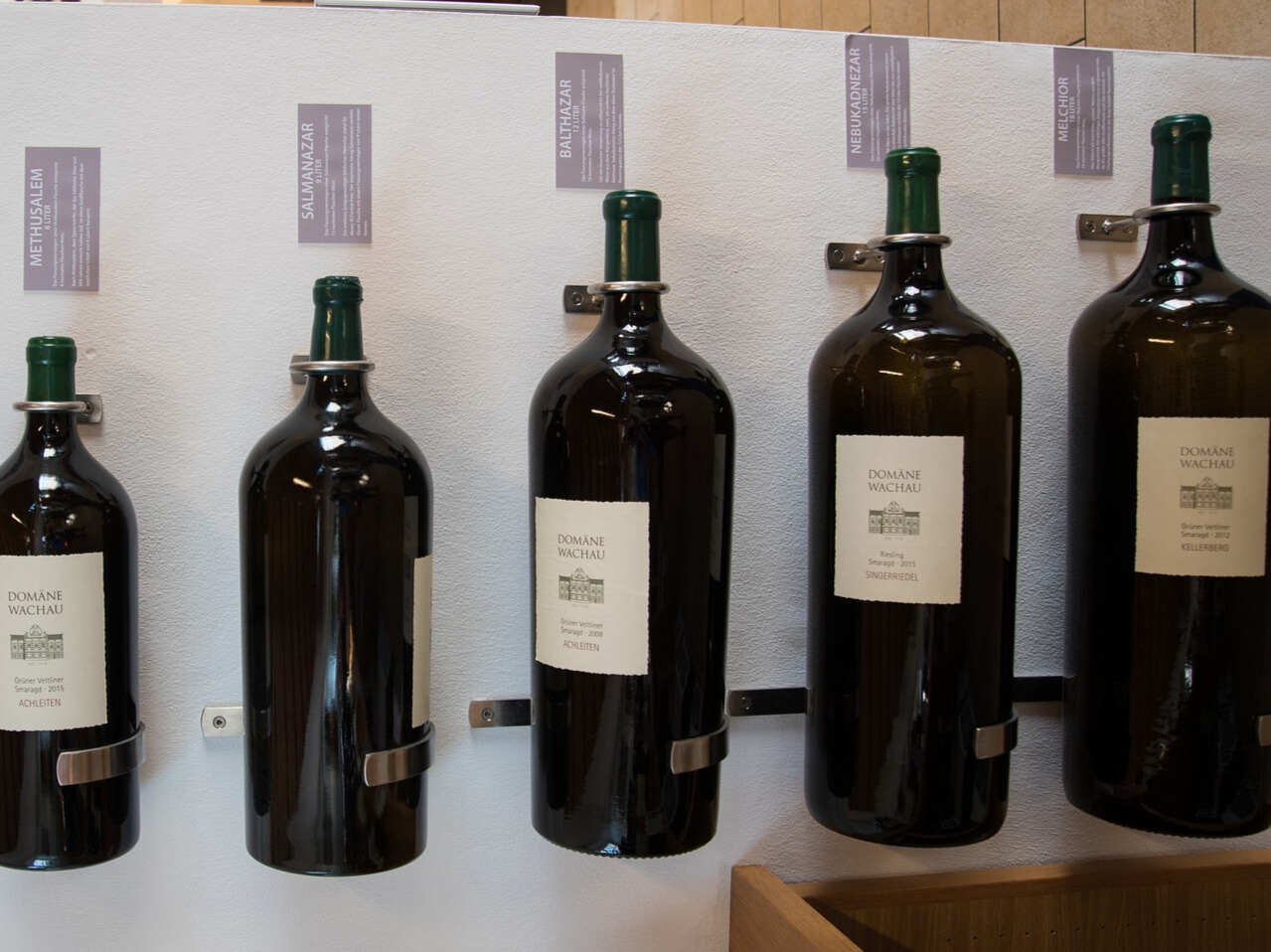
Photo by bogitw
Debunking Myths About Wine Bottles
I want to cover two of them because I hear them often, and they drive me crazy, and not in a Fine Young Cannibals kind of way. They both have to do with quality.
The Deeper the Wine Bottle Punt, the Higher the Quality of the Wine
I didn’t talk a lot about the bottle’s punt when I mentioned it above, because I was going to go deeper (ha! get it?) in this section. The punt is that concave indentation at the bottom of the bottle, though some bottles don’t have one. What gives?
So, when bottles were hand-blown, the punt added stability to the bottle. When bottles were artisanal, they were also uneven, and could easily topple over, so the punt was needed to help with balance. Today, most wine bottles are made industrially, and stability is no longer an issue.
As you’ve seen, there’s nothing there that would improve the quality of the wine. As noted earlier, though, it does help with pressure in sparkling wine bottles.
What it does, however, is increase the cost of the bottle. One with a punt in it requires more glass in its manufacture. And because they help with structure, they are important in heavier bottles. But none of that has anything to do with the quality of the wine.
The Heavier the Bottle, the Better the Wine
This one really irks me. Other than to withstand the pressure inside sparkling wine bottles, there’s no reason to use a heavier bottle. I remember a friend—and mentor—joking that the bottle cost more than the wine when we uncorked a particularly heavy bottle of Malbec.
Heavier bottles require more glass to make, and transport charges you by weight. So, when buying a wine with a thick and heavy bottle, what exactly are we paying for? Additionally, more weight in cargo generally means more carbon emissions. Is it even worth bottling still wine in heavy bottles? Jancis Robinson has long been an advocate of lighter wine bottles. She even weighs them[ix] to praise, or condemn, producers when she’s tasting their wines. In this, and many other things, I’m team Jancis.
The Last Drop
More glass means more expensive wine. And, as I’ve written before, expensive wine does not necessarily mean good wine. Furthermore, I’ve also written about the value of wine, and if paying more is worth it.
We overlook wine bottles because we’re more interested in their content. But they are interesting, and no mistake. Next time you uncork, give that bottle a second look, and maybe even weigh it!
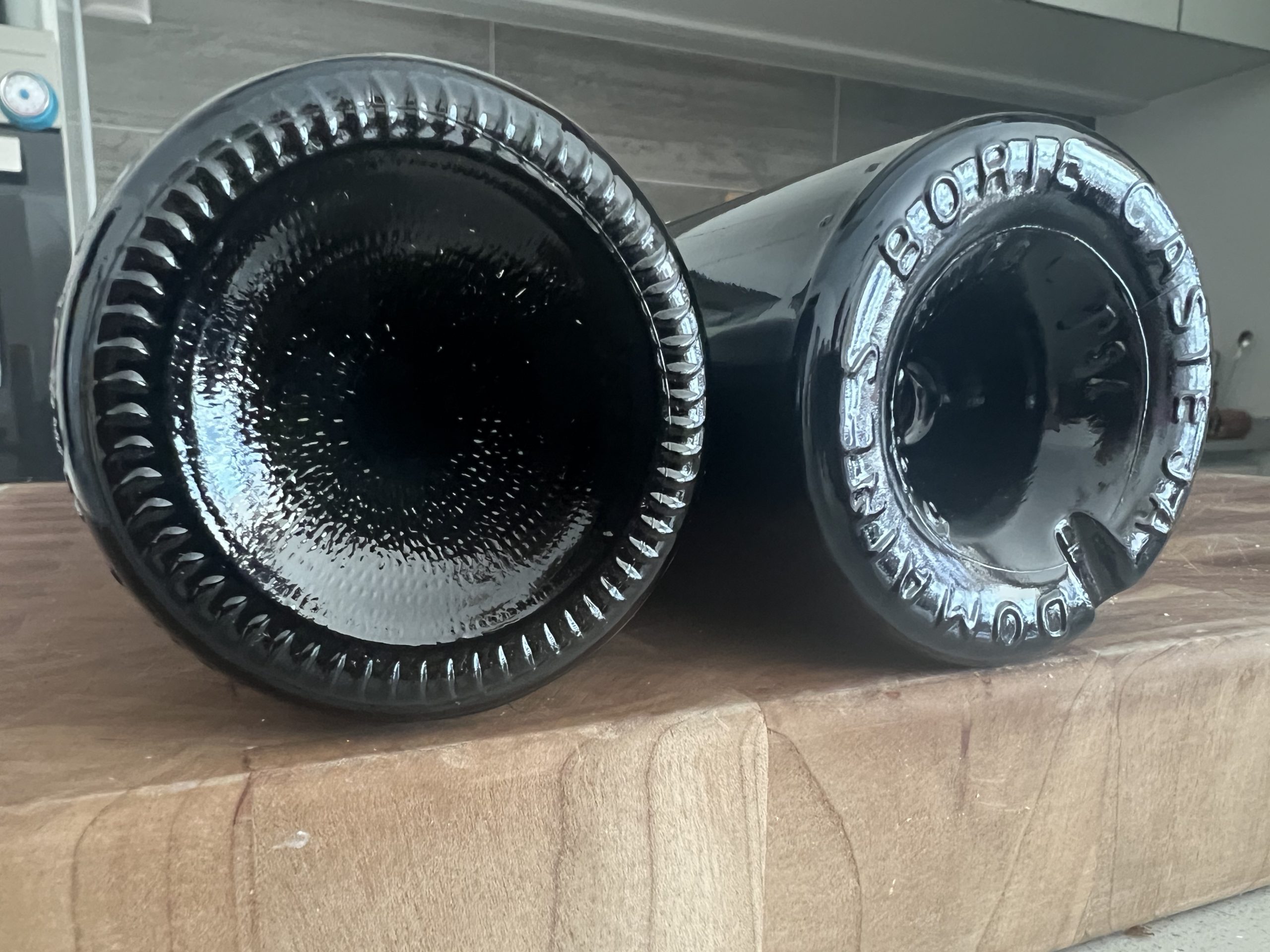
Wine Bottle Punts. My Photo
[i] Both in plastic bottles and in plastic bags inside cardboard boxes (bag-in-box, or BIB)
[ii] Wine in cans is already a thing, and we might see more of it in the near future, but that’s a subject for another day.
[iii] This, of course, depends on where you’re reading me from. Maybe you’re in 1980s Chianti and you’re more familiar with the Fiasco shape.
[iv] Sediment separates from the liquid as time passes, which is why older bottles have more of it than young wines. Unfiltered wines, of course, also have sediments, and it’s a good idea to decant them.
[v] By acting like an arch, and therefore force is distributed better, making the bottle less likely to break under stress.
[vi] Trade between Continental Europe wine makers, particularly French, and English consumers.
[vii] Unless the bottle is holding Champagne, then it’s called Rehoboam.
[viii] Unless the bottle (sounds familiar?) is holding Champagne, then it’s called Methuselah.
[ix] For reference, anything above 600 grams, she considers excessive. In fact, she’s pushing for producers to reduce the current average for expensive wine from 550 g to under 420 g.
Cover Image: Wine bottles can be interesting, if you want to geek out about them. Photo by Markus Spiske.

Leave a Reply