

Explore the rich history of pre-Christian wine art, from Georgia’s ancient pottery to Egyptian tombs and Roman mosaics. Discover how wine shaped ancient culture.
Wine is great, isn’t it? I mean, I’m sure you agree and that’s why you’re reading this article. Wine is what you drink with your meals, friends, and after work. Maybe you travel for wine, and you probably collect it. Wine is great, and you love it.
However, other than a healthy-ish obsession, you probably don’t give wine another thought, right? That wasn’t always the case. Wine has had deep symbolic and religious meaning through its history. You’re probably more familiar with wine’s significance in Christian rites or Greco-Roman Dionysus myths. But there’s a lot more than that. Ready to dive right into pre-Christian wine art? We’ll start with the Caucasus, the cradle of wine.
Was There Pre-Cristian Wine Art in Ancient Georgia?
We currently only have archeological evidence of winemaking, but it’s likely that pre-Christian wine art did exist in the region.
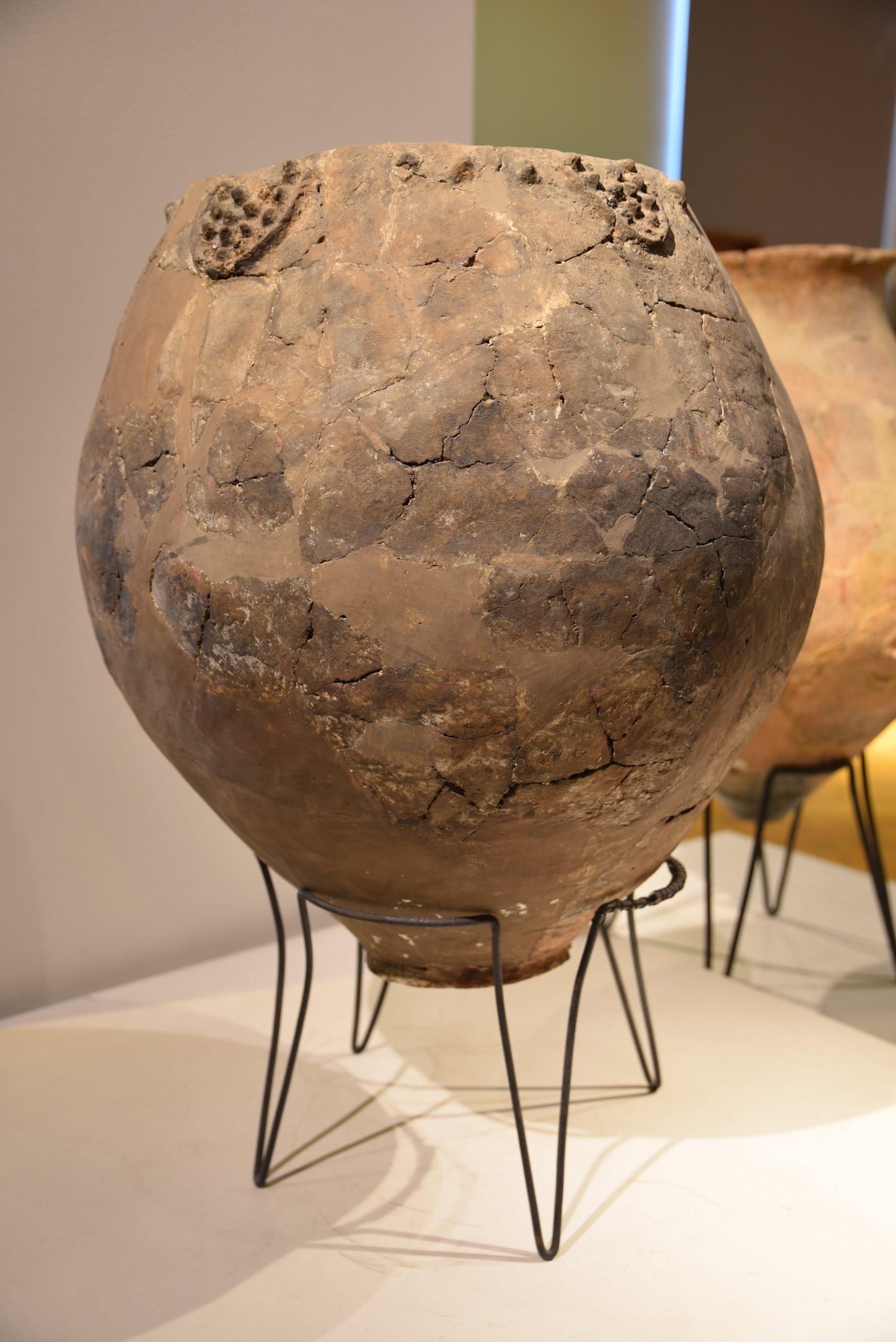
We currently agree that Georgia is the birthplace of wine, although Armenia can easily claim this as well[1]. However, the oldest archeological evidence of winemaking is from their northern neighbors. We have found pottery fragments from around 6,000 BCE containing residues that we can associate with the winemaking process. Interestingly, the pottery found is clay jars not dissimilar to the qvevri still used in wine production by winemakers in Georgia today.
No art from that period[2] survives, unless we count the pottery itself (which I do, even if it had a more practical use than an artistic one). However, it’s likely that they used vines and grapes as motifs in their decorations, which evolves eventually into Christian art. We can see some examples of what I mean in medieval khachkars[3] from Armenia and illuminated manuscripts from the whole region.
But that’s speculation. We know wine—and therefore grapes and vines—were important, but we don’t know if they used those themes in their art, only that Christians did many years later. So, let’s move on to actual art in ancient Egypt, where wine became part of their religion.
The Earliest Pre-Christian Wine Art Known is from Ancient Egypt
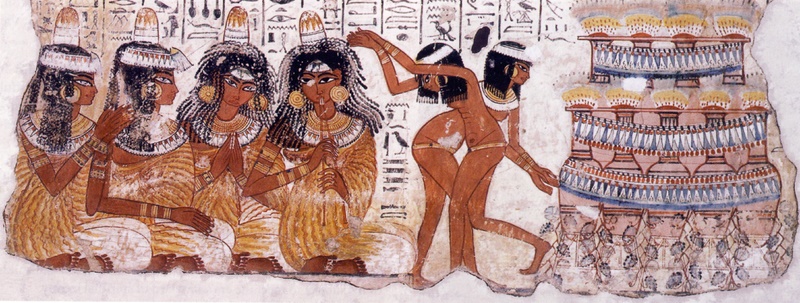
A few thousand years after Georgians were producing wine, Egyptians were using it in their religious customs. Not only did they decorate the walls of the tombs of their kings[4] with paintings depicting the winemaking process, but they also placed sealed wine jars in the tombs, as part of a ritual to sustain the soul of the deceased.
Two Egyptian gods are linked with wine, and both also have an association with the afterlife. Osiris, in their mythology, introduced wine to humanity. Farming is, however, a cycle of life and death[5] and Osiris was, therefore, also the god of the afterlife. The other god was Shezmu and his many domains. He was an underworld judge of the damned, but also the god of wine and blood. This is interesting because we can determine that ancient Egyptians used red wine to symbolize blood in their religious offerings, a precursor of Christian mythology doing something similar with red wine embodying the blood of Jesus.
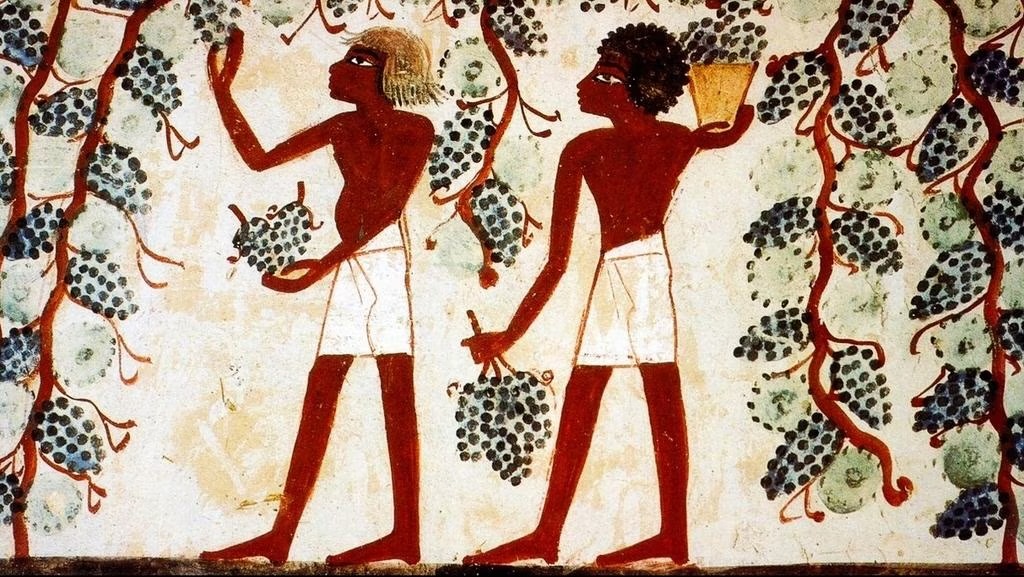
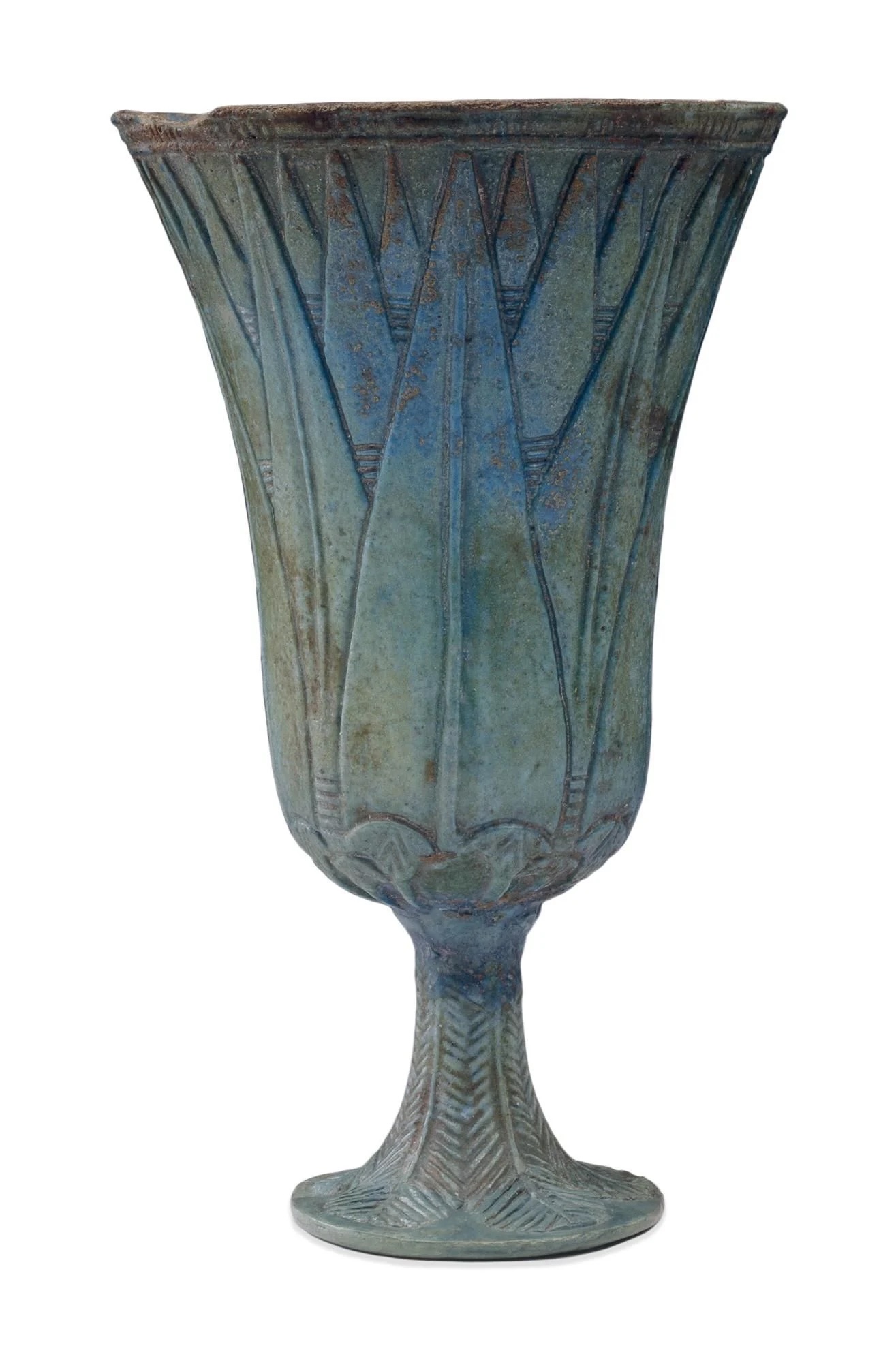
Wall paintings from tombs have survived, allowing us to see the importance of wine in Egyptian society. The Tomb of Nebamun[6], for instance, has a scene depicting a lush banquet with elegant guests, musicians, nude dancers and servants, and a rack holding wine jars decorated with grape motifs, a great example of pre-Christian wine art. Clearly, wine and food were as important then as they are today. Furthermore, beautiful drinkware featured an elaborate incised decoration representing lotus flower petals. Wine, in Ancient Egypt, was a luxury beverage, a staple in the elite’s diet, and a critical element in their funerary rites.
Before we move to Greco-Roman pre-Christian wine art, a little of what was happening elsewhere
Pre-Christian Wine Art in Mesopotamian, Phoenician, and Etruscan Cultures
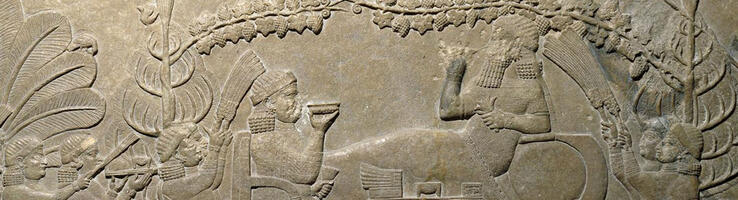
In the Ancient Near East, Babylonians, Sumerians, and later the Assyrians, preferred to drink beer. Wine, however, was enjoyed by the ruling classes, though it was imported from mountainous regions[7]. Iconography exists depicting kings and queens drinking wine while lounging in the shade of vine trees.
The Phoenicians were the traders of their times, and they distributed wine culture[8] throughout the Mediterranean basin. They used clay amphorae, known as Canaanite jars, which have been plentifully found in shipwrecks. These jars were designed to be stacked efficiently in the holds of ships. They carried wine, but also oil, honey, and other goods. The Canaanite amphora became a staple of pre-Christian wine art and utility, standardizing wine vessels. When I think of an amphora the Canaanite shape is the one I imagine. How about you?
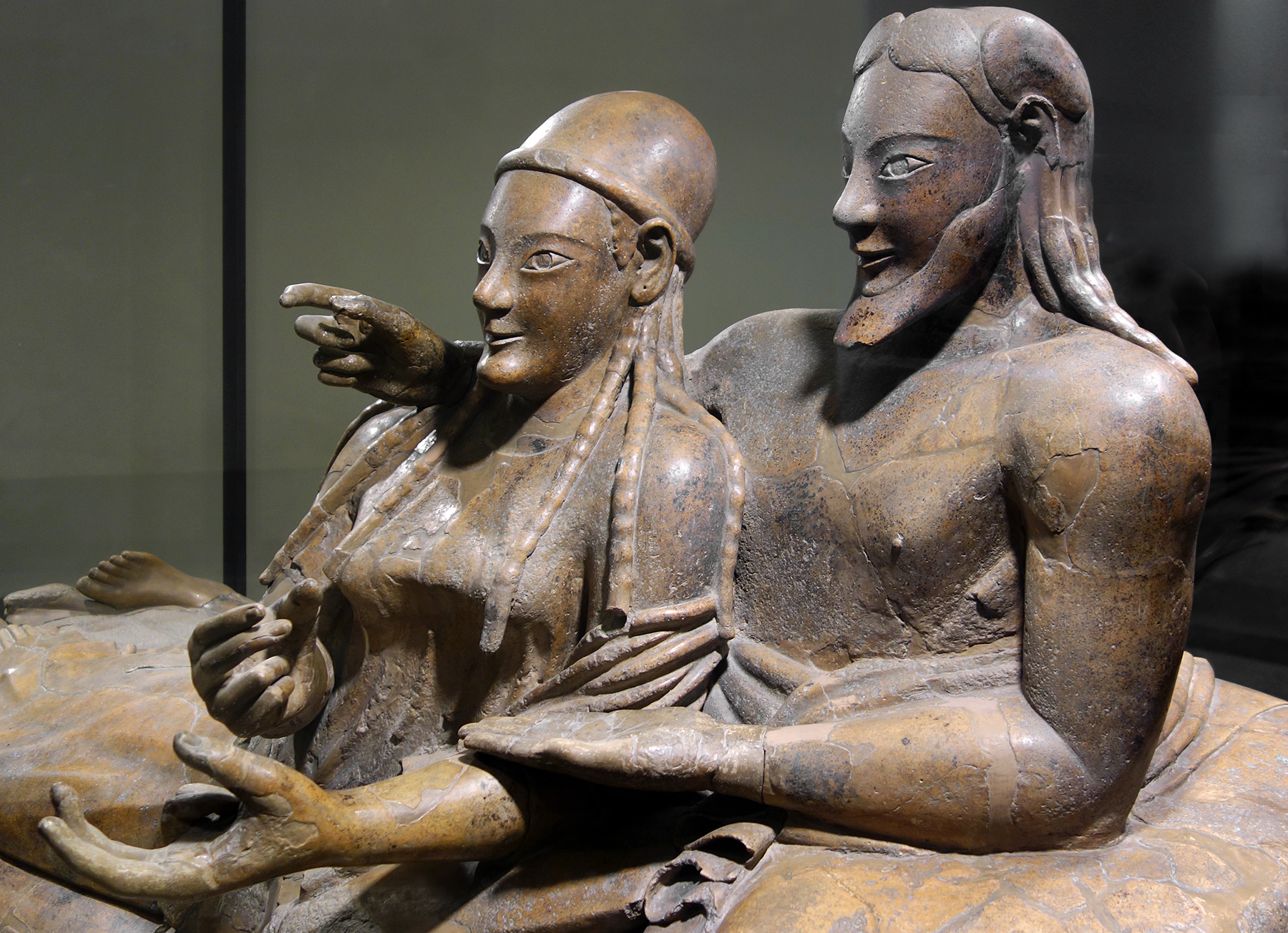
Etruscans, like the Ancient Egyptians before them, also showed banquets with guests imbibing wine in their tombs. They did so in wall paintings, but also on their sarcophagi, like the famous Sarcophagus of the Spouses, depicting husband and wife reclining together for what’s interpreted to be a convivial banquet scene. It is believed that the terracotta reconstruction originally showed the couple eating and drinking wine, mirroring the pre-Christian wine art on the walls.
Etruscans were contemporary with Ancient Greece, and both influenced the Romans, so let’s move on to those.
Pre-Christian Wine Art in Ancient Greece and Rome
The Dionysus myth is central in Greek and Roman[9] culture. The Greeks invented the symposium[10], a highly formalized social and artistic institution which became a dominant theme in their art.
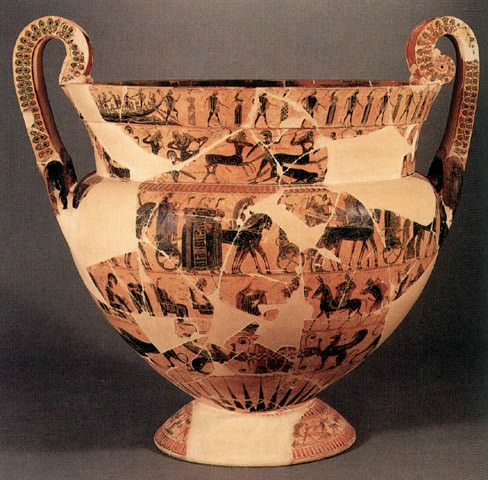
And their pre-Christian wine art comes to us in the form of wine vessels. They drank out of drinking cups called kylikes, which were filled from oenochoe. The wine was diluted, because drinking it straight was considered barbaric, and therefore they also had mixing jars called kraters[11]. They were all decorated with paintings, best exemplified in the François Vase, a real centerpiece.
Greek drinking vessels frequently featured scenes painted inside of the vase. They would be concealed by the wine, so that a narrative will slowly unfold as the wine was drunk. A lot of the images represented on the vases featured Dionysus holding a staff, with interwoven vines and grapes, and presiding over bacchanal scenes including satyrs and maenads chasing each other and other mythological drama that validated human drinking.
Roman Adaptation of Greek Drinking Culture
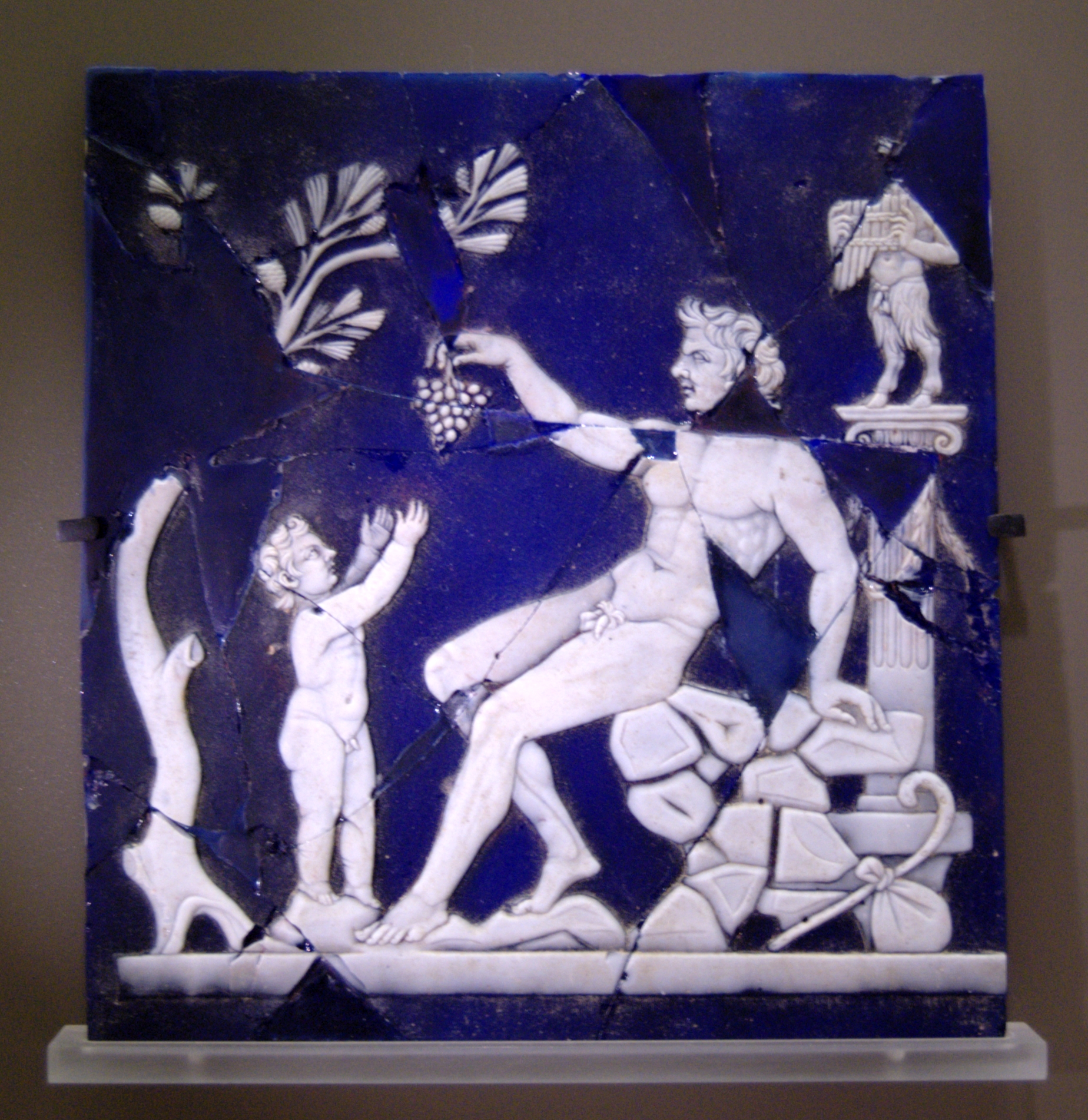
We’re lucky because a great deal of Roman art survives, certainly including pre-Christian wine art. Several villas in the Mediterranean have been found to have Roman frescoes depicting banquets. Possibly none as well preserved as the ones found in Pompeii.
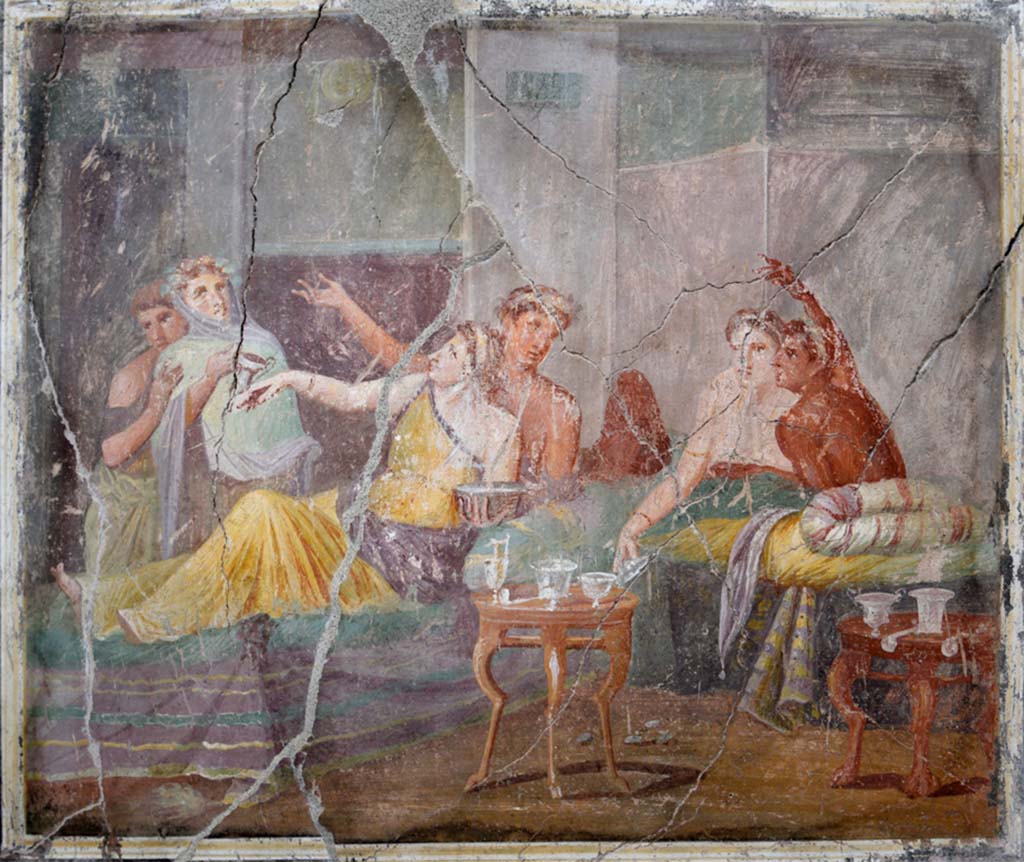
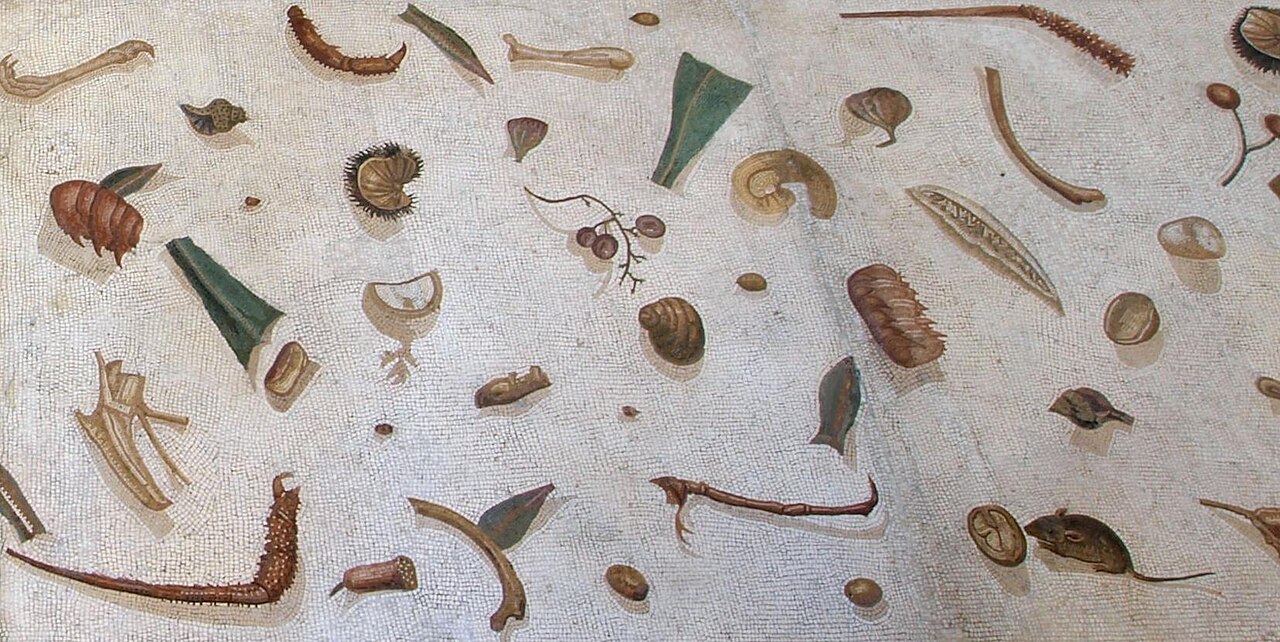
From these frescoes we get a glimpse of Roman banquets and how they varied from Greek symposia. For one, women are depicted as part of the scene, whereas in Ancient Greece only men were permitted to drink[12]. These pre-Christian wine art on Roman walls portrayed banquets, and some floors had mosaics depicting the realistic remains of meals, including bones, shells, and other food scraps. These intricate mosaics are known as asàrotos òikos, or “unswept house”.
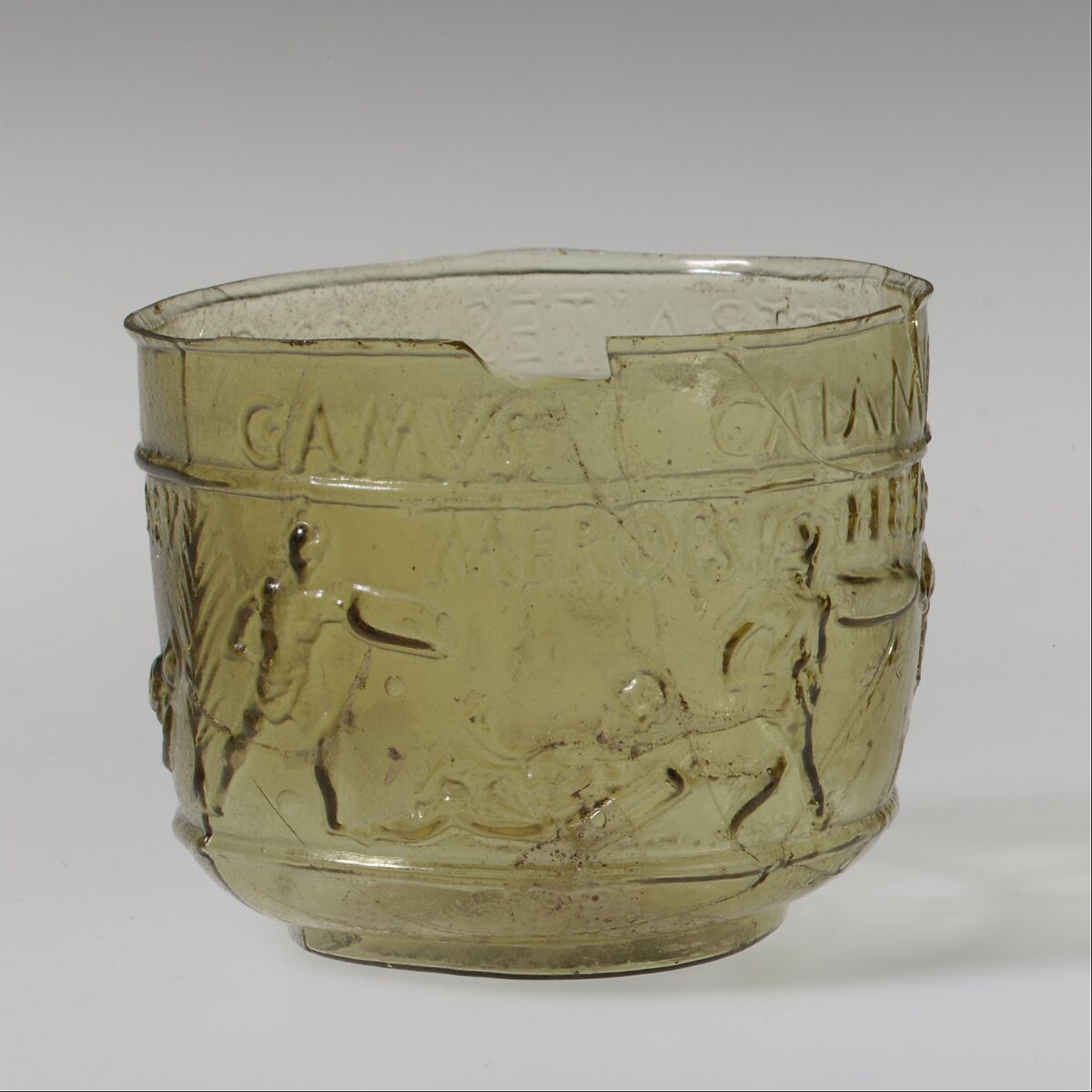
In Pompeii’s The House of the Chaste Lovers, the banquet scenes depicted on wall paintings feature an interesting addition: blown glass drinkware. It is, therefore, around the beginning of the current era, that we moved from clay to glass vessels to drink our wine.
The Last Drop
We’ve been fortunate to enjoy wine for the past 8,000 years or so. And ever since then, it’s been an integral component of pre-Christian wine art. Wine has always been ritualistically important, and therefore everything, from the vessels used to drink and store it, to depictions of wine painted on walls, served a religious purpose, at least until the Greco-Roman cultures, which appeared to be more interested in the pleasures of wine, except when representing Bacchus/Dionysus.
What’s your favorite piece of pre-Christian wine art? Is it something I’ve shown you here today, or did I miss something cool? Let me know in the comments. I’m always interested in discovering new art.
[1] In 2007 archeologists discovered Areni-1, a large-scale winery in Armenia from over 6,000 years ago, which means that small-scale wines were likely produced there since long before that.
[2] The Neolithic Revolution.
[3] A khachkar is a carved stone featuring a cross ornately decorated with intricate patterns, sometimes vines and grapes.
[4] Or Pharaohs, as they called them.
[5] Thinking about the vine’s cycle. After harvest, the plant loses its leaves and goes dormant. It dies. But then, in spring, buds re-appear and the vine is reborn, ready to yield fruit once more. A perfect symbol of resurrection.
[6] Circa 1350 BCE.
[7] That’s right, they enjoyed high altitude wine. I feel they would’ve loved Cabernet Sauvignon from Alto Maipo.
[8] The poet Pliny wrote that the Phoenicians established viticulture in north Africa.
[9] Where he was called Bacchus. In the mythological art paintings that began during the Renaissance, both names were used interchangeably.
[10] Which literally means drinking together. Auspicious for this blog, isn’t it?
[11] With Kylix you can see where the word chalice comes from (from Greek Kylix to Latin Calix). Oenochoe were pouring jugs (literally; from the Greek oeno = wine and cheo = to pour). Wine was diluted with four parts of water to every part of wine in a krater which was typically placed in the middle of the room.
[12] The symposium was basically a male-only drinking club. The Roman equivalent, the convivium, was more inclusive. I don’t want to imply that Ancient Roman culture was inclusive as a whole, only that women of a certain status were allowed to drink.


Leave a Reply