
Explore the history of wine in secular art, from Dutch still lifes to Van Gogh and Lautrec, celebrating everyday life and human skill.
From paintings in caves portraying hunting scenes—vital for nourishment and survival—to frescoes of biblical stories painted inside churches and palaces, art has historically been used (for thousands of years!) as an instrument of religion or similar ritualistic endeavors. Wine, also vital to religion, was often the subject of these depictions.
Pre-Christian civilizations painted banquet scenes in tombs, imagining a pleasant afterlife for the deceased and also representations of their wine deities and their rituals. Later, Christian art showed us scriptural lessons and interpretation of the sacred rites in paintings. Because wine is important in Christianity as well, some of that work features wine prominently.
Eventually, however, strict Medieval religiousness relaxed, giving way to Humanistic thought during the Renaissance. Artists were no longer exclusively preoccupied with religious topics, which opened the door to today’s topic: the use of wine in secular art.
Wine in Secular Art: Wealth
Luxury trade during the late Middle Ages made merchants wealthy. Suddenly, they could afford to hire artists to paint their portraits and commission art pieces to decorate their homes. They were still God-fearing people, but the topics that interested them were not always religious.
Classical mythology became a popular topic, and artists painted wine in secular art scenes featuring Bacchus.
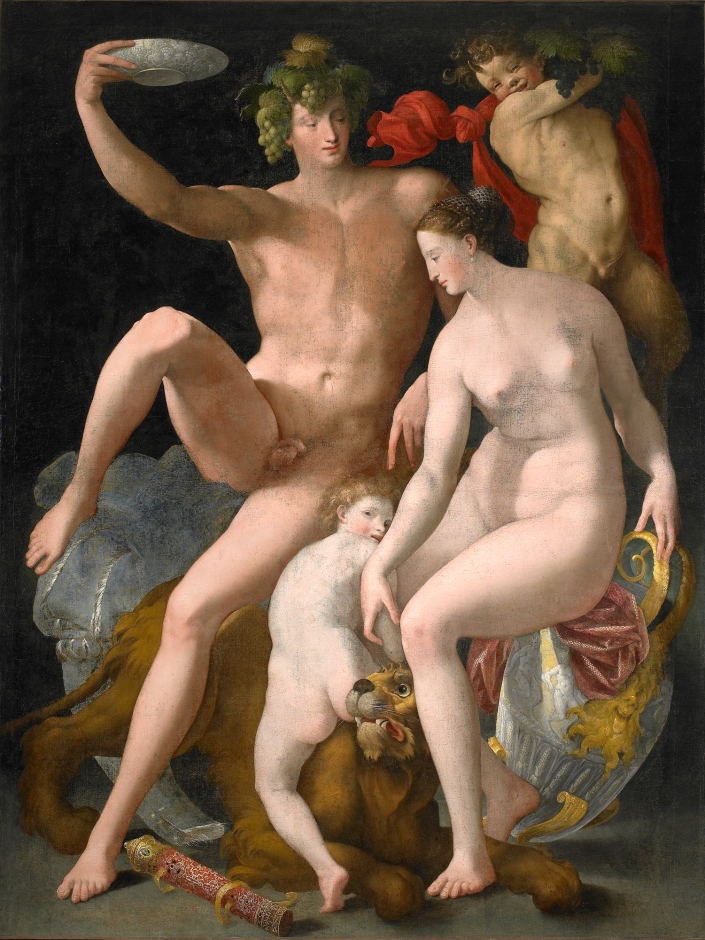
In this example, Bacchus (left) is shown together with Venus and Cupid in this strange composition. The work is attributed to Mannerist painter Rosso Fiorentino and believed to have been painted between 1531 and 1532.
Of course, wine in secular art was probably even more common in Protestant Europe, since religious topics were heavily restricted inside churches, and merchants were not keen on them either. Artists concentrated on genre scenes filled with symbolism.
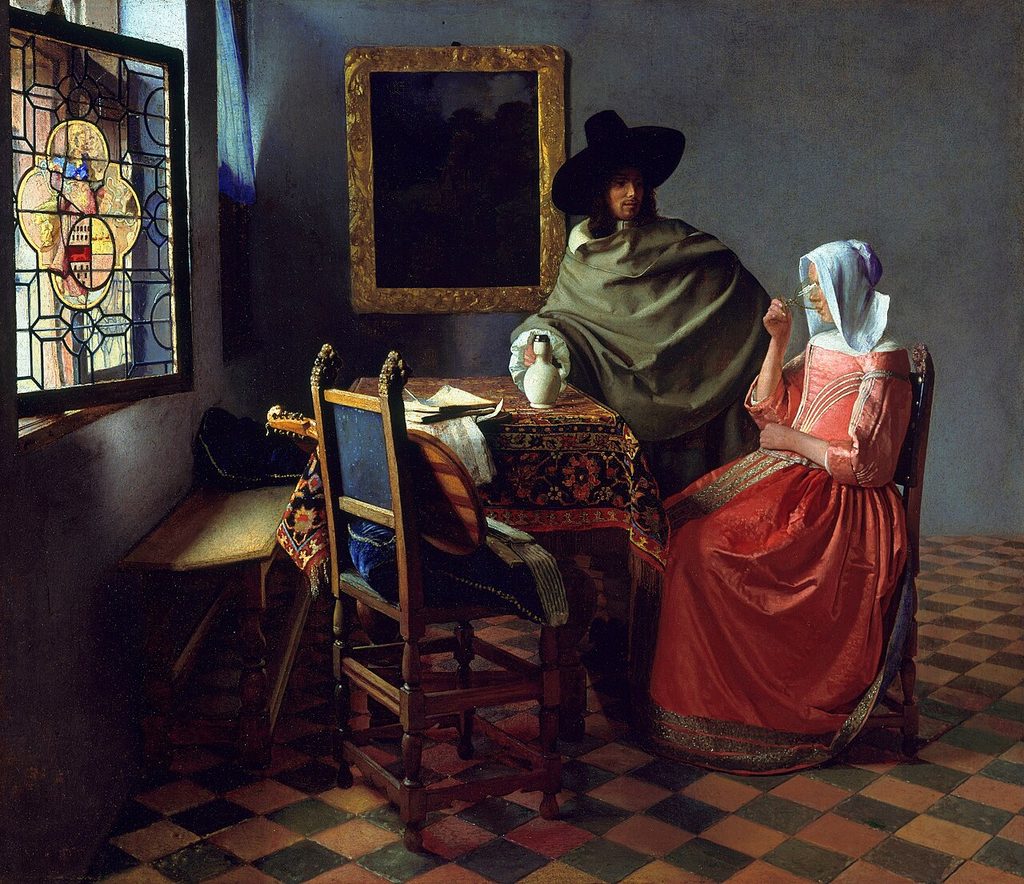
Take this secular wine art painting by Johannes Vermeer. It’s titled The Glass of Wine, and it illustrates a man and a woman sharing a moment, likely some kind of courtship, where the man holds a jug waiting for the woman to finish drinking from an exquisitely painted crystal glass. This detail really highlights the artist’s technique.
Wine in Secular Art: Skill
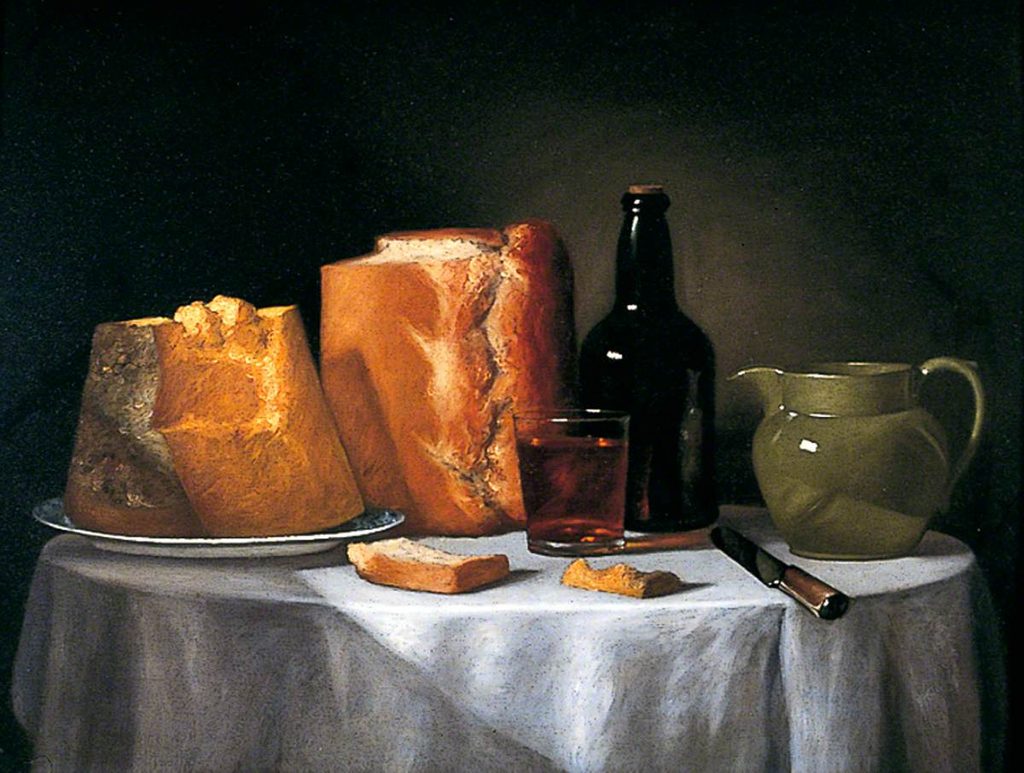
And speaking of highlighting the artist’s technique, still life paintings, particularly the bodegón, gained popularity in the early 1600s. They showed the master’s skill, of course, but they were also loaded with symbolism. It’s hard to argue, for instance, that a still life featuring wine and bread isn’t referencing Christianity, like in this still life by Roland de la Porte.
For a better depiction of wine in secular art, however, look at the red inside the excellently crafted glass in this bodegón by Meléndez. Once again, there’s bread to the side, even if our eyes go immediately to the watermelon at the center.

Wine in Secular Art: Depicting Moments
The invention of portable paint tubes and the rise of photography during the mid-19th century influenced painters and led to the birth of Impressionism (and related genres).
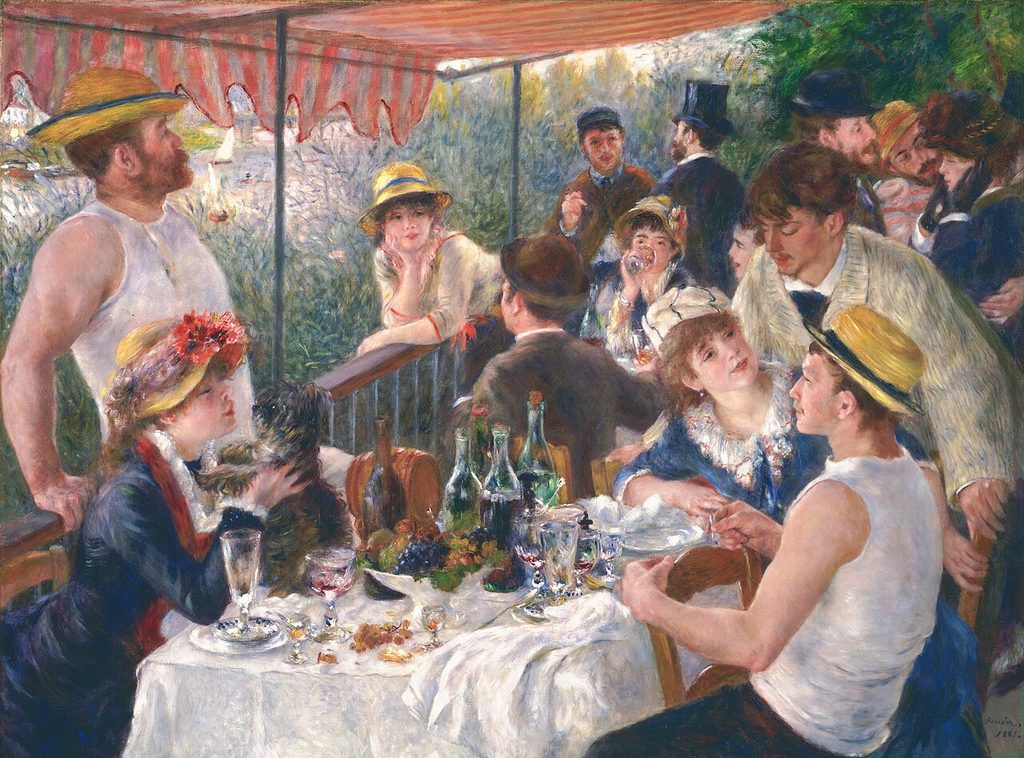
Impressionists were fascinated with capturing the moment. They were outside studios, painting light and oftentimes real-life scenes. Look at this piece by Renoir, a scene showing the idyllic summer lunch with friends. Some are talking, some are contemplating, and everybody seems to be having a grand time. You can see wine, the perfect pairing for moments like this one, sitting on the table. Doesn’t this painting make you want to join them?
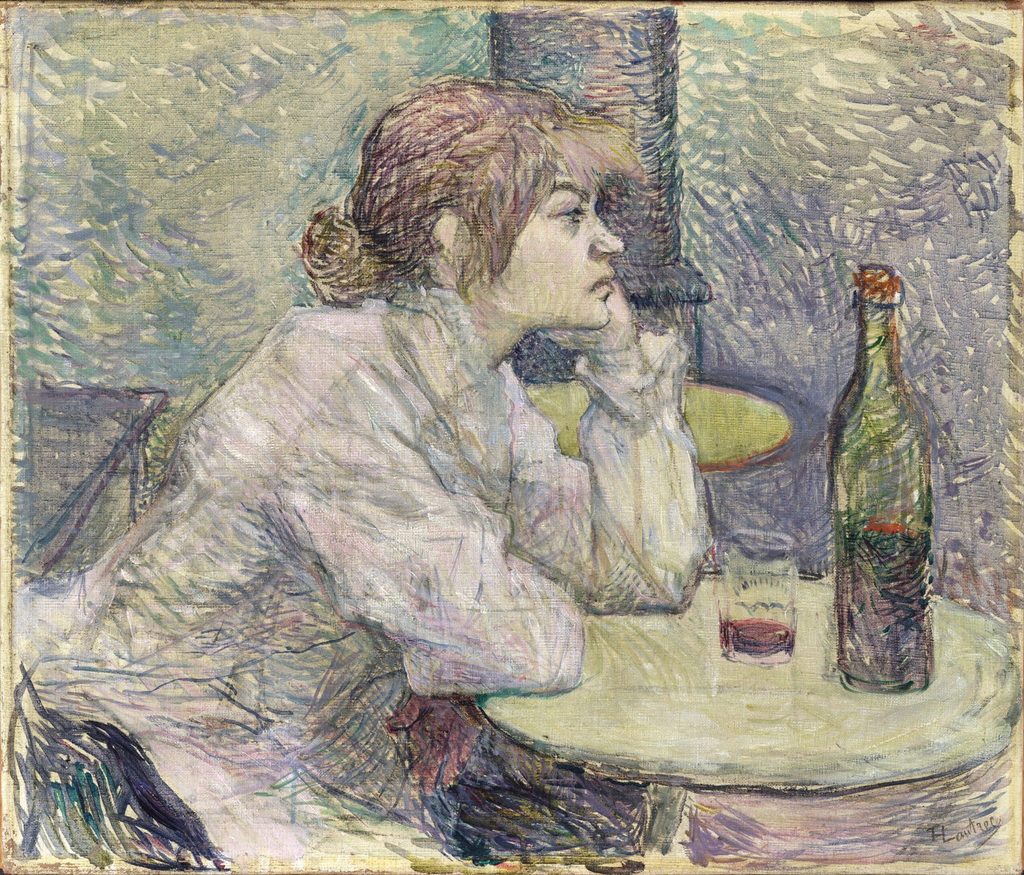
On the other hand, we can also see wine in secular art depicting the vice of alcohol consumption. Henri de Toulouse-Lautrec painted a lonely and irritated woman drinking at a café. To properly analyze this painting, we can’t forget that the artist himself was an alcoholic. In this painting you can really feel the darkness of overconsumption, a far cry from the jolly commercial posters he would become famous for.
Wine in Secular Art: Everything Is for Sale
And speaking of commercialism, I believe Edouard Manet saw the writing on the wall. He painted A Bar at the Folies Bergère showcasing the alcohol that would’ve been sold there, including beer, champagne, and an 1882 bottle of Manet red wine. Yes, the painting is from 1882. Pretty cheeky, that Manet, wasn’t he?
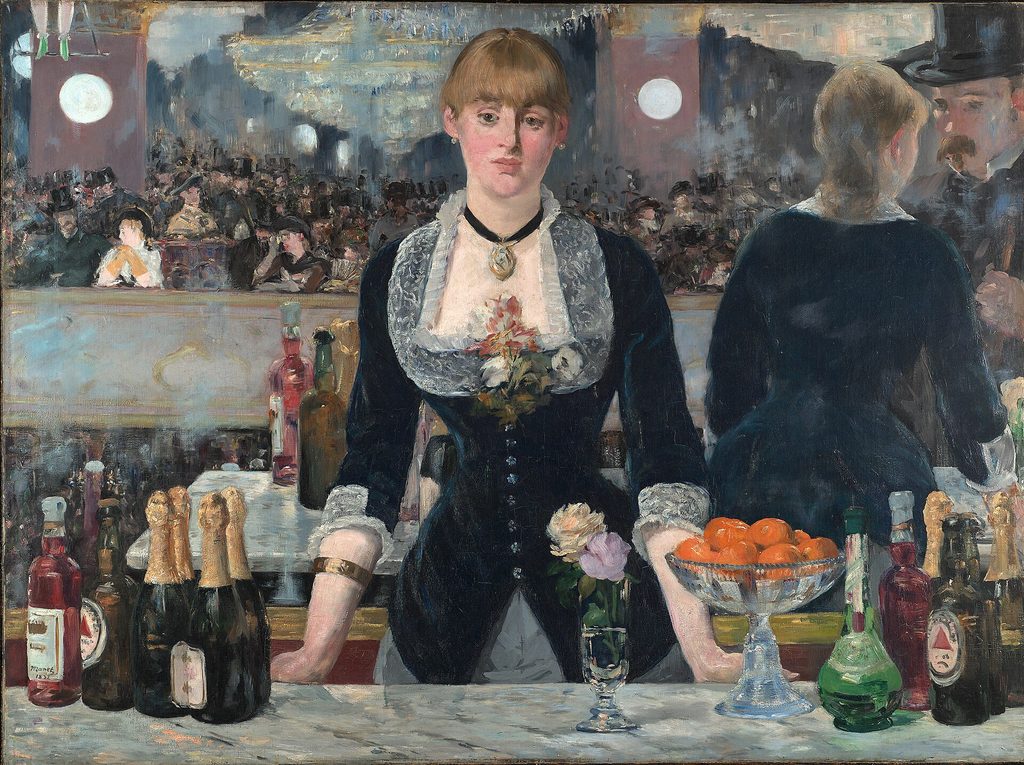
The woman at the center was a real person, a barmaid at the Folies Bergère, a popular nightclub still operating today in Paris. She was there as a saleswoman, of course, but she was also a prostitute, and patrons of the cabaret could also purchase her time. Everything you see behind the bar is for sale. Maybe that explains her far-away eyes when a customer entering from the left approaches.
Wine in Secular Art: The Harvest
The harvest has been, historically, a monumental occurrence in the villages and towns surrounding vineyards. Seasonal laborers arrive to help because more hands are always needed. The harvest marks the starting point for the grapes to become wine.
Also, vineyards are gorgeous when the leaves are turning. It’s no wonder that artists would choose to paint harvest scenes.
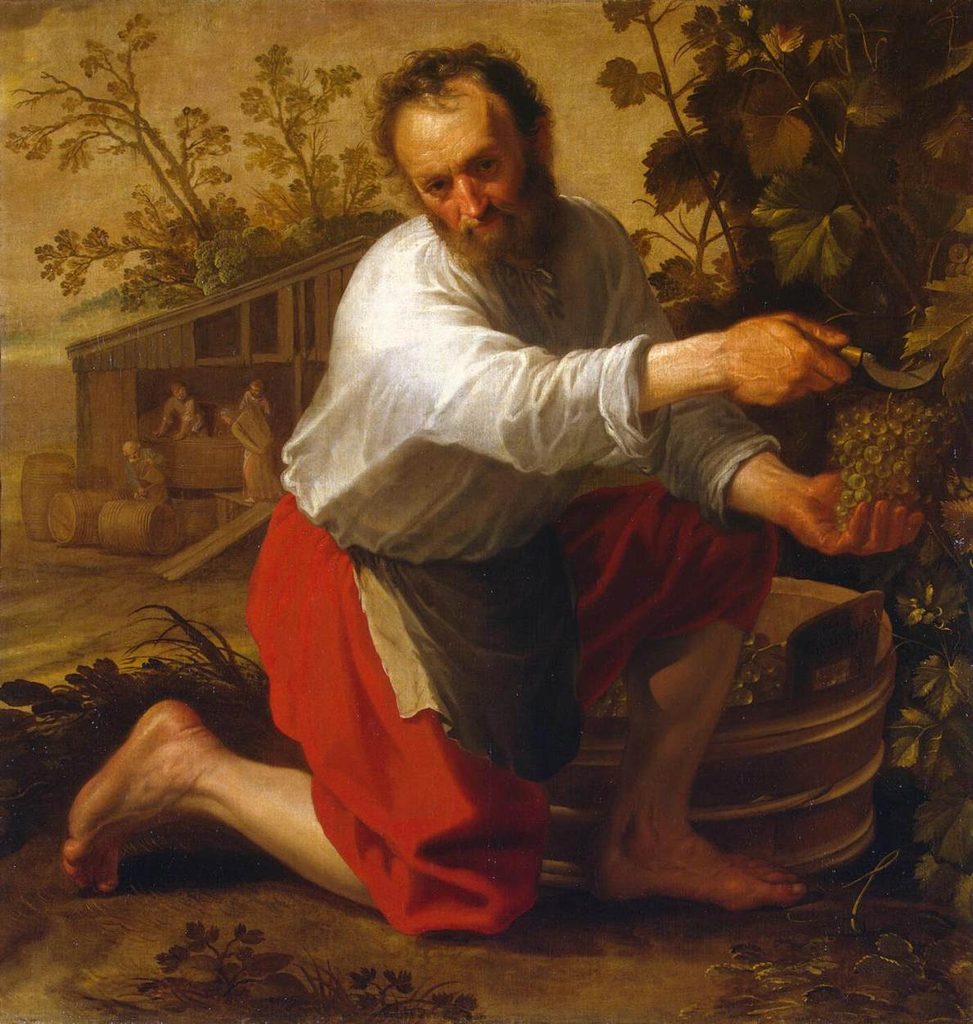
Take this 17th-century painting by Dutch painter Jacob Gerritszoon Cuyp showing a harvester removing some white wine grapes with a sickle, while a press and barrels are getting ready in the background.
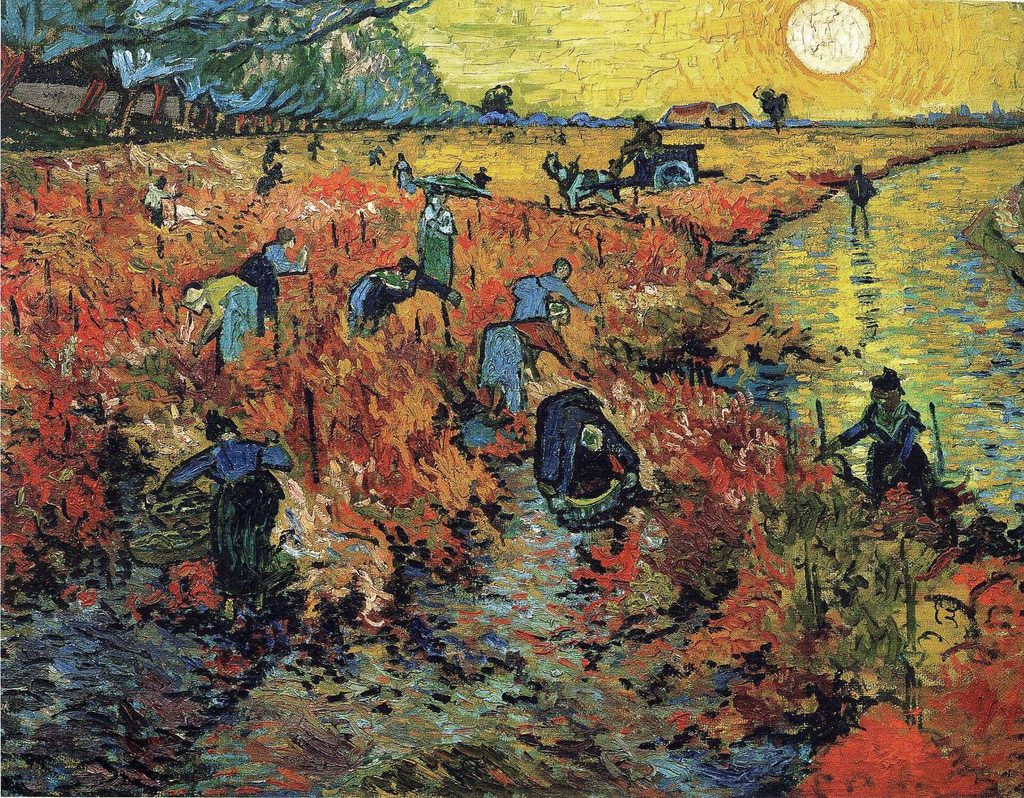
A couple of centuries later, Van Gogh gave us his unique interpretation of a harvest in Arles, painted during the time he lived there. By the way, you might know that the artist sold almost no paintings while he was alive. In fact, there are records of only one sold painting in his lifetime: this one. It’s not his most famous work, but I really like his use of colors and how busy the scene feels.
Wine in Secular Art: When to Drink and When to Stop
Artists in the past have used their craft to warn us of the dangers of excesses to push us to a life of moderation and piety. That’s what the Final Judgement theme is all about, after all.
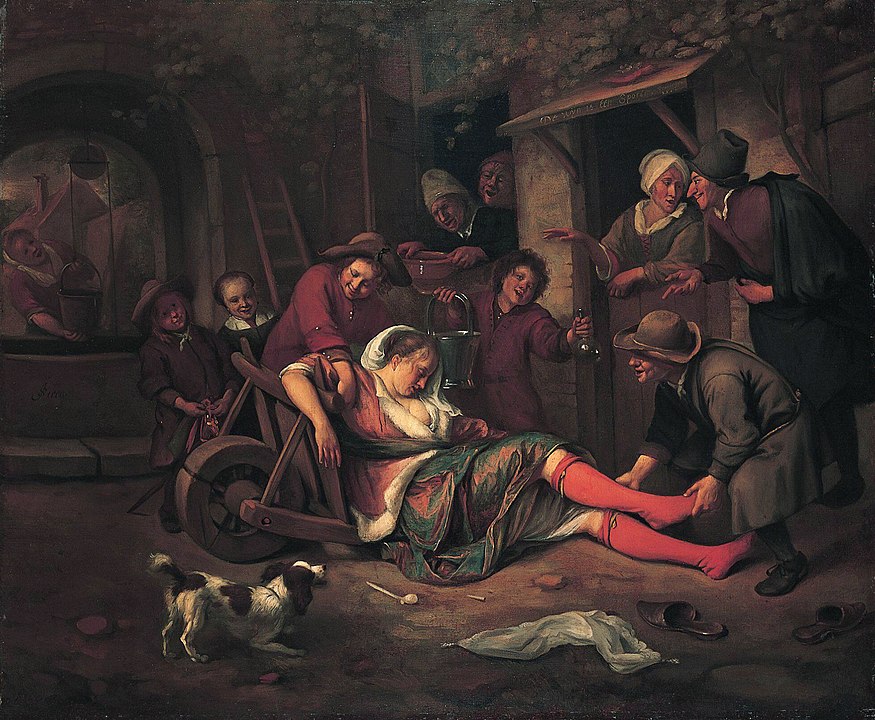
But there are other motifs they can use to caution us, like this scene, pulling from Proverbs 20:1: “Wine is a mocker, strong drink is a brawler, and whosoever is deceived thereby is not wise.” A drunk woman, outside an inn, is about to be carried home in a wheelbarrow. She is elegantly dressed, signifying that status doesn’t grant immunity to imprudent behaviors caused by alcohol. An interesting fact about this painting is that Jan Steen, the author, was likely familiar with scenes like the one he depicts, as he also ran an inn in his town of Leiden.
The Last Drop
I like art, so I enjoy writing these types of articles because they allow me to research paintings to feature in them. I like to mix well-known artists and some that maybe deserve a bit of the spotlight as well. But overall, I look for art that fits the narrative I’m trying to tell.
In this case, that wine remained important enough in society to merit depicting even when not dealing with religious themes. Contemporary artists are still enamored with wine, with some, like Elisabetta Rogai, even using it as ink, and allowing it to oxidate on the canvas, making art that changes hues with time.
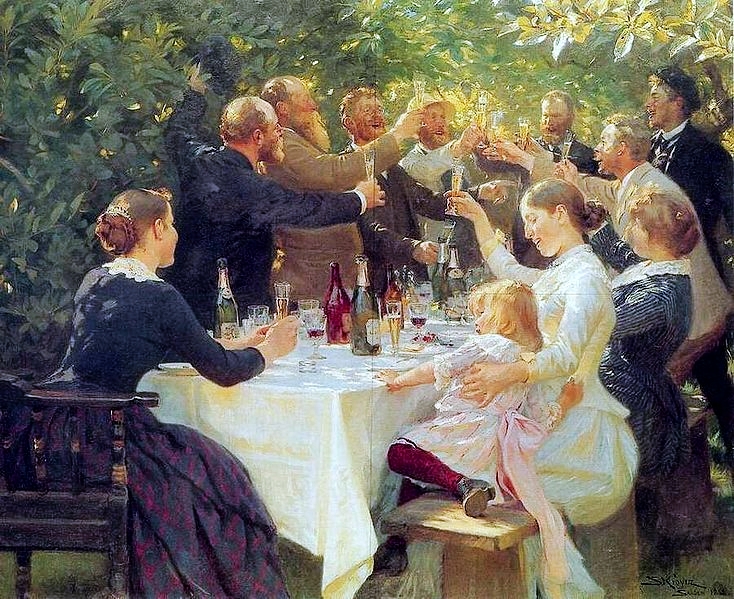
Of course, the wine in secular art that I enjoy the most is the one depicting the good moments we can have while drinking with friends and family, like Hip, Hip, Hurrah! by Danish painter Peder Severin Krøyer, the piece I used as a feature image for this article. It’s another painting that makes me feel like I want to be there, cheering with the old boys.

Leave a Reply