

Riesling was once more sought after than Champagne. Explore the rich history of this German grape, understand its distinct petrol aroma, and see why it’s making a massive modern comeback.
In this past year I’ve covered many grape varieties in my articles, but most of them have been red. Moreover, most of the grapes I’ve written about are French, with maybe the odd Spanish or Italian one[i]. And, as it happens, Riesling is a German varietal. So, let’s end the year with my third white wine grape: Riesling.
Just in time, too, because here in the southern hemisphere, we’re days away from the start of summer, and my body is craving whites[ii]. Riesling is a great choice because it’s truly an interesting wine. Let me explain why.
But First: A Little Riesling History
This yellowish-green grape originates around the Rhine River in western Germany[iii]. It’s an old varietal, and some experts believe it might’ve already been available in the 9th century. Riesling derived naturally from Gouais Blanc, a little-known grape that we’ve already mentioned in this site, as it’s also a parent to Chardonnay.
The first records naming Riesling[iv] come from medieval times. In fact, it first appears in inventory documents from 1435. Back then, and into the 16th century, it enjoyed a slow but steady growth, as it was tended by monks and nobles. We even have a cool mention of the plant, the first time it appears as “Riesling”, in Herbal, a graphic book by Hieronymus Bock[v] in the mid 1500s.
Riesling plantations were diminished during the Thirty Years’ War, but luckily re-flourished after the conflict. And it did great for a while. Farmers gradually switched to Riesling, and by the 1850s, it was a fashionable wine throughout Europe, fetching higher prices than wines from Bordeaux and Champagne[vi].
Wait. Riesling was more coveted than wines from France? What happened? Well, war happened. Two of them, actually.
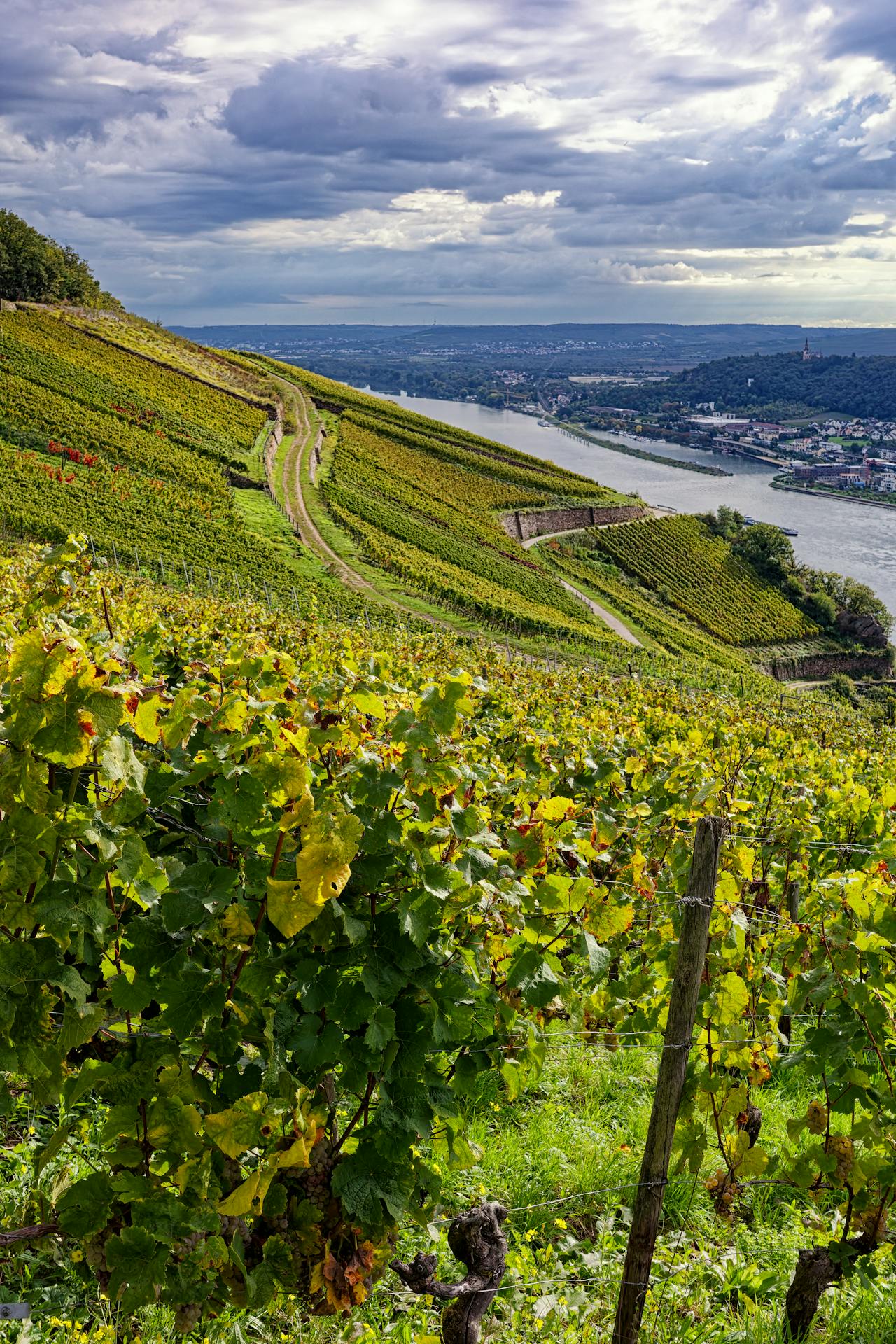
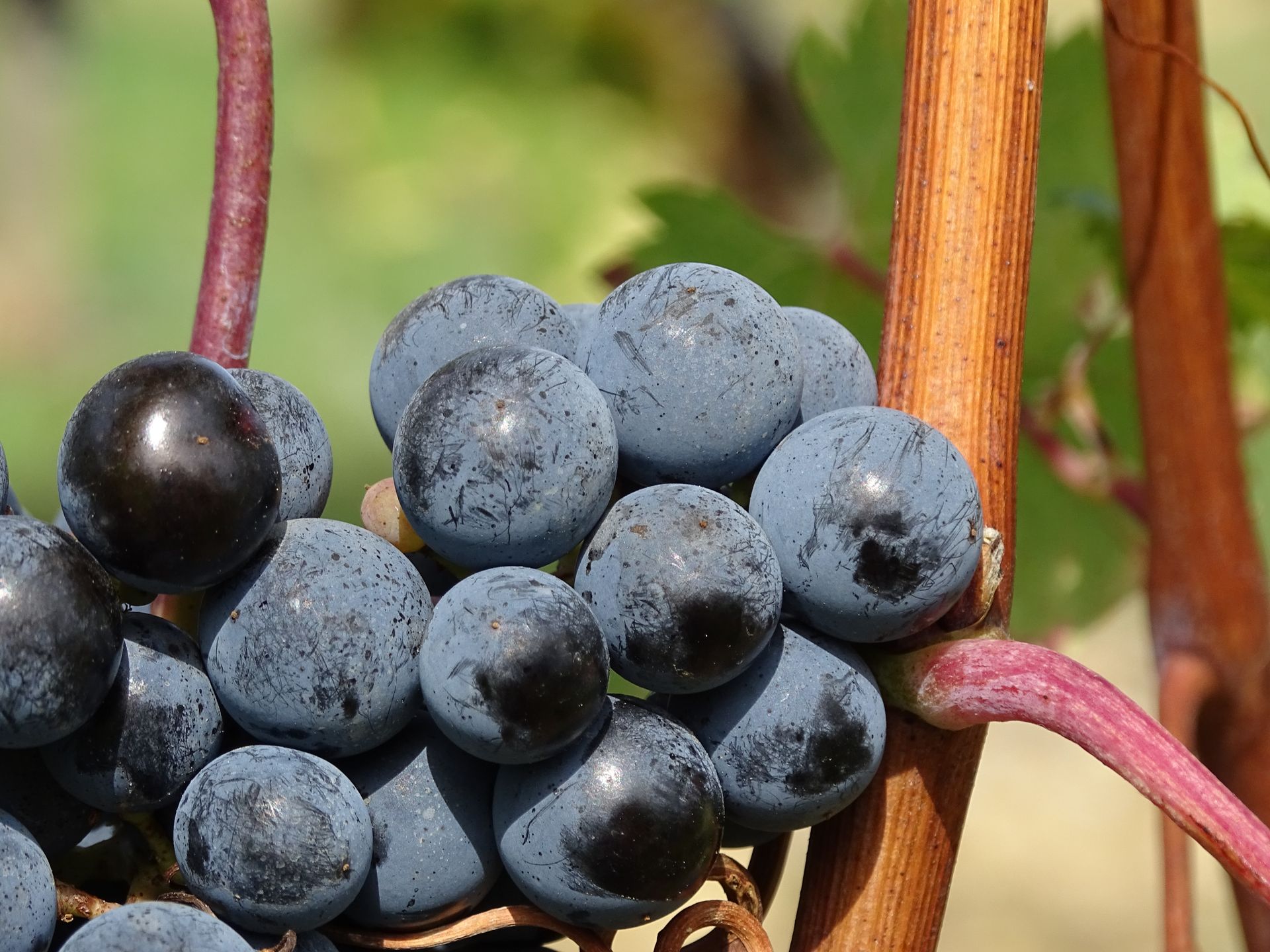
Photo by Carsten Ruthermann
Riesling Decline During World War I and II (And Later Resurgence)
As you can imagine, both conflicts were devastating for German winemakers. Exports went down, labor was hard to find, and farmers were forced to focus on earlier-ripening varietals[vii].
The German economy was in crisis in the aftermath of World War I, and vineyards didn’t get enough time to recover before the next war came along. In the late 1940s, the state of the German wine industry was in disarray. Fortunately, the importance of the Rhine River region for winemaking was recognized by the government, and a helping hand was offered to winemakers.
The process was slow, but by the mid-1990s Riesling had, once again, become Germany’s most planted, more popular, and better rated wine grape. Today, Riesling is well-liked around the globe, and I would even go as far as saying it’s trendy.
Germany and Alsace are still in the lead in terms of quality, but a few New World countries are producing excellent warm-weather wines with this grape.
What Are Riesling Wines Like?
Riesling grows well[viii] in cold weather. Lower temperatures mean that the wines produced in those areas are highly acidic and low in alcohol. Some producers balance the acidity by adding a little sugar to the end product[ix], which is why you can find Riesling wines in different styles: dry, off dry, medium sweet, and sweet.
Cold-weather Riesling has a floral nose with hints of lemon and sometimes white fruit. Warm weather ones are less floral but more fruit forward, but this time you’ll get more yellow stone and even tropical fruit.
The interesting aroma, however, is petroleum. Yes, petroleum, although some would define it as kerosene. But not in a bad way. I know what you’re thinking: that sounds nasty, but it really isn’t in wine, and if you’ve had German Riesling in the past, you know exactly what I mean. These aromas develop as the wine ages in the bottle.
Oh, yes, Riesling ages wonderfully due to its high acidity. So, if you run into a high-quality bottle, feel free to store it (properly) for 5 to 10 years. Even longer, the sweeter they are[x].
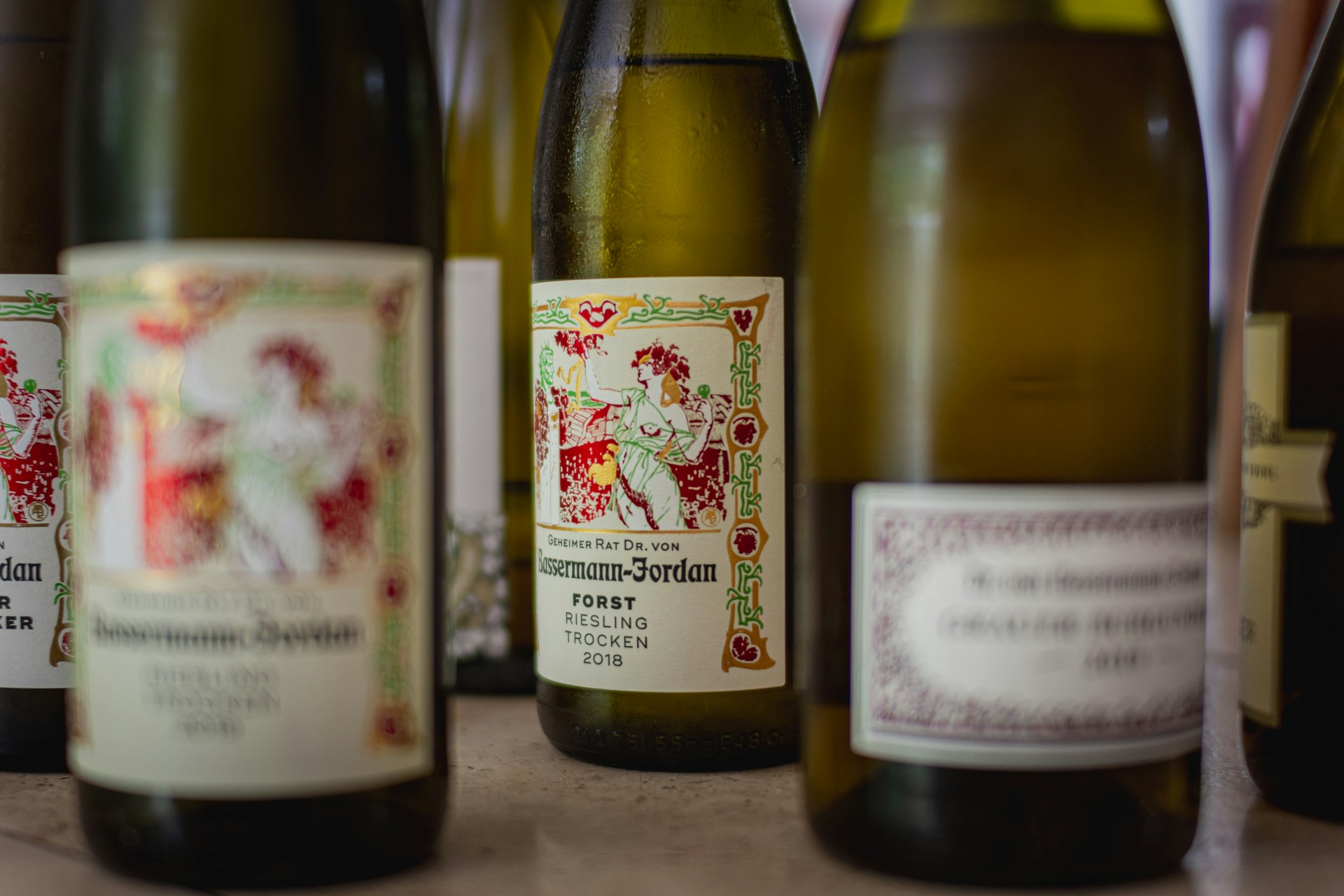
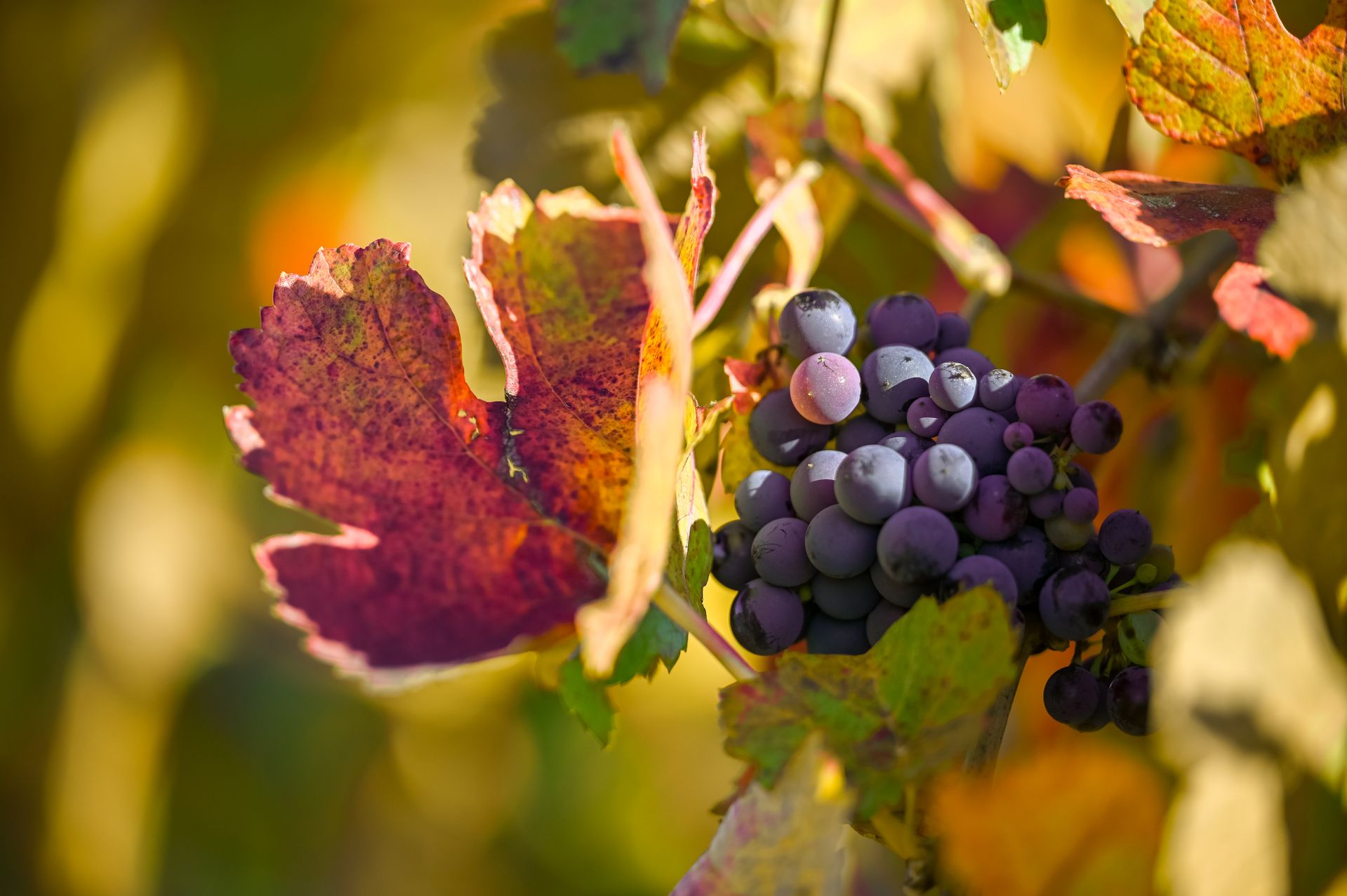
Photo by Sandra Grünewald
Pairing Riesling
I have, in the past, written about how I like pairing wine with moments rather than food. For instance, you can read here how I go about pairing wine and music. However, Riesling is fantastic with food. It’s my favorite wine, after sparkling, for holiday[xi] meals. It’s great with turkey and pork. It’ll even pair well with your stuffing!
Since Riesling comes in different styles, it’s versatile. Its high acidity pairs well with fatty food, like duck, cheeses and charcuterie. Off-dry Riesling is algo a cheat code for spicy food and strong flavors. I particularly like it with Southeast Asian and Indian cuisine. The acidity and the sweetness of the wine will help counter the spiciness in the food. And the sweeter varieties can even pair with desserts.
But, like I said above, I’m into pairing wine and mood. Riesling is a crisp wine with a lot of personality. It’s your picnic wine, your backyard barbecue wine, your patio wine for summer evenings. It’s complex, smooth, and often sweet: It’s like listening to Nights in White Satin, by The Moody Blues.
The Last Drop
I was introduced to Riesling while in Culinary School. Understanding Wine was one of my courses. German wines were not a significant part of the syllabus, but our teacher made sure Riesling was one of the wines we tasted. Of course it was: such a unique petrol aroma from a wine that pairs well with many foods.
I feel like Riesling is having a bit of a moment. Riesling is a food-friendly, interesting wine with a rich history. I see more people drinking it and speaking about it. There’s a buzz around Riesling, and couldn’t be happier. I really enjoy this wine, and I’m glad many of you agree.
What do think of Riesling? Have you tried both their dry and sweet styles? I’m curious to know how you like it with food, and if you’ve paired it with spicy foods or your holiday meals. Let me know your thought down in the comments below!
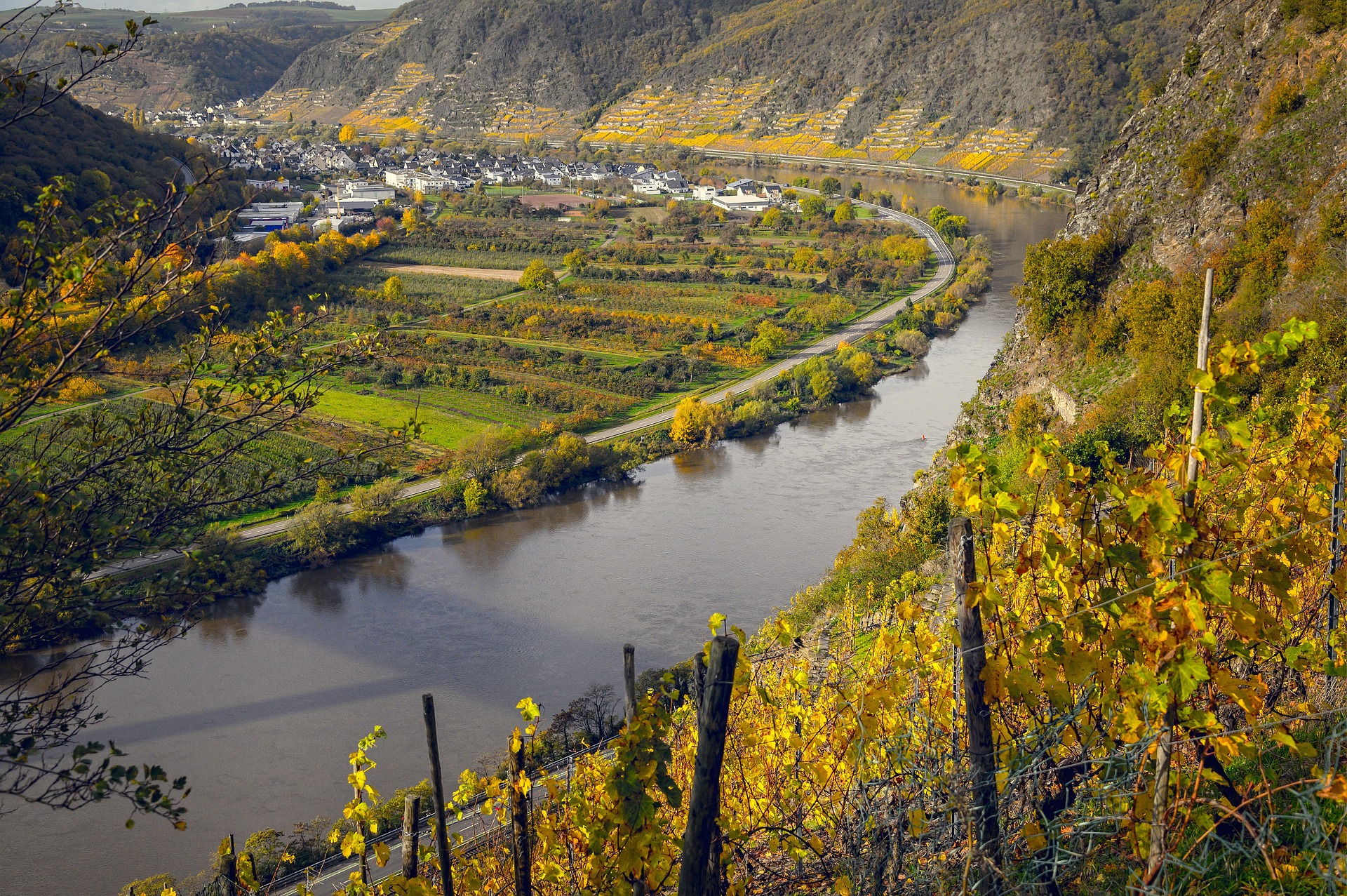
Photo by Peter Hermann
[i] The big outlier, even though it originated in Spain, is País, which I’m counting as Chilean, just to stir some controversy.
[ii] Ok, fair. Not only whites, but I do crave fresher wines during summer.
[iii] At least this is the likeliest scenario. It might’ve also originated from neighboring French Alsace. Most experts, however, agree the varietal is German in origin.
[iv] Although back then the grape was called Rießlingen.
[v] Not to be confused with Bosch, a mistake I made early on my research.
[vi] To be fair, the wines from both of those regions were a mixed bag. They were producing good wines, but they often got lost among lower quality ones. Quality classifications were just getting started.
[vii] Which brought forth lower quality wines, like Liebfraumilch (which you might remember), and therefore also a reputation of lower quality wines.
[viii] I have to be careful to not say “it grows best in cold weather” because that’s subjective. But is it?
[ix] This is, of course, legal in Germany. Not so in most New World countries, where the practice is not even needed because they are, generally speaking, higher temperature wine regions. Warmer weather means more sugars as the berries ripen.
[x] Remember, sugar is a good preservative. Think jams and marmalades.
[xi] I’m talking Thanksgiving, sure, but also Christmas and New Years’ Eve.

Leave a Reply